
Having searched for birds in Europe, my second thought, at least, is that my birding partner has just spotted a pair of common European songbirds. My European field guide says great tits are a “frequent visitor to bird tables and seed-dispensers…at times, plain audacious, may take seed from an outstretched hand.” Now we are talking! “Audacious, great tits!”
Sure, I thought up this slightly salacious title to grab your interest, but there are important points.
Many bird names have little to do with describing the bird and many US birds’ names have an Old-World origin. One of the best examples is the American Robin. Most of us can quickly picture a robin in our mind but in Europe the scene is different. The European Robin is small and brownish with a rusty-red bib.
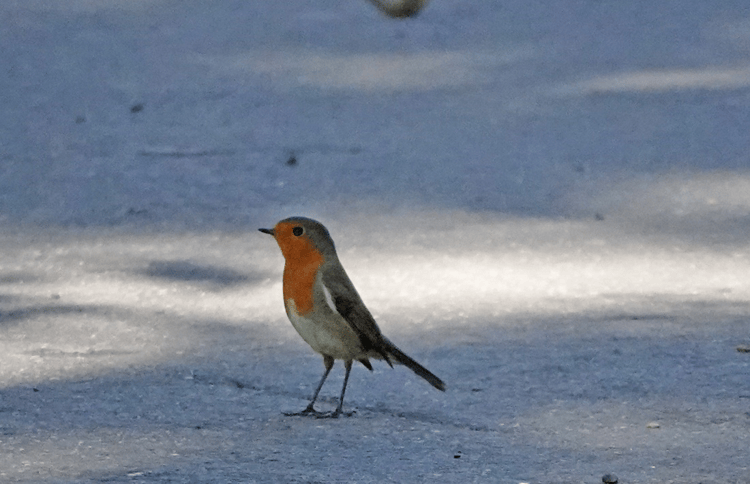
European Robin
The colors of the American Robin reminded early settlers of the European Robin, and the misnomer gained common usage. The American Robin is in an altogether different family known as thrushes. A close-cousin that sneaks into South Texas is called a Clay-colored Thrush—which is the same size and shape as our robin and is the color of brown clay. I prefer that sort of name because it tells me a lot about the bird, in this case, color and family.
Ok, that was boring. Let’s get back to tits. My bird book of Europe lists twelve kinds including blue ones. Picture those! One I have never seen is the Eurasian Penduline Tit. I need to get back there and search for that one! But the provocative question remains. Do we have tits in the US? Not exactly, although we have closely related birds and others with similar names. A favorite of many wildlife watchers is the Bushtit, found throughout the western third of the United States.
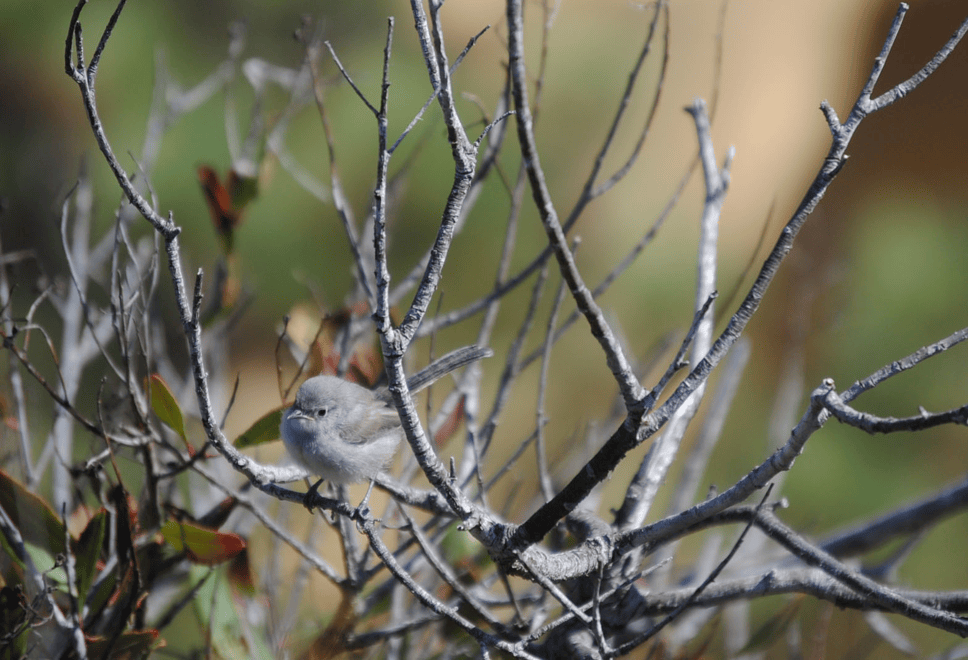
Bushtit
I took this picture in chaparral in California. These nondescript little guys, members of a different family than European tits, are often encountered in noisy flocks in a variety of habitats, frequently near streams. They often permit a close approach as they call back and forth. This bird is common but is often overlooked and dismissed as just a little gray bird (LGB) because it has so few field marks.
A stranger name is the titmouse. Like the various Chickadees in the US, the five North American species of titmouse are close relatives of the European tits, and, yes, the plural is titmice. I cannot imagine what a non-birder would conjure up in their minds if they saw that word out-of-context. What the heck are titmice? Mice that live in…? Never mind!
The Tufted Titmouse, gray on top and white below with rusty flanks, is found from the Great Plains to the Atlantic Ocean and is well known to anyone in the Midwest or East who has a bird feeder. The Western Colorado representative of this family is the Juniper Titmouse. Like the Bushtit, it is mostly gray but has a handsome crest. Also, as the name suggests, it is an inhabitant of Pinyon-Juniper forests (PJs).
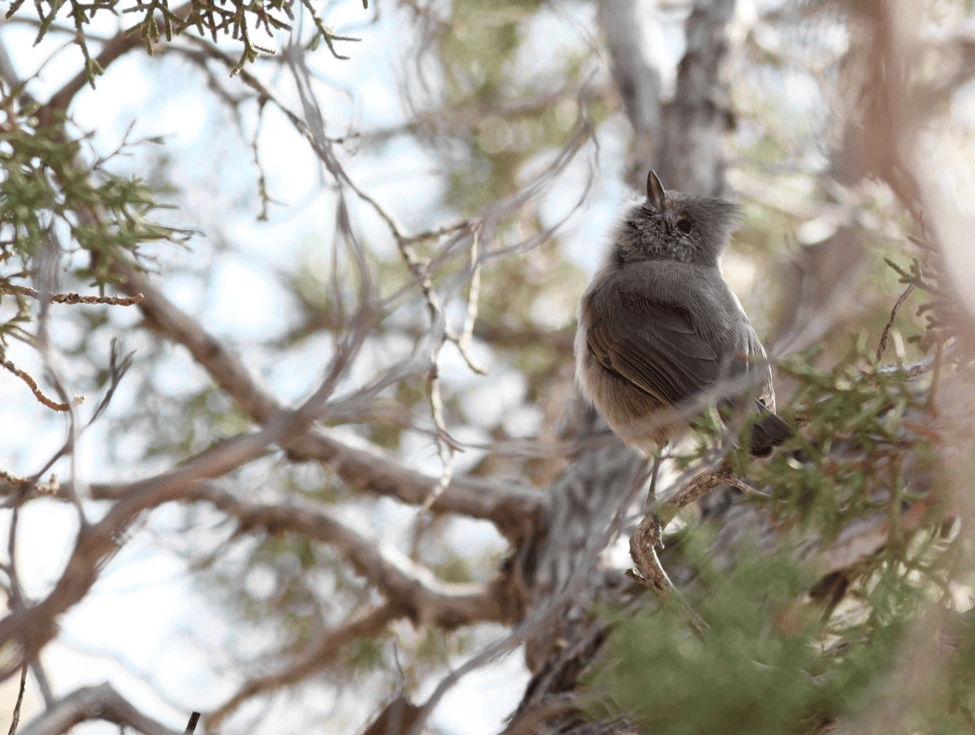
Juniper Titmouse (Jackson Trappett photo)
During the summer, juniper titmice eat mostly insects, but they eat a lot of seeds in the winter.
Wherever you live in North America, you may find titmice at your bird feeder. And, when you are out taking a walk and you see some little gray birds, don’t just dismiss them as LGBs. Take a close look. Some might be tits!


Got a Juniper Titmouse regularly at the cabin and Bridled are common.
LikeLike