WHAT COMES TO MIND WHEN YOU HEAR SOMEONE YELL, “GREAT TITS!”? 

Having searched for birds in Europe, my second thought, at least, is that my birding partner has just spotted a pair of common European songbirds.  My European field guide says great tits are a “frequent visitor to bird tables and seed-dispensers…at times, plain audacious, may take seed from an outstretched hand.” Now we are talking!  “Audacious, great tits!”   

Sure, I thought up this slightly salacious title to grab your interest, but there are important points.

Many bird names have little to do with describing the bird and many US birds’ names have an Old-World origin.  One of the best examples is the American Robin.  Most of us can quickly picture a robin in our mind but in Europe the scene is different.  The European Robin is small and brownish with a rusty-red bib.
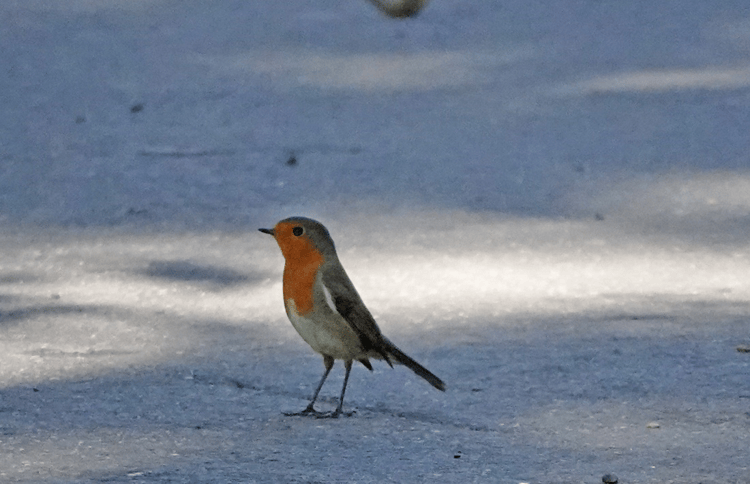
European Robin

The colors of the American Robin reminded early settlers of the European Robin, and the misnomer gained common usage.  The American Robin is in an altogether different family known as thrushes. A close-cousin that sneaks into South Texas is called a Clay-colored Thrush—which is the same size and shape as our robin and is the color of brown clay.  I prefer that sort of name because it tells me a lot about the bird, in this case, color and family.

Ok, that was boring. Let’s get back to tits. My bird book of Europe lists twelve kinds including blue ones. Picture those! One I have never seen is the Eurasian Penduline Tit. I need to get back there and search for that one!  But the provocative question remains. Do we have tits in the US? Not exactly, although we have closely related birds and others with similar names.  A favorite of many wildlife watchers is the Bushtit, found throughout the western third of the United States.
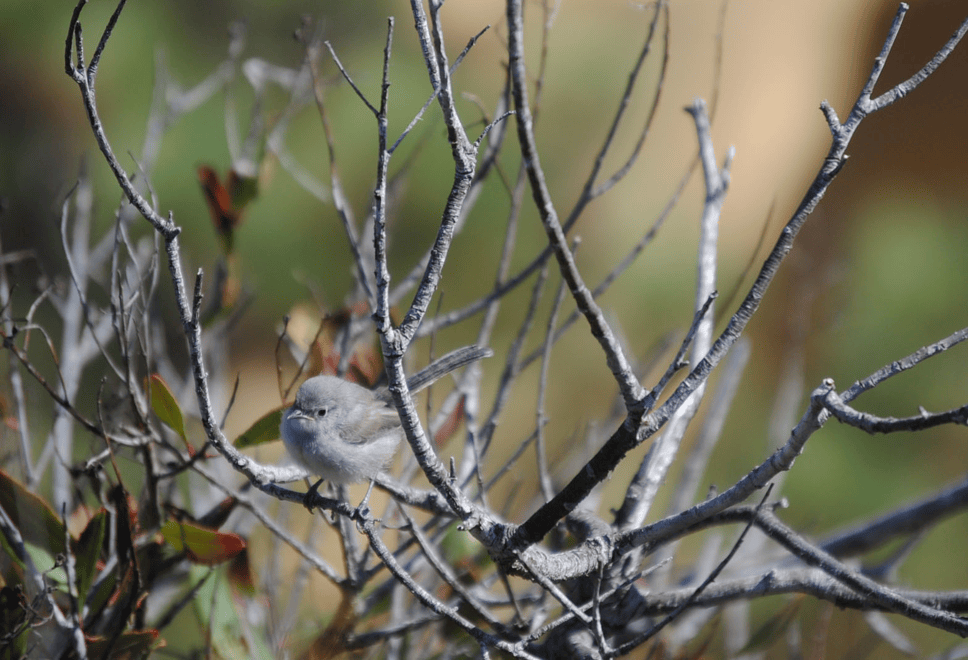
Bushtit

I took this picture in chaparral in California.  These nondescript little guys, members of a different family than European tits, are often encountered in noisy flocks in a variety of habitats, frequently near streams. They often permit a close approach as they call back and forth.   This bird is common but is often overlooked and dismissed as just a little gray bird (LGB) because it has so few field marks.

A stranger name is the titmouse. Like the various Chickadees in the US, the five North American species of titmouse are close relatives of the European tits, and, yes, the plural is titmice. I cannot imagine what a non-birder would conjure up in their minds if they saw that word out-of-context. What the heck are titmice? Mice that live in…?  Never mind!

The Tufted Titmouse, gray on top and white below with rusty flanks, is found from the Great Plains to the Atlantic Ocean and is well known to anyone in the Midwest or East who has a bird feeder.  The Western Colorado representative of this family is the Juniper Titmouse.  Like the Bushtit, it is mostly gray but has a handsome crest.  Also, as the name suggests, it is an inhabitant of Pinyon-Juniper forests (PJs).
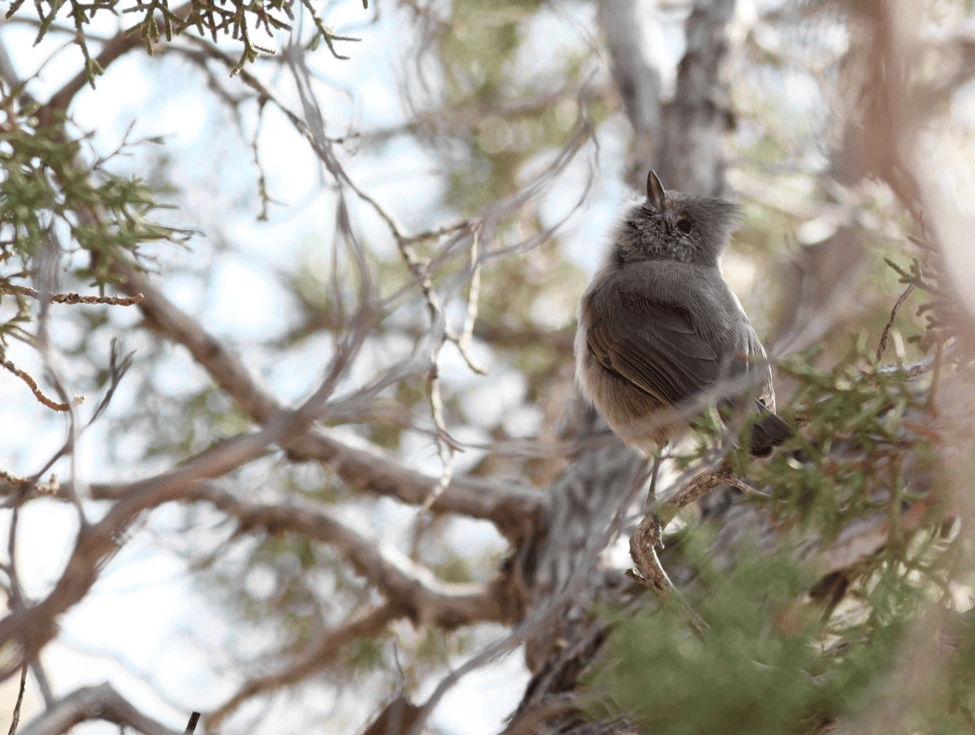
Juniper Titmouse (Jackson Trappett photo)

During the summer, juniper titmice eat mostly insects, but they eat a lot of seeds in the winter. 

Wherever you live in North America, you may find titmice at your bird feeder.  And, when you are out taking a walk and you see some little gray birds, don’t just dismiss them as LGBs. Take a close look. Some might be tits!
THE HUMMINGBIRDS ARE GONE

I sat down to write about something else, but looking out the window and seeing snow on my hummingbird feeder unsettled me.  All winter it seemed, I longed for their return.  I’ve been in denial about the approach of winter. No more!

I am writing from a small cabin at 8,300ft.  Upon arrival yesterday, I considered whether to put up the feeders.  It was a beautiful fall afternoon. The oak brush on the dry hillsides was at its peak with red and a little remaining green sprinkled through the bright, light brown of the leaves about to fall.  Down at the creek, the narrowleaf cottonwoods were bright yellow.  I was right on time for these because they do not retain their changed leaves very long.  The alders and serviceberries also displayed a variety of reds and yellows. 

The aspen in my window view are about half-turned.  Those on the mountainside are all yellow.  Down here, surrounding my meadow, most are pale green, but interspersed are a few in yellow flame, and even a couple with the rarer red pigment. 

My records over 15 years show an occasional hummingbird this late in the season, but as the snow settles on the feeder mount, I know I have another year to wait.  The fleetingness of the seasons up here always comes as a shock.  It is late September.  A scant four months ago, I saw my first Broad-tailed Hummingbird of the year.  Last week I saw the last.

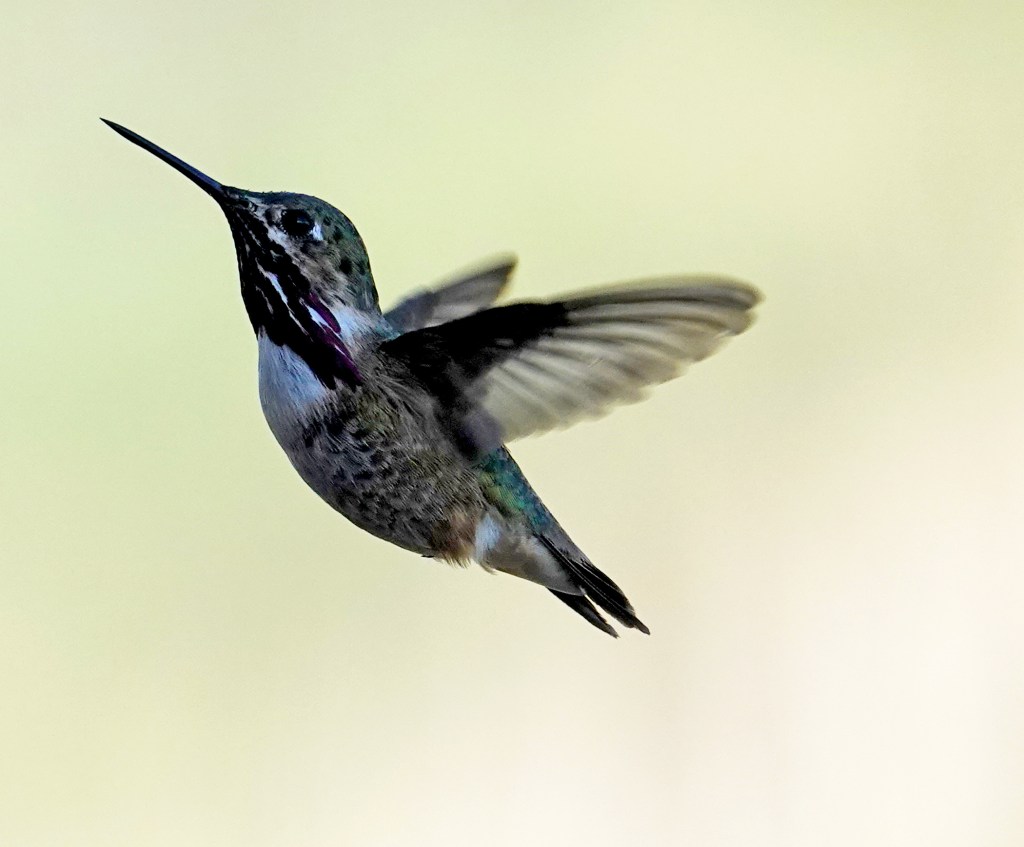
I think about where they went.  Almost all went to Mexico: the Broad-tailed to Mexico and Central America, the Rufous to Northern and Central Mexico, the Black-chinned mostly go to Western Mexico. Similarly, the Calliopes go to West-central Mexico.  Maybe I should go too.

This Calliope Hummingbird is deep in Mexico by mid-September.

I’ve been pondering why I find the disappearance of hummingbirds so disturbing.  There are many things I like about winter: cross-country skiing, snow-shoeing, the holidays, the Christmas Bird Count!

I suspect I have an unrealistic yearning that life always be springtime with its promise of warmer days, brighter flowers and new life.  Deep down, I’m probably wondering about myself, and whether the hummingbirds have a lesson for me.  With their rapid heartbeats (sometimes exceeding 1000 beats per minute), and need to consume (they may eat eight times their body weight in a single day), they have to give life all they have, all the time.  I’ve seen several in the past few days that seemed to drop out of the sky, feed quickly, then rise up high and turn directly south.  As I watched them in my binoculars, their usual rapid wingbeats seemed frantic, as in recognition that they had to get out of here, right now!

Will I see them again?  There’s a question!  How will next spring find me?  I hope the same, but life changes.  My dad, the family realized after his passing, was an unrecognized philosopher.  “You never know,” was one of his favorite sayings. The hummingbirds, with a usual lifespan of only one to two years, are optimistically chasing the spring.  They are chasing warmth and beauty and I hope they find it in some Mexican or Central American forest or garden.  They will return for our next spring, after the snow has melted, and begin the cycle all over.  Life is short.  We need to care for it!