
I sat down to write about something else, but looking out the window and seeing snow on my hummingbird feeder unsettled me. All winter it seemed, I longed for their return. I’ve been in denial about the approach of winter. No more!
I am writing from a small cabin at 8,300ft. Upon arrival yesterday, I considered whether to put up the feeders. It was a beautiful fall afternoon. The oak brush on the dry hillsides was at its peak with red and a little remaining green sprinkled through the bright, light brown of the leaves about to fall. Down at the creek, the narrowleaf cottonwoods were bright yellow. I was right on time for these because they do not retain their changed leaves very long. The alders and serviceberries also displayed a variety of reds and yellows.
The aspen in my window view are about half-turned. Those on the mountainside are all yellow. Down here, surrounding my meadow, most are pale green, but interspersed are a few in yellow flame, and even a couple with the rarer red pigment.
My records over 15 years show an occasional hummingbird this late in the season, but as the snow settles on the feeder mount, I know I have another year to wait. The fleetingness of the seasons up here always comes as a shock. It is late September. A scant four months ago, I saw my first Broad-tailed Hummingbird of the year. Last week I saw the last.
I think about where they went. Almost all went to Mexico: the Broad-tailed to Mexico and Central America, the Rufous to Northern and Central Mexico, the Black-chinned mostly go to Western Mexico. Similarly, the Calliopes go to West-central Mexico. Maybe I should go too.
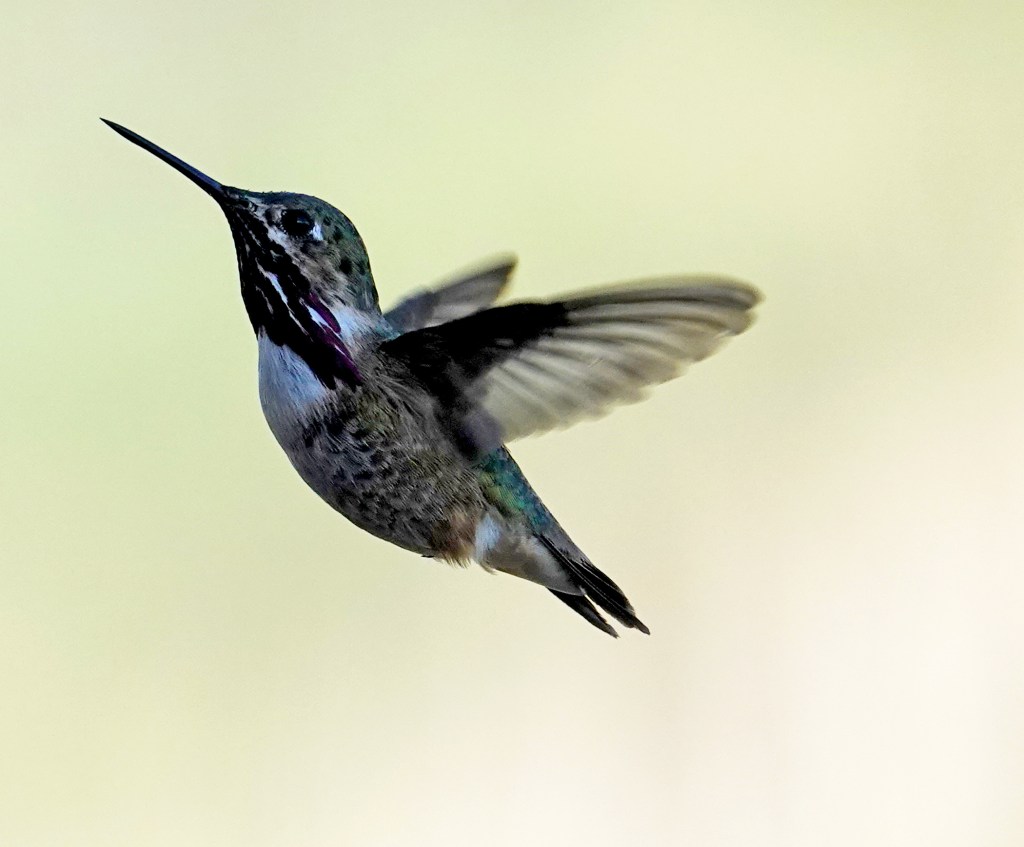
This Calliope Hummingbird is deep in Mexico by mid-September.
I’ve been pondering why I find the disappearance of hummingbirds so disturbing. There are many things I like about winter: cross-country skiing, snow-shoeing, the holidays, the Christmas Bird Count!
I suspect I have an unrealistic yearning that life always be springtime with its promise of warmer days, brighter flowers and new life. Deep down, I’m probably wondering about myself, and whether the hummingbirds have a lesson for me. With their rapid heartbeats (sometimes exceeding 1000 beats per minute), and need to consume (they may eat eight times their body weight in a single day), they have to give life all they have, all the time. I’ve seen several in the past few days that seemed to drop out of the sky, feed quickly, then rise up high and turn directly south. As I watched them in my binoculars, their usual rapid wingbeats seemed frantic, as in recognition that they had to get out of here, right now!
Will I see them again? There’s a question! How will next spring find me? I hope the same, but life changes. My dad, the family realized after his passing, was an unrecognized philosopher. “You never know,” was one of his favorite sayings. The hummingbirds, with a usual lifespan of only one to two years, are optimistically chasing the spring. They are chasing warmth and beauty and I hope they find it in some Mexican or Central American forest or garden. They will return for our next spring, after the snow has melted, and begin the cycle all over. Life is short. We need to care for it!

