I have been the Conservation Officer for a local Audubon Society for many years. In Colorado, I manage a large Western Screech-owl Nest-box program. My favorite places to go birding are the new-world tropics, especially Costa Rica.
There is no folly of the beasts of the earth which is not infinitely outdone by the madness of men. Moby Dick, Herman Melville
Belize had never been on our radar. We had already experienced superlative snorkeling and diving in Mexico and Hawaii. Birds? With all my time in Mexico and especially Costa Rica, the few potential new species in Belize were not enough to inspire a visit. Besides, much of our attraction to the rest of Central America was the Spanish language and associated culture. Belize, where English is the official tongue, is a Central American outlier. Only one more enticement remained. We are students of Mayan ruins and have visited these ancient sites extensively in Mexico with additional trips to Guatemala and Honduras. We knew Belize had ruins, but our interest in them had never been sufficiently piqued. Then, Mexico built the train.
My hatred for the so-called Maya Train is visceral. Thinking of it nearly evokes a sob. I have described Yucatán’s interior before the train (Oxkintoch, Chacmultun, and the Center of the World). In that essay I contrasted the frenetic and over-developed coast with the tranquil interior, which a scant ten years later is being obliterated. * The Maya train connects both coasts with the interior major cities and the once less-visited Mayan sites.
Besides opening the area to industrial tourism, construction irreparably damaged the landscape. YouTube videos show that pylons supporting train tracks penetrated once-pristine cenotes. Construction disrupted lives of Indigenous peoples and bisected what had been the largest section of intact jungle, except for the Amazon, in the Western Hemisphere.
Mexico’s president at the time, Andres Manuel Lopez Obrador decreed that the Maya Train was essential for national security. The purpose of his declaration was to suspend various legal requirements for administrative procedures such as environmental impact assessments, licenses, and permits. Usual contracting procedures were bypassed so construction could start immediately. The rush to destruction was so intense that the army was put in charge of certain sections, including the one that accesses Calakmul, which with its adjacent forests has been recognized as a World Heritage Site by UNESCO.
Obrador knew there would be court challenges but by rushing construction; he rendered them moot. In some instances, official mandates requiring suspension of construction were ignored but even when the judicial system intervened successfully, it was “too late because the project had already reached an advanced stage of execution.”
These actions were consistent with the overall Obrador presidency which eliminated all government support for environmental non-government organizations (NGOs), eliminated most of the funding for Mexico’s national park service, 75% of the funding of the National Commission of Protected Areas (CONANP), and 75 % percent of the budget of the National Institute of Anthropology and History (INAH) which oversees more than 100,000 heritage and archaeological sites, museums and monuments.
We have had marvelous experiences at numerous INAH sites. We had been delighted, rightfully believing Mexico was more skillful at protecting their national heritage than was the US. No more.
Comprehending the train’s impact made us heartsick. In our minds’ eyes, Mary and I could see favorite, large, ruins such as Edzna and Calakmul overrun by tourists and vendors, while beautiful, small ruins such as Tabasqueno and Sihunchen are overrun with weeds and looted. Pre-train, up to 50,000 annual visitors enjoyed Calakmul. The post-train goal is three million.
We had been considering another trip to the Yucatan, but now it would be too painful. A recent visit to Guatemala’s Tikal, however, had alerted us to Caracol in adjacent Belize. Here was a large Mayan ruin—seldom visited because of a bad road. Internet searches verified that hiring a knowledgeable driver/guide or at a minimum, renting a four-wheel drive vehicle was necessary. This sounded perfect. We knew we needed to hurry because Lopez-Obrador had proposed to the Belizean government, as well as to Guatemala’s, that their major ruins be linked to Mexico’s train.
Our visit to Caracol was almost too late. We are among the last to have the sense of discovery and mystery that overwhelmed the first Europeans to visit. Why? The government of Belize has allocated tens of millions to install bridges and to straighten and pave the access road. Even as we travelled in early 2025, the advice suggesting a four-by-four vehicle was outdated. Most of the road was completed and the remainder of the construction was in advanced stages. Any passenger car could make the journey although the trip, for now, remains slow and dusty.
Once the project is complete, the road will be accessible to large tour buses. The Chichen Itza experience will be the norm. Chichen Itza is a magnificent ruin, but the quantity of venders and crowding is remarkable. We visited in the off-season, mid-November, and were still shoulder-to-shoulder with other tourists by mid-morning. Most structures are roped off and viewed as museum pieces. Walking the paths between edifices required passing through a gauntlet of hundreds of vendors. Some would call out. Some were listening to the radio. The flea market ambience hindered attempts to marvel at Chichen Itza’s construction and contemplation of its history. But then, what would one expect with 2.5million annual visitors? In contrast, annual visits to Caracol have been approximately 11,000. I doubt Caracol will ever attract the numbers of Chichen Itza but how much will the experience change when the annual visitation is one million or even one hundred thousand?
We were the day’s first visitors. The caretaker noticed our arrival, walked from his small hut, and unlocked the gate. Ultimately, the parking lot added a small van and three or four more cars. It was a Saturday, after all.
Mary and I enjoyed the old-Mexico-like experience we desired. We climbed the pyramids. We were able to sit quietly on one of the structures as we listened to the bubbly calls of Montezuma Oropendolas busy completing a colony of their pendulous nests over one of the plazas. We could imagine the countryside’s former inhabitants filling the plaza to view sacred rites conducted on the heights.
Caracol’s main plaza from the top of the largest pyramid.
We walked through rooms and hallways, trying to imagine how the people conducted their lives more than one thousand years ago. All the while, monkeys and a variety of forest birds watched from overhead.
Our base for the visit was San Ignacio (population 23,000), from where we also explored Cahel Pech and Xunantunich, two small, nearby ruins, both of which will, no doubt, experience a great deal more visitation when the road to Caracol is completed. Fortunately, we experienced these sites in the manner we desired. Now we could consider the sea.
I suspect most people envision the ocean when they contemplate Belize. Astride the largest coral reef in our hemisphere, second only to Australia’s Great Barrier Reef in length, snorkeling and diving have world class reputations, as does the expense of visiting. I credit Mary with her usual diligence in finding a suitable location for us: Tobacco Caye.
Tobacco Caye is a five-acre island with minimal square footage without a building. Our modest resort was perfectly clean and provided good food. It was not a luxury refuge, so prices were reasonable. Moreover, unlike many Belizean oceanside locations, we could snorkel directly from the dock—no need to hire a guide or boatman to take us to the reef. We were able to see a nice variety of fish and other sea life including eels and octopus. Dive and snorkel trips to famous sections of the reef were available, but we did not feel a need. For us, this was perfect for a few days of ocean.
But Belize is a prime bird watching destination, surely there were birds to find? As stated above, there had not been sufficient new species for me to pursue for the country to become a significant objective. That changed when we visited Tikal, just across the border in Guatemala. Not only had we learned about nearby Caracol, but I was chagrined when I understood that had we planned to spend another day, I likely would have been able to see three species new to me: Black-throated Shrike-Tanager, Mayan Antthrush, and Pheasant Cuckoo.
The latter two were of particular interest. Pheasant Cuckoo is listed as present in Costa Rica but is only detected every few years. There are no reliable locations. I never entertained the thought that I could see one. The Mayan Antthrush, like the Black-throated Shrike-Tanager is a regional endemic. It is also a member of the family Formicariidae, a favorite of mine because these are species that require pristine rainforest. Antthrushes, small and dark with an upturned tail, are reminiscent of rails. They fly little. Their colors are dark, the best for hiding in the deep understory they favor. Their presence signifies the high-quality habitat where one might see a tapir or a jaguar.
I had selected Black Rock Lodge for birding because of frequent sightings of my target species. As our arrival date neared, and I reviewed what was being seen, I was astonished by frequent reports of a Black and White Hawk-Eagle, a much rarer species than the others. Even more so than the Pheasant Cuckoo, this was a species I never expected to see.
We arrived at our quiet cabin noting many birds in the surrounding trees including several familiar from the US such as Gray Catbird, Northern Parula and Indigo Bunting. These seemed out-of-place amidst the numerous Red-legged Honeycreepers and Yellow-Winged Tanagers. I was also attracted by busy hummingbird feeders replete with White-necked Jacobins while also serving rarer Wedge-tailed Sabrewings and White-bellied Emeralds.
Our first afternoon included a pleasant hike, highlighted by a perfect view of a Sepia-capped Flycatcher—rare and local in Costa Rica where I once had a fleeting glimpse. Here, the bird was perched in the open, just above the trail. My view was lengthy and satisfying. Later, we enjoyed a pleasant swim in the warm Macal River as foraging Mangrove and Northern Rough-winged Swallows zoomed past our heads. Unexpected was a Social Flycatcher entering and exiting its nest on a mid-river boulder.
That afternoon, I met Isaias, the guide I had hired for the next morning. We discussed the birds I was most interested in seeing. Incongruously, the species of which he was most confident was the Hawk-Eagle. A pair were nesting in the adjacent Elijio Panti National Park. It is not an exaggeration to say Isaias considered himself to be their steward and protector.
The only access to the National Park was by hiring a guide and crossing the river. Although the crossing in a small canoe is trivial, the lack of a bridge and roads into the park likely accounts for the Hawk-Eagles’ presence. As he paddled, Isaias explained we would hike to see the Hawk-Eagle nest while hoping to encounter the other species on the way.
Isaias was right. Within twenty minutes we heard a Mayan Antthrush. Just six years ago, what we were hearing was considered a subspecies of Black-faced Antthrush. That species has special “favorite” status with me because its three-note, drawn-out whistle “keep-too-too” is one of those sounds that signifies “this place.” In this case, “this place” being unspoiled, sizable lowland rainforest. Sadly, its population is decreasing. Most notably, its song is no longer heard so often at Costa Rica’s famous La Selva Research Station, likely because encroaching development and climate change have altered the habitat.
The call of the Mayan is so different from the Black-faced, it was a wonderment they had been considered the same species until 2021. The Mayan’s song is a series of 9 or 10 piping whistles dropping in pitch.
There are physical differences as well. The Mayan Antthrush is overall rufous rather than brown and has dark rufous on the head and nape, and a rufous forecollar. Apparently, with cryptic species such as these, there was formerly a greater tendency to lump them. After all, they were dark birds with similar habits. I suspect, however, that the co-dwellers in the depths of the dark forest see the differences as stark.
We concealed ourselves and played the Mayan Antthrush’s song. The bird answered fearlessly. It circled us, never coming closer. After thirty minutes, Isais said, Oh well, we will find another. We moved on, and, later, another called nearby. Unfortunately, we had similar luck. The bird answered, hinted at advancing, but sailed down a steep slope and away. I did not have time to be disappointed because we were close to the target for the hike, the nest of Black and White Hawk-Eagles.
I was ecstatic to see the Hawk-Eagle. Although they can be found from Southern Brazil to Mexico, Black and White Hawk-Eagles are always vanishingly rare and local. As an example, the ebird database shows 23,000 sightings of the Mayan antthrush with only 8,300 of the Hawk-Eagle. By contrast, the Black-faced Antthrush, the most easily encountered of the three similar antthrushes, has 44,000. Adding to my excitement, just as we were arriving at the Hawk-Eagle nest, we encountered a mixed flock containing a Black-throated Shrike Tanager. Now peering at the Hawk-Eagle on its nest, I considered how many birding incidents are happenstance. This species would have been on my list of “most-likely not-to-see” in Central America, and here it was, truly one of the most beautiful of all raptors.
Black and White Hawk-Eagle on Nest.
Isaias was protective. After watching for a while, he said, “Let’s go, we can’t risk disturbing it. The previous nesting attempt failed. ** Grudgingly leaving the Hawk-Eagle, we turned our attention to the Pheasant Cuckoo (11,000 sightings). Black Rock Lodge had quite a few records which, ironically, besides the frequent reports of Mayan Antthrush and Black-throated Shrike-Tanager, was the reason I had selected it,
Isaias had warned me that Pheasant Cuckoo were increasingly hard-to-find once the rainy season started. Oddly, they call and are most approachable at the driest times of the year. The rainy season had definitely begun as we had already endured several downpours. The cuckoos had stopped calling. Still, we tried.
We climbed a steep slope into some drier forest, better habitat for the cuckoo. We listened and called at numerous previously successful territories, but there was never a hint of a cuckoo’s presence. I knew there had been a detection a couple of weeks before our arrival; there would not be another for a month.
Even so, it was a great hike. I saw two more Black-throated Shrike-Tanagers and had outstanding views of a pair of Tody Motmots, the rarest of the motmots. This motmot, unlike the others, does not have a split tail with bare sections, is much smaller, and typically is found in the understory. I had a sufficient, albeit brief, look at one in Costa Rica, but this viewing was far more pleasing. There was a pair, and we were able to watch them move through the forest for several minutes.
But now, it was becoming late. We had to return. Gloomily, I realized I was not going to see a Mayan Antthrush. Adding insult to this injury was that I did not even have a recording of the two we had heard. I had counted on seeing one and had not thought of it.
We had been on our feet since before six. It was now close to noon. I lamented to Isaias that I had forgotten to record the Mayan. He nodded sadly and we walked on. Suddenly, fifteen minutes from the canoe, one called. I was relieved. I quickly obtained a recording. At least now I could add its song to my birding checklist and have something to show for our attempt. I was telling Isaias I was content, but he cautioned me to be still and played his call. Inexplicably, in the middle of this searing muggy day, when it was supposed to be asleep, the bird approached. It performed a pirouette in full view. Through my binoculars I examined the wide, rufous fore collar unique to the species. The day had ended perfectly, with that last call.
*The locations affected by the train were all easily visited by passenger cars. Local guides were available. Nearby lodgings and restaurants were small, clean, and offered a home-grown flavor in both senses of the word. Hence, my objection to the train is the loss of a certain type of experience; one of quietude and tranquility amidst traditional villages. There was also an abundance of wildlife. Those cannot withstand millions of annual visitors. Would it not be desirable to preserve a range of experiences rather than offer only the industrial tourism as is already available in the Yucatan at Chichen Itza and Uxmal, and in Guatemala at Tikal?
**Three months later (July 2025), a Black and White Hawk Eagle successfully fledged from this nest.
Yes Yes I see it so they won’t keep telling you where it is
Lying While Birding by Naomi Shihab Nye
I’m often asked, “What is your favorite bird?” I admit to preferring some more than others, but an ultimate is asking too much. Ask me for memorable birding experiences, well, that is different. Here are a few. *
*My book TEN JUNGLE DAYS, describes favorite sightings of Lanceolated Monklet, Black-Crowned Antpitta, Thicket Antpitta, and LeConte’s Thrasher. A previous blog, “The Most Difficult Bird,” is about my experiences seeing a Rosy Thrush-Tanager.
COCKATOO
I was sitting at my tiny first grade desk. The final bell rang. I emerged from the basement of what is now the St Paul Parish Center, ran up the steps, raced down Lemon Street, turned right on 9th, and yelled into “Tony” Lang’s basement for him to hand me the day’s newspaper.
I slowed as I grabbed the paper. There was a pink, crested bird in the tree above me. It looked like the cockatoo in the World Book Encyclopedias my parents had just acquired for me. Excitedly, I finished running 9th, dashed across Poplar to our small home at 709, and told my mother what I had seen. She laughed. I was embarrassed when she related the story to others. I had seen a female Northern Cardinal. It is fitting that my initial field identification was a mistake. It was not the last.
It is surprising how much I learned from our little yard in Illinois. I loved to climb the Chinese Elm in the backyard, brush off the ubiquitous little worms, and gaze toward larger trees down by the “branch,” a small drainage that connected to a nearby creek. I watched Common Grackles and Mourning Doves perch in the dead limbs.
Once, I found rows of neatly drilled holes in that Chinese Elm and was thrilled when a Yellow-bellied Sapsucker, not expecting a boy in the tree, came to visit them. Our face-to-face encounter was unforgettable for both of us.
A baby bird was under that same tree another day. I caught it and put it in the cage we had bought for my recently expired Budgerigar. I hung the cage in the tree with the door open and watched. A Baltimore Oriole! It fed the youngster once, then coaxed it from the cage into the tree and away.
I was also enthralled by our neighbor’s Purple Martin house. I enjoyed watching the acrobatic Martins swoop through the sky. Watching them taught me to despise House Sparrows and European Starlings because both would battle the martins for nest holes.
The best yard sighting was when I yelled to mom, “there’s a Brown Creeper in the front yard.” Perhaps, remembering my mistaken report of Australian avifauna, she was not interested. I begged her to look. She was shocked at first, then impressed. I was on my way!
BLACK-FACED SOLITAIRE
The Resplendent Quetzal was revered by the Aztecs, is the face of money in Guatemala, and easier to see in Costa Rica than any other country. It was highlighted in brochures we had studied before our first trip in 1989. At that time, the Monteverde Cloud Forest, because of the Quetzal and the now-extinct Golden Toad, was Costa Rica’s most famous eco-tourist destination.
We arrived in the early afternoon needing to leave twenty-four hours later. We had made what was then the long drive to Monteverde after a marvelous party the previous evening at our friend Raquel’s home (See: Don Tino’s Strange Fruit).
These days, renting a car in Costa Rica is as easy as anywhere but that was not the case in the 1980s. Raquel’s family advised that rental agencies near the airport were unreliable and expensive, so she drove us to Central San Jose. The car we thought we had reserved was not “ready.” We refused to accept the car that was offered because we needed a 4-wheel drive. After an hour’s wait, they rolled out a dented, well-used, dark-green, diesel-powered, 4×4.
Raquel led us out of the city, or we would surely have gotten lost. Once underway, the road, was narrow, curvy, and slow, but seeing signs directing us to Panama or Nicaragua was exhilarating. We watched for the turnoff to Monteverde having been instructed to find a bar, just past a small river.
We stopped at the bar and asked, just to be sure we were on the right road, but we received more than directions. The bartender pointed at a man sitting outside and in broken English, told us he needed a ride to Santa Elena, which was on our way. Everyone was friendly and our erstwhile rider looked at us so imploringly that we consented. I could scarcely believe it. We had been in the country less than 24 hours, and we had a hitchhiker, something we would never have done in the US. Our rider spoke no English but smiled benignly as he climbed in the back seat with Ann and Adam.
As we left the pavement and started up the rough road I hit a deep pothole. The back door of the battered vehicle sprung loose, popped up, and our luggage bounced into the road. Fortunately, the suitcases did not burst open, only suffering dents and scratches. We re-loaded and continued.
The road was steep and sinuous, only a single lane wide alongside steep drop offs. At the first of these, our rider gesticulated excitedly and tugged at his unlocked seat belt. After a bit of mutual consternation and more pantomimes, we understood he wanted us to unfasten our seat belts because if we ran off the road, we could more easily jump out of the car as it tumbled down the mountainside. Fortunately, we had no mishaps and delivered the man to his destination.
Today, Monteverde is replete with hotels, zip lines, restaurants, yoga retreats and so on. The road is wide and paved. In 1989, there was one small, hotel and a couple of smaller lodgings known as “pensions.” The “restaurant” where we dined that first night was under a carport. We suspected they merely made four extra portions, and the family enjoyed the same meal.
Before checking into our room, we drove to the reserve entrance and asked about guiding. We were here to see a Quetzal and had no idea whether we would ever return to Central America. We arranged to meet a guide, Alan, early the next morning. He said he had arrived on New Year’s Day and had seen a Quetzal every day since. It was now mid-April. We retired that night with confidence.
The next morning, we awoke to a shock. We arrived on a sunny, calm, day and woke up to fog, rain, and high winds. The consequence was that we learned when such days are bad enough, Quetzals move downslope to escape the weather. Alan tried to convince me that seeing a Black Guan (not a big deal) and a Red-headed Barbet (sort of a big deal) were adequate compensation, but they were not. We had to make the long drive back to the Central Valley bereft of a Quetzal sighting.
That drive was wild. It was market day. The road was crowded with slowly moving, mostly beat-up trucks full of produce. We learned that horn honking was not about warning of danger but communication such as “yes, I should not have passed but I am coming on anyway. Stop and let me in.” Large trucks were not always able to slow down fast enough; their return honks meant, “Stop, and go back or you’ll be in a head-on!” If there had been a crash, it would have been a demolition derby.
Repeatedly, on curvy, uphill sections where my vision was obscured, a truck driver would wave for me to pass. Sometimes that worked but often enough the wave morphed into frantic gestures that I should slow and get back to avoid an oncoming vehicle.
For miles we were trapped behind a truck laden with sugar cane. Fragments of the load rained on us as we followed. Safely back at Raquel’s house I asked about the reckless driving. She laughed and said Costa Ricans thought they had a sixth sense when it came to cars and traffic. I read later, at that time, Costa Rica had the highest per capita accident rate in the world.
We had survived our initial excursion into Costa Rica’s hinterlands and into a cloud forest. We live in the desert where the land is dry, and the colors are browns and reds. What had I expected when I encountered cloud forest for the first time? A forest of clouds or a forest in clouds—a forest fashioned by clouds. It is all of those, but what I perceived was that our luck was bad.
Birding was practically impossible. Gusty winds swirled cloudy mist through the treetops and, at times, to ground level. I would aim my binoculars toward a moving object a few meters away and whether leaf or bird, it would quickly be obscured by fog and occasional sheets of rain. My binoculars fogged so badly they were barely functional.
The forest soared into the foggy mist. The largest cottonwoods along the Colorado river would be part of the understory. These giant trees were of the genus Quercus. If that sounds familiar, it is because they are oaks but even grander than the great old oaks I knew growing up in the Midwest.
“Festooned” is a cliché but no word better describes the massive branches, each supporting a plethora of vines and bromeliads. Only the stoutest limbs can sustain so much wet vegetation. These limbs can sustain tons of vines, epiphytes, and bromeliads. Everything I touched felt like a wet sponge. Moisture dripped from above. Fog swirled horizontally. All this, I realized, is cloud forest.This is how it is.
Alan identified a few calls amidst the roaring wind— “an Ochraceous Wren,” he said. I finally had a fog-obscured glimpse. And then, I heard an odd, soon to become familiar, sound. The usual description is of a swinging, rusty metal gate. “That’s a Black-faced Solitaire,” said Alan. I looked up. “You won’t see it,” he continued.
He was right. The sound emanated with the dripping moisture amidst the swirling fog from high in those oaks. When I trained my binoculars upward to search for the sound I was rewarded with water droplets on the lenses.
Other sources refer to the call of a Black-faced Solitaire as flutey and ethereal or complex and exquisitely modulated. That’s better. The call evokes a solemnity and power that is the essence of its environment. It is a sound that evokes dripping green and riotous growth. Aldo Leopold referred to the “numenon,” that entity without which a particular biome cannot exist. His examples were the Ruffed Grouse in the North Woods and the Pinyon Jay in the high deserts where I live (See: The Numenon: Pinoñero Nostalgia). Likewise, a Costa Rican cloud forest does not exist without Black-faced Solitaires. Their songs support the famed ornithologist Alexander Skutch who called the tropical rainforest “the greatest example of nature’s creative process.” I did not see a Black-faced Solitaire on that day, but their essence had invaded my soul.
Happily, there are periods of sunshine and calm in the cloud forest and Black-faced Solitaires can be spotted in flight and followed to their lofty perches. When not breeding they can be found in loose flocks at lower elevations. Thus, often enough, I have been able to enjoy the steely blue-gray color of their bodies and the black face, both offset by the bright orange of the bill and legs.
(Black-faced Solitaire, juvenile)
My most memorable view, one-hundred miles to the southeast, thirty years later, was so unexpected, I could not identify the bird for several minutes. I began my hike just after five because the sun rises early near the equator. The slight mist that was falling became a steady, rain. I opened my small umbrella—essential in this environment. I moved slowly hoping for ground-dwelling species because the conditions made viewing of even the mid canopy impossible.
It was November, out of the breeding season for most species. The forest had been silent except for one or two exuberant outbursts from a Gray-Breasted Wood-Wren. After an hour and a half, I had detected only three species but was feeling satisfied with a close encounter I had just had with a Zeledon’s Antbird.
I love antbirds for their need for pristine habitat as well as there being no analogs in temperate climates. I had observed a beautiful male—black except for the pale blue skin around his eyes. I watched him swish his tail slowly—a prominent characteristic— as he disappeared in the understory.
Suddenly, I heard an unfamiliar call.” An upward slurred nasal ghank,” I wrote in my notebook when my Merlin bird app did not recognize it. The call was rising from the ground. I perceived movement. I approached cautiously trying to obtain a decent view in the gloom. Though partially screened by vegetation, a dark plumaged bird was walking back and forth on a small horizontal branch, all the while repeatedly uttering ghank, ghank.
It was a typical rain forest dilemma. How to sneak close enough without frightening the bird? I eased forward. My quarry was stocky, mostly gray. Too large and plump for most of the tanagers, I thought of grosbeaks but a partial view of the head indicated not that family. I saw a flash of the bill…orange. The feet were orange too. Now I saw it fully. It could not be, but it was — a Black-faced Solitaire, two meters away and on the ground. I watched it for a long time, back-and-forth on the branch, ghank, ghank. It appeared to be a display, but on the ground? For what? Months outside of nesting season? Where was a potential mate? What about that strange call? I have checked subsequently. Monographs on the bird do not mention such behavior. Birding guides I have queried had never seen or heard of it either. For me, it was a lovely bird, the numenon of the Cloud Forest, gifting me a special moment. **
**The Xeno-Canto wildlife sounds data base has examples of this call.
RESPLENDENT QUETZAL
Fortunately, our time with Raquel and her family had gone so well that we eagerly returned two years after our failed attempt to see a Quetzal. Once again, we headed for Monteverde and arrived at the reserve early in the afternoon. I asked at the entrance if there had been Quetzal sightings. The gatekeeper knew of one that morning and gave me the name of the trail. We went hiking. I am still disappointed Mary, Ann and Adam did not remain. Birding is too slow for them and the gift shop at the reserve entrance beckoned. By myself, I continued for a while further. No luck.
I turned back but remained vigilant. I scanned the forest for the tall dead trunks Quetzals use for nesting. They are obligate cavity nesters and despite their small, weak, and stubby bills, excavate the cavities themselves. Consequently, Quetzals as with the rest of the trogon family, mostly nest in rotten trunks. Indeed, a frequent cause of nest failure is when a too-rotten trunk collapses before the chicks are fledged.
I spied such a trunk and a cavity. Protruding from the hole were two long, green, plumes. The plumes were ragged from being bent to fit inside the cavity into which the bird had disappeared. Then the male peeked out and began expelling the contents of the nest hole as it worked. I was ecstatic. I knelt to be unobtrusive, but what it was, was reverence. It was me and the Quetzal. I had waited two years to return wondering if I would ever see one. There it was. I knelt in adoration for many minutes. Eventually, it flew to a nearby branch to preen in the sunlight.
(Resplendent Quetzal)
Photos cannot prepare one for the bird’s size and stunning colors. The brilliant red breast, the emerald-green body, the golden-green crest, the ebony shoulders and the snow white undertail are magnificent. I was not prepared for the greens shading to blue when displayed clearly in the sunlight. And the thirty-inch plumes! I consulted the online database Birds of the World. There are many bird species with names containing superb, beautiful, and elegant. Fittingly, only one species is Resplendent.
BLUE WINGED TEAL
Does it seem strange that a common North American duck with a population in the millions resides next to Resplendent Quetzal as a memorable sighting? The reason is the Tody Motmot. Of Costa Rica’s six motmots, I was missing only the Tody. Lesson’s and Turquoise-Browed Motmots are splashy and common. The Rufous, Broad-billed, and Keel-billed may not be as easy, but can be found without inordinate effort, but not the Tody. The latter is smaller, shier, thinly distributed, and lacks the flashy racquet-shaped central feathers characteristic of the others. Mary and I had already organized and led a group trip to Costa Rica as a fundraiser for Grand Valley Audubon. Accordingly, when we planned a second trip, I selected Heliconias Lodge as one of our stopovers. I had been watching birding trip reports, and this was the most reliable Costa Rican location to find a Tody.
We did find a Tody Motmot on the last hour of our last day, but my most memorable sight when we stayed at Heliconias was of Blue-Winged Teal. It was 2011, more than twenty years since our first trip to Costa Rica’s Caribbean slope. The roads were better and there was much more development, but one thing had not changed: the vagaries of the weather. Both days we planned for birding Heliconias were beset by high winds, heavy rain, and fog. Our guides talked it over. We bailed for the coast. Because of the vastly improved roads, it only took an hour or so to reach the lowlands.
Our guide Ernesto asked our van driver to stop at a private school. He collected a little money from each of us and entered. He returned with permission to access land behind the school, a former catfish farm.
The habitat consisted of dry fields interspersed with ponds. We had a fine time identifying grassland birds and in one large pond, a variety of ducks. Most were Blue-Winged Teal, but the special prizes were Northern Shoveler and Cinnamon Teal, rare birds in Costa Rica and much sought after by Ernesto and our van driver for their country lists. Our group had our own views of the common ducks easy for us to see at home while we searched for wrens and seedeaters in the fields. We saw other interesting birds for Costa Rica, such as a flock of Dickcissels and the introduced Tricolored Munia.
This was Guanacaste, a region known for a pronounced dry season. It was remarkable how near we were to the wet and misty cloud forest. Yet here the fields were reminiscent of autumn in Western Colorado–mostly brown, little green. As the day waned, I found myself separated from the group and thought I should return. The setting sun at my back cast everything with a golden hue.
I noticed an area we had not checked and moved in that direction. Part of me regrets what happened next, but I had no way of knowing what a disturbance I was about to cause nor what beauty I would see.
I ascended a small rise which turned into a dam behind which was a tiny pond 30 by 50-meters. Tucked in the corner of the property, distant from the larger ponds, perhaps this one was usually less disturbed. Our group had been walking all about. Many ducks had flushed. It seemed every Blue-Winged Teal we had flushed congregated here. As I peeked over the rise, I was five meters from a pond so full of ducks the water was not visible. It was bank-to-bank and bill-to-rump with Blue-Winged Teal.
They rose as one with a stirring whir of a thousand wings. Their takeoff was not random, but in one large formation, side-by-side. Their bodies were golden in the setting sun and their wing patches a dazzling azure. Apart from a blue sky, I had never seen so much natural blue at one time. It was breath-taking. Later that night, others spoke of Streak-backed Orioles and Red-legged Honeycreepers. I spoke of teal!
SANTA MARTA PARAKEETS
It was the third day of our Colombia trip…the first morning at the famous ProAves, Eldorado birding lodge. Our small group, myself and friends Larry, Coen, Brenda, Tom, Kay, and Linda, loaded into two beat-up 4×4 vehicles. It was 4AM. We had to ascend a rough road to be on the San Lorenzo ridge by daylight. Our wish was that three or four critically endangered Santa Marta parakeets would fly over the ridge at dawn. We were hoping someone would spot them coming and we would have time to detect color in their mostly green bodies: orange and red underwing coverts, blue primaries, and reddish-tinged bellies.
Being so near the equator, sunrise is akin to a curtain rising. We arrived and abruptly, it was full light. Almost as suddenly, there were parakeets. Not three or four, but everywhere. They landed so close; the excited drivers began snapping away with their cell phones. There were dozens of parakeets. They squabbled and hopped from branch-to-branch as they interacted. Some interactions were copulations. Some were fights. We forgot about the cold coffee and rice and beans we were handed for breakfast. That stuff was warm at 3:30. It was a nasty repast now, but the birds were enthralling.
(Santa Marta Parakeets)
This was a perfect beginning to one of my most amazing days birding. Shortly afterward we viewed a Santa Marta Bush-Tyrant, a Santa Marta Brushfinch and a Santa Marta Warbler. Notice the theme. This isolated mountain range in Northern Colombia may have the highest rate of endemism in the world. The Journal Science, called the area “the most irreplaceable site on earth” of all protected areas worldwide. We were convinced.
The excitement of our guide and drivers at the parakeets informed us of our luck. Subsequently, I read that the entire population in this area, believed to be 60 to 120, represents about ten percent of what remain, and that they are only rarely encountered in groups as large as 20. We counted more than sixty with some within three or four meters. They paid little attention to us. We were so engrossed that I can no longer remember how long we were entertained. And then, they rose as one and were gone.
ROSY-FINCHES
“I wish I’d been there!” was the reviewer’s response. You see, I had turned in an ebird list with 1050 rosy-finches, including Gray-crowned, Black, and Brown-capped. My list also contained thirty Common Redpolls. It was New Year’s Day 2013. My friend Larry was assisting me count birds in my area for the Grand Mesa Christmas Bird Count and we had turned in an improbable account of our birding that morning.
This area is usually nearly sterile on New Year’s Day. We can drive for miles and see a few Common Ravens and if we are lucky, maybe a Bald Eagle, maybe a Red-tailed Hawk. This year, the year of the pink cloud, was different.
Few birds in the Western Hemisphere exhibit pink in their feathers. Some Pine Grosbeaks appear pink as do some Crossbills, particularly the White-winged variety, but nothing rivals a swirling flock of Gray-crowned, Black, and Brown-capped Rosy-Finches. Plumages are variable because of sex, subspecies, and age, but every flock exhibits bright pink.
(Black Rosy-Finches)
Even without the pink, let’s say it is a dreary day with flat light, a flock of rosy-finches can be recognized by the way the flock darts and settles and repeats frenetic movements. Rosy-Finches are adept at sudden changes in direction, sudden landings, and sudden takeoffs. If the day is bright and the sun orientation is appropriate, their pink flashes are a treat.
Rosy-finches are not easy to see, surviving as they do in cold steep places. The population of the Brown-capped Rosy-Finch, a near endemic to Colorado (a few live in Wyoming and New Mexico) was believed to be in trouble until a recent study, described as “walking slowly and looking for birds on 45-degree rock slopes, on unstable footing and crumbling rock,” estimated the population to be a healthy 115,000 to 150,000; three times what was estimated in 2016. The study found rosy-finches prefer cliffs and snow patches between 11,500 and 13,200 feet. Unless the weather is not just bad, but really bad, they can stay up there all winter. Gray-crowned mostly nest in British Columbia and Alaska and Black Rosies nest in the high mountains of the Northern Rockies in the US. When they wander during the winter, they often find each other such that flocks may contain all three species. The best time to find them in our valley is after a series of storms in the high country. The finches are irruptive and gregarious. I had seen them several times, but in flocks of tens, never hundreds.
We encountered at least a thousand feeding along the roadside. It had been cold and snowy, and the birds had descended to feed on seedy plants. We were supposed to check a much larger area, but instead, we stayed with the finches and drove back and forth on the muddy road. Our excuse was to count the rarer Redpolls that intermingled with the Rosy-Finches. The large flock rolled with our passage. We would stop and so would they. They fed just outside the vehicle windows, almost close enough to touch. When there were junipers, some would perch, giving the impression of a Christmas Tree.
When we moved, so would they. It was thrilling to mingle in the rolling pink cloud. I doubt I will ever see anything like that again.
(A fraction of the Rosy-Finches we saw!)
My ebird checklist had flagged my counts for all three rosy-finches and the Redpolls. The reviewer was required to check. I sent back not just photos but a verbal description of what we had witnessed. No wonder, he responded as he did.
BLACK-THROATED HUET-HUET
“You never know where your kids are going to take you,” lamented my mother. She was referring to Mary and my move to Tucson for graduate school. Before that trip, she had been no further than 250 miles from her childhood home of Highland, Illinois. She was so uncomfortable visiting that she brought jugs of water for drinking.
In our case, our daughter did not take us to another state, but to another country, Chile. Unlike my mother, we were serious travelers having already been to Mexico and Central America. We were delighted to visit. Still, Chile had not been on our radar and if Ann had not taken a job there, we might never have visited.
Our goals were to see Ann and whatever she wanted to show us. It was not a birding trip. Nonetheless, Ann, true to her upbringing, wanted us to see some National Parks and climb La Campana, a small peak famous both for its view of the towering Aconcagua (the largest mountain in the hemisphere) and for having been summitted by Charles Darwin.
Studying what birds I might see proved difficult because I had never heard of them. What was a cinclodes? A tit-tyrant? Or a canastero? Finches I had heard of, but their variety and similarity were confounding. Nevertheless, I had some exciting views: flocks of Hudsonian Godwits, dozens of Black-faced Ibis roosting on our hotel’s rooftop in Castro on the island of Chiloe, and Slender-billed Parakeets lighting up the bare limbs of a dead tree. The most memorable, however, was a Black-throated Huet-huet.
My overall failure seeing the species with exotic names may have had something to do with my fondness for the Huet-huet. My luck had been poor with dotterels, rayoditos, and miners. I may have been desperate for a close encounter with one of the bird families previously unknown to me.
Huet-huets, of which there are three species in their genus, are tapaculos. It was the first of that family I had ever seen and is also the largest. Confined to Southern Chile and adjacent Argentina, they are ground-dwellers, known for digging up invertebrates from leaf litter.
It was mid-morning of our visit to Puyehue National Park. We were on a walk and had seen nothing more than the common flycatchers and finches. We sat for a rest. Nearby was a dense, shrubby, thicket, three-to-four meters in height. I decided to investigate. It was possible to lift some outer branches and crawl inside. Hunched over, I moved about until I heard a loud scritch-scritch. Close! Almost at my feet was a chubby, large-eyed, chestnut brown bird with a rufous belly and cap. I observed the powerful thighs. The feet and legs were incongruously muscular on a bird that size. “Drumsticks! I thought. Perfect for a bird that scratches and digs. The big shoulder revolved as the bird rotated its powerful legs and large feet through the leaf litter. I had found a Black-throated Huet-huet.
Then I was drawn to the large eye, peering directly at mine. Usually, if a bird and I are eye-to-eye, the moment is fleeting, and the frightened bird departs. This time, I sensed cognition and discernment. “I see you. You are not a threat, but I am not taking my eye off you either.” Less than a meter from me, the bird simultaneously watched me and scratched in the litter. I knew that birds, with their eyes on either side of their head could use them independently. The Huet-huet was demonstrating—one eye concerned with its safety, the other with dinner. Occasionally it grabbed a morsel, but even though the head jerked to feed, the eye never wavered from mine. For several minutes it scratched, dug, and fed at my feet. Moving slowly as it hunted, the Huet-huet scratched its way into thicker brush and out of sight. I was grateful. Through that eye, the bird had drawn me into its world. For a brief period, I knew what it was like to be a Huet-huet.
Is this the best tamale you have ever eaten? I asked Mary. She mirrored my surprised expression and nodded vigorously. It was fresh. The masa was melt-in-your mouth smooth. The chicken and salsa filling was tender and flavorful.
Then we ate the brownie and locked our eyes again. This is the best brownie I’ve ever eaten; we said in unison. There was just a hint of sweetness, but the flavor of the chocolate! Wow! Complex and strong, not quite overpowering! We washed down our treats with chocolate frio–chocolate frothed with milk, the drink still having pieces of cacao throughout. Again, not sweet, but as compelling to the taste buds as a fine wine.
Parts of Europe are known for chocolate. Textures are better, but flavors we have experienced south of the United States border are the best we have had. Where were we? In the town of Copan Ruinas, Honduras. The specific venue was El Lugar de Te y Chocolate, or The Place of Tea and Chocolate. Indeed, it was.
The rear half of a large house had been converted into a chocolate factory. Three women were cleaning, roasting, and cooking cacao into a variety of items. A long, narrow table through the middle of the room was filled with samples: chocolate and chili, chocolate and cardamon, chocolate with various nuts—chocolates of every kind. The large room’s balcony was suspended over a steep hillside permitting views of the valley and town, the perfect place to enjoy our treats. Someone’s idea of heaven, perhaps.
We were in Honduras to see the Mayan Ruin of Copan. I had dreamed of visiting after reading Incidents of Travel in Central America, Chiapas, and Yucatan by John Lloyd Stephens. I had picked up the book during a beach vacation forty years previously (see The First Time and More: Learning to be Travelers). Stephens and artist Frederick Catherwood had visited in 1839 and 1840. They were the first non-indigenous to describe a city abandoned by the ancient Maya.
The first location they visited was Copan, which, because of its early acclaim, has among the richest archaeological records of any Mayan site. Stephens and Catherwood had heard rumors but were astonished by what they found. They had planned to spend two or three days, but their visit stretched into months. Their tales of shock and wonder as well as the deprivation they endured (insects especially) were captivating. I was fascinated by the idea of such massive, abandoned structures. It added to the mystery and enchantment I began to develop with the jungle.
Over the years, I have accumulated and read more than ten other books about the Mayans. I l learned that seven-to-eleven million people are believed to have lived in the region at its peak—incredible to comprehend, especially with some of the cities believed to have contained upwards of fifty-thousand inhabitants. How could they have fed that many people and had a large enough “idle” class to design and build massive structures with stone tools?
The civilization had collapsed by the time the Spanish arrived. Unfortunately, in their Christian zeal, the conquistadors burned mountains of Mayan written records deeming them works of Satan. It is only recently that glyphs on the statues, stellae, and edifice walls have been deciphered, enabling reconstruction of what was occurring at the peak, but not during the demise of the civilization.
Most archaeologists believe that over-exploitation of the environment–cutting all the trees, polluting the water, exhausting soil nutrients–combined with over-population caused the common people to reject their priest/ruler class—those responsible for the monuments. There was also increasing conflict among the city-states. Mass starvation ensued.
Copan is not the grandest Mayan site, which may well be Tikal, but it has unique features and was the source of many major discoveries. The first burial site of an important ruler, famous for an intricate jade mask, was uncovered at Copan. Likewise, the “hieroglyphic staircase” is the longest, continuous, single purpose Mayan “document” yet discovered.
Another initial discovery from Copan was the propensity of the Mayans to use an initial edifice, constructed centuries previously, as the core of the subsequent temple. Typically, the inner structures were ritually demolished but one at Copan, called Rosalia, was found intact, complete with its bright red coating. Despite fragments of these colors visible on the extant buildings, it is difficult to visualize how garish and magnificent they were.
Copan is famous features for its stellae, approximately eight feet in height, which represent their ancestor kings.
Ornately carved stellae from Copan.
These stellae are elaborate and intricate especially as compared to the “flat” stellae from Tikal fashioned at the same time. None like those of Copal have been found elsewhere. How was such detail possible with stone tools?
The stellae are spread out in a large field. I could envision “the people” gathering in that courtyard of “gods” to watch their priests and kings performing rituals on the temple heights. These carvings and stelae became war-like and even more adulatory for the last kings—their dying gasp to hang on to power.
Fortunately, Copan exceeded our expectations, because arriving there had been an ordeal. As we boarded in Grand Junction three days previously, I received a message from the driver who was to take us from Guatemala City across the Honduran border to Copan. He was an expat birder and graduate student. We had been communicating for months. He had a sudden, important conflict and had to back out. He said he had made other arrangements with a reliable, local driver.
Because of changed flight schedules, our initially planned one-day trip to Guatemala City had already become two, requiring us to overnight in Dallas. Mary had made a hotel reservation near the airport but when we called the shuttle driver, we had difficulty with his accent. He was impatient, rude, and hung up on us twice. We spent a disturbing hour before realizing that our reservation was near the wrong airport. After cancelling the first and finding another hotel, even though it was on a hotel row, none had restaurants.
The next day was worse. Guatemala requires a tedious, online “declaration,” mostly regarding identity. After submission, a QR code, which you must have to board your flight and enter the country, is emailed. I completed the form and dutifully included accompanying family members as requested, erroneously thinking that took care of Mary. Nope. We had to complete Mary’s form while detained at check-in at the airport. We entered it three times, having much consternation while we kept one eye on our departure time, before realizing that Mary’s acknowledgements went to spam while mine had not.
As we landed in Guatemala City, I had eaten an apple, knowing I could not bring it into the country. Unfortunately, enough of its essence remained in my backpack. The Guatemalan customs dog took notice, and I had to be searched. When we finally emerged from the airport, the skies were overcast with light rain.
Our driver, Etsduardo, was waiting. He had a good car and drove safely but was taciturn in Spanish and spoke no English. Our online research predicted four-to-five hours to reach Copan, under four if traffic was light. Etsduardo said it would be at least six. He was right.
Admittedly, it was difficult to have a nice impression of Guatemala City when stuck in traffic on a gloomy day. I was surprised at the number of late-model, large, expensive cars and trucks and the plethora of businesses common in the US: McDonalds (in particular), Walmart, Taco Bell, Home Depot, and Shell. Interspersed with the nice vehicles was an eclectic mix of ancient vehicles and an enormous number of semi-trucks.
The road to Copan was in good condition, but after we had traversed it twice, we deemed it the ugliest road in the world. The drive is approximately 140 miles. Hence, six-hours of travel time equates to slightly more than twenty mph. You may be thinking this was one of the frightening, mountain-hugging, winding roads famous in Central and South America. Nope, this road was mostly straight and flat.
Instead, it was like driving a hundred miles of decaying strip mall. Traffic was heavy. There was an extraordinary number of gas stations, necessary to feed the glut of idling cars. We would pass McDonalds and a Guatemalan fast-food equivalent, and junked cars, other businesses, homes, abandoned buildings, more junked vehicles, and repeat and repeat.
Where there wasn’t a building, there were billboards—many of great size and so close together that the countryside was not visible beyond. Street venders constantly walked in and out of the traffic. Worst of all, it seemed every 100-200 meters there was a speed bump. We were accustomed to these. It is a game on roads in Mexico where warning signs and their appearance were capricious. As soon as I stopped watching for one, I would bang into the next. There would be one at most school crossings, but not all. Usually, these were only an inch or two high and hitting one was only a minor jolt. On the road to Copan, however, each “muerto” (dead body) as they are often called, was 4-6 inches high and two feet wide, causing each vehicle to come to a nearly complete stop every time one was encountered.
You can sense what we experienced: brief acceleration, braking as traffic is approached, slowing to a stop for the speed bump, lurching up and over, and repeat. Often enough, traffic came to a standstill because someone would want to make a left turn or simply be stopped to conduct business from the road because there was no parking. Then we would sit until our driver, taking advantage of the slow, heavy traffic, would nose into the oncoming lane to pass. Horns honked incessantly.
I had worried about a border incident when crossing into Honduras, but passage was simple. Border attendants asked us to open the trunk and peered into a suitcase but then waved us across as Mary and I held up our passports. I asked Etsduardo why they had not stamped them, but he only shrugged. We learned later this was his first trip across the border.
Mary had found a beautiful, bright, and comfortable, boutique hotel. It probably cost triple or more than other local accommodations, but three nights with breakfast in a flower-bedecked courtyard cost about the same as one night in Dallas with no meals. And, important to us later, they had a generator.
After check-in, we went in search of an ATM to obtain lempiras. The streets were deserted. We had no luck finding one. Then, we noticed a group of six or seven heavily armed young men, city police. We asked, being sure they would know where to direct us, but expected a sullen response. Instead, they were friendly and jovial, happy to have anything to do. They conferred. Then with a pleasant smile, three of them waved to us to follow. They waited while we completed our transaction, pointed us in the direction of the restaurant we had selected, and wished us a good evening.
The young lady at our hotel’s front desk had suggested the restaurant. We liked it so much; we ate there twice. Our meal that first night was hearty chicken/tortilla soup, chicken sautéed in local cacao sauce, vegetables cooked perfectly, mashed potatoes, and handmade corn tortillas. I had a beer and Mary a large mojito. All this for less than $30. Now we were excited, travel struggles forgotten. We had read and studied much about Copan and were anxious to visit in the morning.
Local travel was by three-wheel scooters called tuk-tuks. None of the streets were paved as we know it but were made of cobblestones. On the steep bumpy streets, it felt as if the tuk-tuk might flip over backwards when we ascended or be unable to stop on what felt like too-rapid descents. We asked about accidents but were assured that almost none occurred.
A trip anywhere costs the equivalent of a dollar. Tuk-tuks had room for three, but drivers often crowded in a fourth resulting in close encounters with locals who were invariably friendly and happy to speak with us.
After spending three days in and around Copan, we estimated there had been no more than twenty foreign tourists. It was the off-season, Honduras has a bad reputation, and the ruins are difficult to access. We were told that if one flew into the Honduran capitol of Tegucigalpa, travel time by car was longer than from Guatemala City. No wonder the residents were happy to see tourists.
We had an exciting day exploring the ruins, enlivened by large groups of Scarlet Macaws. We had a major surprise when we returned to town. It was November 1, “the day of the dead.” In the main square, four Mayan-featured men in rough, white robes were performing a ceremony with much bowing, incense, and chanting. There was a pile of corn, squash, and beans. We could understand a portion of the chanting thanking “El Senor” for the cosecho or harvest. There was also mention of Pachamama or Mother Earth— an example of the combining of pagan and Christian traditions. We also noted that a stage was set up behind the ceremony. On the stage was a sound system, marimbas, an accordion, and a guitar.
When we returned after a time at our hotel, it was a party. The previous night’s deserted streets were bursting with people. Although stationary at the time, there was a pair of the tall puppets that you often see in Latin America parades. Tables were set up in front of all the businesses. Food, candy, and small toys were being distributed to long lines of mostly, but not exclusively, children.
The city square was about the size of a U.S. city block. A side street off the square had one block’s worth of restaurants and curio shops on both sides of the street. On streets adjacent to the tourist area, there were old ladies selling garden produce, boiled corn on the cob, and churros. A lengthy line of people waited to buy fresh tortillas from an ancient Mayan-featured, woman.
That night we ate at an old, authentic restaurant on a side street. Photos on the wall indicated the restaurant had been operated by the same family for generations. I was reminded again of how everywhere, so much of life, is the same. Honduras has a reputation for crime, street gangs, and corruption but there are families with histories just like ours. Most citizens want the same things we do.
For an appetizer, we ordered anafre, which I called Honduran fondue. There’s a vase-like receptacle with a clay base containing glowing charcoal. A separate clay bowl, filled with refried beans and melted cheese, sits on top. The beans and cheese are consumed with sturdy, home-made tortilla chips. Food overall was familiar to any Latin American traveler, beans, avocados, and chicken or pork cooked in a sauce. After eating, we returned to the square.
The square’s center was packed with tables and a large buffet of food had been prepared. Tables were numbered so we supposed reservations were required. The entire town, it seemed, had gathered to eat, and listen to the band. The guitar player was notably tall for a Central American and played a noticeably big guitar. He was the band leader and was really enjoying himself.
Vendors selling food and drinks crowded the sidewalks. Rows of chairs faced a building’s wall where a movie was being projected to entertain small children. Those slightly older were running around as they do everywhere while adolescents huddled in familiar-appearing groups of mixed gender. We enjoyed feeling solidarity, maybe not directly with these inhabitants, but as fellow members of humanity.
We found seats and listened to the band. One tourist group walked by and then two young, Anglo women we had seen at the ruins. That seemed to be the only tourists about, especially judging by the restaurants, which were virtually empty; we ate by ourselves two nights.
On the following day, we explored a minor group of ruins. There was a large complex inhabited by what were described as craftsmen. I suspected the largest and most ornate belonged to the brilliant carvers for which Copan is known. It had been fortunate the previous evening had been dry because the rain was incessant. This was the afternoon we ate our best tamale and brownie.
That evening, again, the streets were deserted. Perhaps because of the heavy rain, the power went out. We learned this was a frequent occurrence and it might be days until electricity was restored. Our hotel and the restaurant we selected both had generators, but it was eerie to walk through the wet and dark empty plaza that had been so full of life the evening before.
We were sad to leave to leave the next morning. We felt very safe. Our hotel, the food and everyone were lovely. There being few English speakers, we had enjoyed using our Spanish, once talking with a woman who was trying to inspire her grandkids to do homework, something to which we could relate. With another day, we would have hiked through unexploited forest to an area where the ruins haven’t been excavated. We could have made another visit to the “place of tea and chocolate.”
Twenty-four hours later, I was thinking that in a perfect world, Mary would not be sick in our cave-like room in Antigua. The return drive was mostly in heavy rain under dull skies. It was brutal, and an hour longer because we had to go past Guatemala City to Antigua. The drive was also late starting because of an apparent border scam.
On our first full day in Honduras, the attendant at the ruins told us his machine had denied our credit cards. I paid with cash and then checked on the cards later when we had internet at our hotel. The cards were fine. I decided either the government or local workers trying to secure a bit more funding were to blame, but now, as we tried to leave, we learned we had never legally been in Honduras.
Why weren’t we in Honduras? Remember our entry to the country? We had arrived on a rainy, dark evening. Mary and I were enduring our fourteenth hour of traveling, much of it exasperating. At the border they looked in suitcases and waved us by even as we held out our passports. I had asked our driver about passport control. He shrugged and said something about “down the road.”
It is worth an aside to say that in Costa Rica, a few times, we have crossed into Panama to access stores without border control. We assumed this border was similar; that few foreigners cross here and travel further into Honduras. Passport control could be on the other side of Copan Ruinas. Consequently, we were not worried about it.
Well, it was a problem on our return. At first, we blamed our driver’s inexperience with the border but then we realized border officials had let him cross back into Guatemala the day he delivered us and then back into Honduras to pick us up without stamping his passport. Now they wanted to fine him, as well as us.
We wasted one and a half hours with different officials. I decided it was a Honduran scam. Let tourists in, then fine them when they leave for not having their passport stamped. While we argued and waited, we watched numerous vehicles with Guatemalan plates waved through in both directions.
I was surprised how confident my Spanish became when angry. I told them it was a scam. I told them their employee had waved us in, how could we know what to do? We were taken to see a higher-ranking official inside a glass-enclosed office. He was insulted by my argument and kept explaining how passports had to be stamped at every checkpoint. I insisted it was their fault. We had held up our passports at the checkpoint, their employee waved us by.
By now we recognized there was a building where we could have parked and entered where our passports would have been stamped. The building was not signed, only colored blue and white for customs. Maybe if it had been light and not raining? Or if our driver had known? Or did they wave us through purposely?
We were told the fine was approximately $800 which included our driver’s penalty because he had no money. They wanted lempiras which we had been careful to spend. Where is an ATM? I asked, having finally given up.
We were told to walk into Guatemala, while the car remained in Honduras. There was an ATM, but once there, it only had quetzales, the Guatemalan currency. I frustratingly retrieved my card without withdrawing anything just as “El gran jefe” from Honduras arrived, chasing after us. He was overweight and out-of-breath, but pleasant and conciliatory. He told us he had cancelled the fine.
Back at the crossing, we were lectured first by a Honduran and then a Guatemalan, who finally returned our passports. That’s why we have no official record of having been in Honduras. Later, an ex-pat, who frequently crossed into Honduras without having his passport stamped, told me our not being submissive might have been the difference. Perhaps, the border officials had decided we were the sort that would complain to the embassy and write about our experience on Trip Advisor. We will never know. At least we were officially and lawfully back in Guatemala.
Why Guatemala? It had been in the back of my mind for a long time. I recall a childhood game that showed countries and their products. I liked bananas, so maybe that was why I remembered Guatemala —like I remembered reading about Venus and Neptune when I was a child.
As an adult, I had read Bitter Fruit and other books about the country such as I, Rigoberta Menchu, Bird of Life Bird of Death and travel books such as Green Dreams and Guatemalan Journey. Besides, when we were at Uxmal, we heard a tourist say to a guide, “I’ve been to Chichen Itza and now here, I guess I don’t need to see any more Mayan sites!” The guide replied, “No, you have to see Tikal.” We already knew that. * And, then there’s the Pink-headed Warbler. More about that later. Anyway, Guatemala and Tikal had been a dream for years.
The unfortunate border incident was just what we needed at the beginning of the seven-hour brutal drive! Unfortunately, our travails were not over. Etsduardo dropped us off on a crowded street in Antigua and pointed at a doorway. We bumped and bounced our suitcases over to a small desk just inside. After several minutes, the attendant said they were full, and we did not have a reservation. I explained that our birding guide had made the arrangements and gave her his name. That didn’t help. I called Daniel. He was in the field with clients but took the time to talk to the attendant. She seemed satisfied and hung up, but after several minutes still could not find our room. She went for help.
After conferring for more minutes, the two clerks informed us this was one of several hotels with the same owners and our reservation must be at a sister facility a couple of blocks away. Dutifully, we trundled our suitcases down the rainy, cobblestone streets to the other hotel. I was engaged in talking to the attendants. Mary was engaged in looking about. She told me later; she would have refused to stay there. It was busy, small, crowded, and untidy—not our kind of place, particularly for three nights. She did not have to voice her concerns. The woman at the desk also went for help and brought out the manager. He said we did not have a reservation but surely had one at the place we had just come from. Back onto the rainy cobblestones we went.
I called Daniel again and he persuaded the attendant to find someone else for him to talk to. She went for help and finally our reservation was found. They were apologetic and blamed the confusion on a new employee. We had just lost another hour.
We were given keys, passed the attendant’s desk, and entered a hallway which opened onto a courtyard with many plants, tables, and chairs. Our room was tucked back opposite the courtyard. We were so relieved to finally have a place to crash, that we did not look carefully at the setting. We should have asked for a second-story room. Ours was cave-like, the only window opened onto a dark walkway with the courtyard behind.
The hotel’s location was near the main square and the most well-known of the historic buildings. But like every building in the city center, it was 300-500 years old. With the tile construction, every sound was amplified. Facing that interior courtyard and adjacent stairway to the second floor, we heard every sound. We could hear the voices in the next room and chairs scraping anywhere in the building. As the night wore on, people returned from their evening excursions and often sat in the courtyard and conversed.
We had been disappointed with the restaurant we selected, finding on arrival it was a street cafe with benches outside without the relaxing ambience we needed. We were too tired to look elsewhere. Then, it was a long, noisy night culminating with Mary’s early morning attack of intestinal trouble.
We have both faced this malady before (See, The First Time and More, Learning to be Travelers). Mary started a regimen of the antibiotics we always have with us, but she was miserable. Nothing stayed down or in. I could think of other locations where we had endured illness. None were this dark, this noisy and this damp.
She encouraged me not to stay in the dank room. There was nowhere to sit except on the bed or in the courtyard, so I ventured out. A local had told us, “You google Guatemala, you see three things: Antigua, Lake Atitlan and Tikal.” Our arrival with Mary starting into her illness after an awful day of travel and the hotel mix-up did not set us up to enjoy Antigua despite its quaint cobblestone streets, old public buildings and historic cathedral.
It did not help that it was a busy weekend, and that traffic was not restricted. Cars and motorcycles were everywhere. The one-way street in front of our hotel had cars side-by-side, two abreast, bumper-to-bumper, frozen in traffic the entire day. The weather was so heavy (rainy or foggy), vehicle fumes did not dissipate and were very noticeable as I walked about.
It also did not help that we were across the street from “Pappy’s Bar BQ.” In fact, it seemed all the large seventeenth century courtyards inside what were once mansions are now food malls or artisan malls. If you sum up what is behind each door on the quaint streets, nothing is missing: sushi, organic, Irish, vegan, spas, massage, jewelry, clothing, travel agents, 4-wheeler rental, Vietnamese, Indian…and so on. It is a trendy mega-strip mall. Taking your time and being “into” different foods would be a reason for being in Antigua. As for us, Mary’s recovery was aided by a nearby US-style smoothie shop. Indeed, Antigua reminded me of the great Castle of Carcassonne in France where the building is magnificent, but every space has a shop employing a method for extracting tourists’ money.
Antigua has a beautiful old square fronted by an historic municipal building. Both were scenic but filled with vendors of every stripe. Most, apparently, were Indigenous, based on their clothing and features. Most were selling junk while eating pizza from Dominoes. I suspect certain of the vendors’ wares were authentic, but how could one tell? Hats, jewelry, food, weavings, art were everywhere. Others wanted you to take photos and pay for them. Still others seemed desperate, selling items (gum, cheap toys) no one would ever buy. Where did they come from? We wondered what happened at night. Where did they go? After dinner one night, many doorways were full of the Indigenous. Did they sleep with their wares?
I walked up to an overlook/park. With the historic architecture below and the surrounding volcanoes, the “bones” of the old city are scenic and charming. The setting is as beautiful as the touristy photos show. I also found three new bird species in the park. We would have enjoyed a day walking around but would still have been glad to move on.
Our last afternoon in Antigua, we were to be met by my birding guide, Daniel, who had been recommended by a Costa Rican friend as “the best guide in Guatemala.” Five days later, Mary and I easily agreed that our friend had not exaggerated.
Daniel had been guiding twenty-four straight days. He had asked me if he could bring a guide he was training. Erika is a biologist planning for a career as a general nature and adventure guide. We were glad she came. She was knowledgeable, enthusiastic, and always helpful.
There was also an authentic restaurant that Daniel showed us. Traditional foods are often served in bowls. From the menu, you expect a piece of chicken cooked in a particular sauce with the sides of vegetables served on a plate. Instead, you find them all cooked together and served as a stew with corn tortillas on the side. We found these meals tasty and satisfying.
Mary’s condition had improved, but she was unable to accompany us for lunch or the afternoon excursion. Our first stop was El Pilar, private land, but protected as Antigua’s watershed. I recalled the same situation near Manizales in Colombia—the only reason a large area was not deforested was to preserve clean water. Fortunately, wildlife is preserved as a byproduct.
Two birds I had hoped to see were present: Rufous Sabrewing and Bushy-crested Jay. It was a great area for hiking and the views from the mountainside were superb.
Mary had finally recovered sufficiently to join us for a light supper. If there was a positive side to her illness, it was that it had not affected Copan and would not affect our plans for Lake Atitlan and Tikal. She was ready for our 4AM departure the next morning—a morning in which I hoped to see a Pink-headed Warbler.
The whole truth is that as much as I wanted to visit Copan and Tikal, the trip would not have occurred without the opportunity to see a Pink-Headed Warbler. Four years previously, I went on a commercial birding group trip to Chiapas and Oaxaca. My most desired bird was the Pink-headed Warbler.
Guatemala and Chiapas have remnant pine forest—the most southerly pines in the hemisphere. Pink-headed Warblers are confined to the highest (cloud forest) portions of that habitat. They were never widely distributed geographically and are threatened with extinction by both deforestation and climate change. Mexico already lists it as “in peril of extinction” and likely has a larger population than does Guatemala.
Unfortunately, local unrest prevented me from seeing it in Chiapas. Our guide had been scouting for them the week before the group trip. He was threatened and chased. Sadly, while our group was in Chiapas looking for other birds adjacent to the Pink-headed Warbler habitat, men within fifty meters were denuding the slope we were birding with chain saws. Probably, a week later, the area where we saw several interesting species was cut down. The good side of that sad news is that the Chiapas/Oaxaca trip was well worth it anyway, and not seeing the Pink-headed Warbler became a justification for going to Guatemala.**
Our destination that morning was Finca Caleras Chichavac, an old farm. The owner only “selectively” logs the property and invites ecotourists. I did not understand the relationship, but several Indigenous people live in their traditional ways on the property. They wore their native clothing and tied their babies to their backs with long cloths.
The early morning was foggy and rainy but began with a good omen. As we parked the car, Daniel pointed at a distant conifer. That’s a Hooded Grosbeak! It was one of my most desired species, a rare one I had missed when in Chiapas and Oaxaca. Through the scope we had excellent views.
Our good luck continued despite, or maybe because of, the rain. Daniel told me later he feared we would not have a good view of a Pink-headed Warbler. Usually, they are in the treetops, he said. I feared you would see little more than a shape. Instead, to avoid the fog, two came in close and only a few feet off the ground. The rain had briefly ceased, and I was able to otain excellent photographs.
Pink-headed Warbler
Hours later, as we were walking back for breakfast, Daniel turned to me and said, “Have you heard of Alexander Skutch?” “Are you kidding,” I responded.
Skutch is a hero of mine. He was an ornithologist and thinker to which I devoted nearly all the second chapter of my book and quoted throughout. I own all thirty-one of Skutch’s books. I knew he had spent time and written of experiences in Guatemala. Now I was able to have breakfast and tour the very farmhouse where he had lived. This was better than a new bird! I might have eaten breakfast at the same table!
I reread Skutch’s account of the area when we returned home. In his day, avian life was much richer and included Horned Guans and Resplendent Quetzals, both endangered and neither living nearby anymore.
From there we drove to Lake Atitlan where we would spend three nights. Before arriving at our hotel, we stopped to see an unusual hummingbird, the Slender Sheartail. Parking at a farm, we walked under a sign indicating we were entering a bird sanctuary. A rough path routed us past three or four Indigenous who were selling food, drinks, and crafts. Daniel told me guides had known about this location for the Sheartail for years. Eventually, those living and working on the nearby lands erected the sign, charged access, and started vending. I liked the straightforward way birding was adding to the local incomes.
Lake Atitlan is postcard beautiful. Our base was Santiago de Atitlan, one of the twelve villages on the lake. Some villages are only accessible by boat. No road circumnavigates the lake. Tourists take boat excursions to visit these villages to sightsee and shop. Native dress is not a show for the tourists here. It is authentic. Daniel and Erika told us that Guatemala’s twenty-two identified Indigenous groups mostly use traditional ways and clothing.
Mary hired a tuk-tuk and visited a local market one morning while we were birding. There were no other gringos. She did not visit the artisan market where it is possible to buy authentic weavings. Judging by the clothing we saw; the people are experts. We did not take the time to go to that market, not being interested in more things to hang in our house. Here, there were no McDonald’s. Apparently, the US economy has not penetrated beyond Guatemala City, and that stretch to Copan.
Often, I write of missed opportunities and bad luck. Not this time. We saw the birds I desired most and all but one of the others I had hoped for, but it was not easy.
Seeing a Horned Guan pushed me to the edge of my seventy-four-year-old ability. We were on the trail at 4AM. The plan was to climb 2000ft in two hours and arrive at first light where there was a fruiting tree favored by the guans. There were three besides me, Daniel, Erika, and Arlo, a local guide.
Although, I had not run a race in years, my training and experience helped. I began deep-breathing before the climb started so that I would not run out of breath quickly. I scanned every step as we climbed, watching to ensure that I raised my foot the minimum necessary. Whenever the slope moderated, I continued breathing as deeply as I could so that I could maintain and restore my breath. Later, I received compliments for being a fast hiker.
I learned that Arlo roams the upper portions of the volcanoes that surround Lake Atitlan searching for fruiting trees that attract Horned Guans. The forest and understory vegetation where the guans live is thick. The volcano slopes are very steep. Daniel said the only reason the guans persist is that the volcanoes are high enough and access difficult enough that local people do not climb up and shoot them for food.
Arlo’s reconnoitering paid off. We could hear a guan’s deep-nasal call, but it was not in sight. With my inability to triangulate sounds, I would never have found it, but Arlo and Daniel soon pinpointed the location. We had to slide into a steep ravine. We scrambled and finally, Daniel and Arlo, told me to wait. A few minutes later, they returned having found a “hole” in the vegetation through which the guan could be viewed. This bird is so rare (~1000 remain) and its habitat so unfriendly to humans that it is almost mythical. I indulged myself as I watched it feed. What a strange looking bird: gawky in profile, orange feet with long, finger-like toes, overall dark-bodied but with white undersides, a pale blue eye ring and a cream-colored beak with significant overbite that seems to curve from the nostrils. And then there is the horn. If you can visualize a pinky finger separated from the rest of a hand and enclosed in a red examination glove and glued on top, that’s it! We were only a few days past Halloween, this was a bird that appeared to have forgotten to remove its goblin costume. Now it was time for breakfast.
We are signifying our success by showing the horn!
Arlo’s wife had prepared fresh tortillas and chicken and eggs in a tomato salsa. He unwrapped this feast from banana leaves he had carried in his pack. As I ate, I thought about my good fortune to be a birder. Sometimes, all that is needed is the energy to walk a few feet from a parking lot and watch a favored perch as with the Slender Sheartail. Sometimes, a muddy, 6AM hike is needed as for the Pink-headed Warbler. This was more. Accomplishing hikes such as this justify my efforts to stay in shape. I had just seen one of the rarest and oddest species on the planet. Now I was sitting on the slopes of a classically formed volcano enjoying the same breakfast many Indigenous families were having in the huts far below. All of this while I gazed through the trees at Atitlan, one of the world’s most famous lakes.
More about Arlo. Being the one with the mountain legs and lungs, he carried Dani’s scope, the food, the water, and snacks—thus, he had a big load on his back combined with the awkwardness of carrying a scope in his hands. Without all of that, we could not have kept up with him.
On the following day, we hiked up and around on the volcano slopes. Arlo came with us to help spot birds, which he was exceptionally good at, to carry gear, and provide breakfast. Arlo brought his 9- or 10-year-old son, who sat and watched the vehicle when we were away from it. It was sad that the vehicle needed to be watched, but that is common enough anywhere these days.
Why wasn’t Arlo’s son in school? I wondered. Daniel said the state schools are notoriously bad. He himself, with educated parents, went to private schools. Considering how poor everyone is, this guiding and provision of breakfast may be a big part of Arlo’s family’s income. I know that Daniel had employed him three weeks before and was coming back in a couple more weeks. I don’t know what Daniel paid him because local guides were included in what I paid for Daniel’s services. (I also tipped Arlo separately.) On the other hand, Guatemala is not a major birding destination. A couple of companies do have trips there. Whether Arlo is the only one doing this at Atitlan, I have no way of knowing.
Although we had overall good luck birding our last day at Atitlan, there was the one species we missed—Yellow-throated Nightingale Thrush. Daniel had seen it three weeks previously. In the interim, locals had cleared the ravine where the bird had been accessible…in a national park. All the peaks we could see are part of a national park system where there is no enforcement. Wood cutting was occurring all over the lower slopes, even of tiny trees, a practice especially symbolic of the poverty. Meanwhile, more birds and other species, such as a couple that I came to see, are threatened with extinction.
The ravine where we had hoped to find the nightingale thrush had been planted with an invasive, large-leafed plant used for wrapping food. Daniel said gatherers receive only a few centavos for collecting them. We have been in impoverished locations in several countries, but in Guatemala, it was more consistent and pervasive than anywhere else we have been.
I seem to be criticizing Guatemalans for wanton environmental destruction but mix desperate poverty, lack of education, and lack of governmental enforcement…what else could happen? Daniel and Erika also said, most of the Guatemalans who emigrate to the US are from the villages, not the city. In the rural areas, too many of the resources are exhausted and there’s no land for the next generation. Starve or leave…just as Paul Ehrlich predicted in the 1970’s.
In addition, it was only a couple of decades ago that their government, with initial support from the US, determined that every Indigenous person was part of the left-wing opposition. The result was genocide. Santiago had hundreds of “disappeared.” A US Catholic priest, in Santiago de Atitlan, who was helping the Indigenous, was gunned down in the streets by the Guatemalan army.
I asked our guides what they were taught in school about the US-backed coup in 1954 which wrecked their budding democracy and turned the country into chaos. The book Bitter Fruit describes the 1954 debacle in which United Fruit Company, fearing a loss of profits, falsely claimed that a workers strike for a livable wage was Communist inspired. This was the height of the red scare period and Eisenhour had the right-wing zealot Dulles brothers in his cabinet. United Fruit leaders convinced the Dulles brothers, who convinced Eisenhour, and the US helped depose the Guatemalan president and replace him with a military junta.
We had an interesting discussion. They knew about 1954, but a more recent wound described by our friends is that in the 60s and 70s, the CIA, with the consent of the right-wing dictator at the time, injected political prisoners with diseases our troops in Viet Nam were contracting in order to devise treatments. One of our guides had a relative who died from this. I continue to wonder in many of these countries why the inhabitants do not knock all of us on the head when we show up. Fortunately, they do not blame individuals, they blame our government—and the country is desperate for tourist dollars.
The lack of organization and leadership (and money) can be seen all over. Daniel remarked while waving at the lake, “can you imagine how much money Cost Rica would make from this lake…jet skis, zip lines…etc.” Some of that would certainly make sense if it were controlled. Lake Arenal in Costa Rica has those diversions and solid protection for the park areas that surround the lake. What if the government had invested in tourism and jobs infrastructure a few decades ago instead of genocide? (You still see lots of army presence, roadblocks, trucks with soldiers driving around, etc.)
On our final evening, we sat overlooking the beautiful, tranquil lake. Mary had a glass of wine. I had a tumbler of Ron Zacapa, a local rum which had been the answer I was given when I asked if there were a drink or product for which Guatemala was known. The scene was mesmerizing, an enormous (50sq mi, average depth 500ft), calm lake surrounded by the triangular shapes of volcanoes rising 4-5 thousand feet above the calm surface.
Our hotel was perfect, comfortable rooms, tasty, authentic food, nicely landscaped grounds, and a lakeside, perfect for watching the sunset. Watching the Indigenous sculling their skiffs across the lake surface in the fading light was a highlight. Unfortunately, we knew too much. Bass were introduced decades ago. The bass not only wiped out the native fishery, but also caused the extinction of a flightless grebe that had evolved only in this lake. (Bass love to feed on small birds floating on the surface.) The Indigenous people, with no tradition and taste for bass, do not fish for them or eat them. We had seen pipes pouring wastewater directly into Lake Atitlan. There have been lake-wide cyanobacteria outbreaks due to unchecked pollution.
We saw in another location, twenty or so women who had waded into their waist and were washing clothing—a quaint and charming sight but, as Daniel said sarcastically, “and isn’t that great for the lake?” (Daniel is an upbeat person. It is just that his profession confronts him day-to-day with the ongoing environmental degradation. He also guides in Costa Rica and sees conditions that, while not perfect, are much better.)
The constant political turmoil has led to an evangelical takeover of religion from the Catholicism that had been identified with the right-wing, genocidal, leadership. There are thirty-seven evangelical churches and five Catholic in Santiago de Atitlan, a town of 45,000 people that is almost 100% indigenous Maya. Every night there were big fireworks displays, the kind that cost thousands of dollars in the US. This was right across from us—4th of July, every night, just after sunset, fireworks reflecting off the lake’s mirror-like surface. I asked who was responsible and the answer was that it was one of these churches. Extract money from the poor and then use the money to shoot off fireworks!
I was reminded of a short story by B. Traven, “The Kidnapped Saint.” A destitute Indian had used the last of his money to buy votive candles to pray for a saint’s intercession, initially for his sick mother and then in the hopes of obtaining work. After his hopes were dashed, he stole the saint’s statue and hung it in a well. He hoped such treatment would cause the saint to relent and give him what he needed. The Indian eventually dies leaving the statue to be discovered later to the wonderment of those who found it hanging in a well.
Enough negative thoughts! Guatemala has marvelous historic, traditional, and environmental resources. Hotels, guides like Daniel, the weavers who are selling at the market, need tourists to come. If there were enough tourists, there could be enough protection and Resplendent Quetzals, and Horned Guans could again be seen at the base of these volcanoes.
The birding had been magnificent, but Mary and I were rundown. Each day had meant waking at 4 or 5 and going hard. We were looking forward to Tikal, but we had one more stop to make, a multi-generational, long-time, coffee farm, run by a German family: Los Tarrales.
What a wonderful place for birding groups! All we had was a morning, but we saw deer, flocks of Collared Aracaris and other birds. A perfect volcanic cone overlooked the property. There were no new birds for me here, but I enjoyed filming an Ivory-billed Woodcreeper and seeing a Great Black Hawk fly over. There was a swimming pool and nice grounds. I would return. From there, Daniel and Erika dropped us off at the airport for our flight to Flores where we would catch a shuttle for the hour-plus ride to Tikal.
We had already endured three frustrating days of travel. It was time for more. This story has a successful conclusion, but not without our having to experience significant mental distress. Although we were six hours early, we went to check in with TAG airlines. No one at the counter spoke English, but they communicated easily enough that our flight to the city of Flores was not going. Mechanical problems! They said. When could we go? No one knew. They looked at each other and shrugged. Wait! is all they said, so we did.
Three hours later, we were told there would be a flight at approximately eleven PM. We asked how long the flight would take. The two attendants looked at each other and shrugged. When will we arrive? I asked. Again, nothing. One went in the back for a few minutes. When she returned, she said, We think forty-five minutes. There are three or four flights to Flores per day. How could they not answer such simple questions?
The late arrival meant we would miss the hour plus shuttle ride to our hotel at Tikal. Mary and I frantically attempted to communicate both to Flores and our hotel. Would anyone meet us? Could a ride be arranged? Would someone be there to let us in our room after midnight? We were never able to receive firsthand information but decided we had to get to Flores, even if it meant staying in the town for one night.
We sat there fretting and aggravated. Meanwhile, the departure board continued to update TAG flights, but none were for Flores. Flights to other cities, including some departing the next morning, were posted. Why not ours? Finally, I decided to check if there really would be a flight that night. Again, my presence caused consternation among the three attendants. One finally turned to me and said, You must hurry. The door for the flight is about to close. I ran for Mary, and we ran for the gate. We were among the last to board. We waited eagerly for the pilot’s announcements to ensure the flight was actually going to Flores.
Ironically, the twin-engine plane was spotless and modern. The flight attendants were professional. Our luggage was on board, and our arrival in Flores was earlier than our original schedule. Of course, our hotel had thought the flight had been cancelled, so our shuttle was quite late. Nonetheless, after all the anxiety, we were relieved when we finally arrived at The Jungle Lodge at Tikal.
Unlike Chichen Itza, where copious vendors mar the experience, peddlers and their wares are not allowed inside the park where it is a twenty-to-thirty-minute walk to any of the structures. Regrettably, labeling and signage were poor compared to Copan and what we usually encountered in Mexico. Copan’s museum is also much better than Tikal’s, the latter of which, while interesting, was composed mostly of photographs. Nevertheless, Tikal did not disappoint us.
Settlers from Tikal are believed to have initiated the Mayan influence (there were already farmers present) at Copan which is about one-quarter the size. Indeed, Tikal was the dominant Mayan city for several hundred years, although Calakmal and others were as powerful.
The temple complexes for which Tikal is known are astounding, especially if one imagines them with the original garish colors. The hieroglyphic record is also strong, describing history and honoring the rulers with stellae, altars and temples. During the seventh century, the Tikal ruler was captured and sacrificed by the city-state of nearby Caracol causing a hiatus of more than a century in Tikal’s hegemony. All of this can be visualized by the timing, quality, and quantity of structures.
Initially we hiked to one of the minor temples and then followed the trail to the main plaza.
A portion of Tikal’s Central Plaza
Even with a lot of people there and the tour guides doing their claps*** in front of the pyramids, it was breathtaking to contemplate what it must have been like. There were two large temples facing each other over a central plaza. On the other sides of the plaza were large complexes, the North Acropolis, and the Central Acropolis.
We had no difficulty filling out our day inspecting the buildings and sculptures. We were well-prepared to visit the site and enjoyed reconstructing the history and visualizing how life had been for the Mayans. With our preparation, we did not miss having a guide, but, nevertheless, soon wished we had more time.
That night, we viewed the sunset from Temple IV. For this, or for a sunrise view, a guide is required. We welcomed having a guide because if your flashlight failed on the way back or you stumbled off the trail, you would be lost. (It has happened.) Walking back at night, the darkness was total. There are no lights, and the jungle is dense. Without experience and knowledge of where things were, it would be easy to become disoriented within the trail system. Perhaps that added to the feeling of mystery.
Our guide, Benedicto, was arranged for us by Daniel. He was an excellent choice and was tipped off that we were interested in birds. He immediately took us to the favorite perch of a pair of rare and near-threatened, Orange-breasted Falcons. There are believed to be only two dozen pairs in Central America and the Peregrine Fund has established a breeding program to save the species. This falcon is larger than the more common Bat Falcon. It was appropriate that Tikal, being such a prominent site, harbored this large, rare raptor.
Once we climbed the ladders and stairs to view the sunset, we were surprised to see that there was probably no one up there within thirty years of our age. It was not that difficult to ascend. Maybe the age difference reflected our desire to travel solo rather than with a tour, as did the younger visitors.
As we looked around, we could see temple crests rising from the thick jungle. It was difficult to comprehend that more than fifty thousand people had lived there and that the dense forest we were viewing had been cut down for housing or crops. I realized that Orange-breasted Falcons probably did not live on the temples when the civilization was at its peak. There would have been too many people and not enough prey. From our vantage point, we could visualize what the first Europeans saw–nothing but mounds with vegetation-covered temple-crests emerging from the forest. It was incredible to comprehend, what was there, what it was like, how it was built and that it all collapsed.****
We wondered. Who were the individuals who built these? What had they looked like? What had they thought of? Even though those questions are being answered in recent years, it was still a place to contemplate the past. What had the ceremonies been like? Did all fifty thousand inhabitants crowd around?
We can visit our Capitol, Washington’s Mt Vernon, or Jefferson’s Monticello and consider 250 years of our civilization. Here at Tikal, it had been six or seven times as long. All that history, all that life! Now, after the sunset tours are done, no one is there. Bats swoop about, Mottled Owls hoot, and the pair of Orange-breasted Falcons rest until dawn.
Our second full day consisted of rain and fog. It was eerie to see the temple crests looming, barely visible, in the mist. We could stand in the plazas gazing at the size and grandeur, but photography was difficult.
As with Copan, we wished we had another day. There was more of Tikal to see, and I had not recognized how good the birding would have been. I would certainly have seen two or three new species with another day. But it was time to go.
On that last morning, we worried in the shuttle all the way to Flores whether TAG’s plane would, indeed, be there. It was, but this time the problem was American Airlines. The counter attendant informed us that our plane to Dallas was going to be late arriving into Guatemala City. American had already scheduled us to spend the night in Dallas. We were also informed that the next morning’s early flight to Grand Junction from Dallas was already full, so we were being routed to Phoenix. Instead of arriving home that night, it would be late the next afternoon.
You might guess what happened next. The flight into Guatemala City made up a lot of the time. More was made up flying to Dallas. When we landed, no other international flights had arrived, and we breezed through customs with sufficient time to catch our original flight. Except! We were now ticketed through Phoenix the next day. We attempted to change our tickets back to the original, but the lines were long. We frantically watched the minutes pass and finally reached the counter. The attendant said, The flight is still here but it is in the next terminal. You won’t make it. I am not allowed to change your ticket.
In the end, our trip encompassed fifteen days. We traveled on six, each of them memorable for problems. Mary was sick two additional days. That left seven; each of which I would describe as perfect. Soon after our return, Mary said she would never have done the trip if she had known about the travel and being sick. However, months later, she agreed, it had been worth it. We would never give up those seven perfect days.
*In our opinion, the best cross-section of Mayan sites would be Copan, Uxmal, Palenque, and Tikal, reluctantly leaving out Calakmal. If it were a single, brief trip, we recommend the central Yucatan (Uxmal, Calakmal), with a side trip to Palenque.
**Apparently, Chiapas residents have now recognized that birders are harmless and have money to spend. They recently had a “bird fair” in the area we were unable to access and are now welcoming birders.
***Mayan pyramids are known for having been constructed such that they magnified sounds from the courtyards in front. Because of this, all the tour guides take their charges to the front of the pyramid and clap. The infernal, never-ending claps became annoying. Plus, neither Mary nor I sensed that much of an effect on sound.
****Jared Diamond, in his book, Guns, Germs and Steel, posits that besides the over-exploitation of the environment, the Mayans failed because there were no beasts of burden or large food animals to domesticate. It was not that Europeans were inherently smarter or more resilient, but the latter had cattle, horses, sheep, and goats. All the Mayans had available were gamebirds. In addition, the Europeans were not as isolated. For example, the Roman legions conquered foreign lands and exacted tribute. The Mayans, deep in the jungle, had significant geographic barriers, such as vast swamps, impassable jungle, or mountains, which prevented their expansion and colonization.
A New Adventure is coming up and I’m sure it will be a good one. Sigurd Olson: the final words remaining on his typewriter the day he died, at 82, while snowshoeing.
My son and I had just completed a wondrous day of skiing at Copper Mountain. Adam had driven from Ft Collins where he attended Colorado State University. I had driven from Grand Junction and had rented a room so we could have another day together. I was feeling warm and mellow, anticipating another fun time tomorrow. The phone rang.
Mary was on the line—in tears. Although low-mileage and not daily, she was a runner. Recently, she had complained of pelvic pain afterward. Today it had been intense and had not subsided.
Prior to that Copper Mountain phone call, our outdoor activities, usually backpacking, had never been curtailed by a physical problem. This time a week-long Grand Canyon backpack trip had to be cancelled. I have always marveled at Mary’s equanimity. She can find the good in bad situations and, more importantly, not let a negative condition affect other parts of her life. Nevertheless, she identified so much with her ability to enjoy the outdoors, this malady was devastating.
Now began a multiyear ordeal of orthopedic surgeons, physiatrists, and sports medicine specialists including sessions with the current and past presidents of the International Pelvic Pain Society. A pelvic specialist and then a physiatrist at the University of Colorado both proffered incorrect diagnoses. Their final recommendation was that Mary take antidepressants.
Fortunately, talented, and specially trained physical therapists identified asymmetries in Mary’s body caused by a displaced tailbone from a previously forgotten childhood accident and by post-appendectomy surgical adhesions. The asymmetries were addressed with frequent manipulation and exercise. Although Mary was able to backpack again, her disorder requires vigilance and occasional treatment. Regular physical therapy visits are a lifelong routine. We had to plan shorter trips, limit the weight she carries, and be more careful about terrain.
As Mary improved to where she could manage longer walks, Adam and his wife-to-be, asked if Mary could do a trip to Minnesota’s Boundary waters. The planned trip had mostly short portages. Adam said he could carry Mary’s gear so she wouldn’t have to handle any weight.
The trip was an ideal corrective—a backpacking-type experience with minimal stress to Mary’s condition. Her gear fit easily into Adam’s large pack, so she had no sense of being a burden. Adam and I had to make two trips at each portage anyway—one with a canoe, one with packs. Mary could be just as busy around camp as ever.
There was a further reason the trip had special significance. Sigurd Olson, one of the founders of The Wilderness Society, had long been a favorite writer. I had already read most of his books describing the Quetico/Superior area. Olson worshiped wilderness. His books are replete with extravagant descriptions of his feelings about the landscape. I once lent one to a well-read friend and when she returned it, her comment was a quizzical, Don’t you find his writing pretentious? Put on the defensive, I made an excuse, but as I thought of it later, I decided Olson’s unabashed and, yes, conceited love for the area resonated with me.
Here’s an example: I have discovered I am not alone in my listening, that almost everyone is listening for something, that the search for places where the singing may be heard goes on everywhere. It is part of the hunger all of us have for a time when we were closer to nature than we are today. Should we actually hear the singing wilderness, cities and their confusion become places of quiet, speed and turmoil are slowed to the pace of the seasons, and tensions are replaced by calm.
Furthermore, Olson had kindled my interest in the voyageurs, the area’s original canoe travelers, who had transported supplies and furs from the 1680s until the late 1870s. At their pinnacle in the early 1800s, the voyageurs numbered up to three thousand. The deprivations and labor these men endured, and the wilderness they experienced were awesome to contemplate.
Having no previous experience, an excursion that far northeast of our home in Western Colorado had never been considered. Fortunately, Adam and Cara had a contact who worked for an outfitter; they arranged everything. After our long layoff, Mary and I were delighted at the prospect of a new and unexpected wilderness adventure.
My fantasies and dreams about the region were fulfilled. I was exhilarated by the idea of portaging, even though once, I rammed the canoe into a tree, knocked it off the shoulder pads and briefly stunned myself as it bounced on my head. Our travails, of course, were nothing compared to the original voyageurs who carried at least two ninety-pound bundles of furs. I was able to fantasize about walking in their footsteps on routes that had been used for centuries. At one turn, I almost rammed my canoe into a moose. Its height was startling. It was the first I had ever seen.
Our campsites were regularly serenaded with loon music as one or more pairs danced and called in the twilight. I had read of it, listened to recordings, but to hear the eerie wailing at a wilderness campsite, what could be better!
Dueting loons.
I had read of loons and North Country fishing in Outdoor Life and Sports Afield. Those magazines were my teenage escape from Southern Illinois where fishing was limited to whatever lived in the nearby muddy creeks and ponds–usually catfish and bluegill. Catching smallmouths in Minnesota evoked those wistful dreams of my youth when the idea of such sport had the same reality as trapping Martians.
Additionally, I caught them with my trusty Zebco 33 reel, bought when I was twelve. Here, 45 years later, I was using the same reel on a trip that would not be happening without my son and his girlfriend. I wrote in my journal: —What would that twelve-year old have thought to envision being on a lake like this with my son, his girlfriend, and a wife of 35 years that I deeply love? I would have been thrilled, I’m sure.
At home, a week later, I added: I do wonder what it means exactly, now sitting here thinking of my own aches and pains, and Mary’s. I was taught, or learned, that if I were good enough life would be pain free. Not so. I have learned that the older one gets, the more physical pain is involved and the more you know to worry about. On the other hand, while on this trip, I celebrated my wife, caught smallmouth bass, heard loons calling, watched eagles soar, and heard Cara giggling as she and Adam talked. The beautiful things were all I observed. Why weren’t my problems relevant then? Because they are minor? Because I couldn’t do anything about them? I wonder. In my mind’s eye I return to paddling on a wilderness lake as the sun sets. Very near to us, loons laugh and call and hoot loudly.
Our camps were idyllic, except for mosquito time, regular at dusk, but untroublesome otherwise. Once, we camped on a peninsula so narrow, it felt like an island. Birdlife was impressively absent, except for the calling loons. The other sound was red squirrels chattering incessantly. One evening, I wrote: The sunset was magnificent—a red orb dropping through high clouds and finally disappearing within the dense forest before leaving us in darkness.
I appreciated that campsites were established. The remaining landscape was choked with deadfalls and brush or was impassable bog. Often our paddling was through narrow passages fully engulfed in grasses and pond lilies. The tall birches and filmy fern-like balsams were lovely.
Once when exiting the canoe onto what I thought was solid ground, I plunged in thigh deep. At another portage access, a woman who had arrived before us, pointed our way to safety, saying the most obvious step was booby deep, as she had just plunged into her chest.
On our toughest day, the weather threatened with thunder and occasional gusts of wind. We had to paddle across a large lake. Landing for the portage, in contrast to the usual boggy landings, we encountered a narrow, stony, trail. This portage was narrow, steep, rocky, and uneven, not soft, and smooth as we had become accustomed. Although we had done a portage two and one-half times as long the previous day, this one was more difficult.
Later, I learned this portage crossed the Laurentian Divide, the remnant of the former mountains. Glaciation had left the area with only a thin layer of soil. All around us were the Precambrianigneous and high-grade metamorphic rocks that form the ancient geologic core of North America. We were experiencing the Canadian Shield the deep bedrock that stretches north from the Great Lakes to the Arctic Ocean, covering over half of Canada and most of Greenland while also extending principally into parts of Minnesota and Michigan in the United States. As we continued paddling, we passed a series of lakes: but there were no campsites, only twenty-to-thirty-foot cliffs of Precambrian Canadian Shield. Though confined, I mused that these inaccessible lakesides must be true, deep, wilderness. The water itself was a clear, bottomless green.
Mary propelling our canoe!
As we paddled from one lake to the next, the weather deteriorated. The sky was black. Fortunately, there were only a few gusts of wind as we quickly learned how defenseless we were in our lightweight canoes.
Bolts of lightning flashed in front of us. We paddled half of the lake before taking a campsite on a long finger that stretched toward the middle. We ate lunch under a tarp to shield us from the rain.
When the rain ceased, I had a chance to explore. Even on a peninsula, I recognized how easy it would have been to become lost on land. There were no landmarks and no obvious lines of travel. But then, I confronted something remarkable. Here was an enormous field of ripe, red raspberries. Was it an acre? More? I could gorge on them.
I did not even pull out my fishing gear. I ate raspberries. I finally understood how a bear could survive on berries. Indeed, I kept looking for one. Surely the size and status of this extravaganza had to be familiar to local bruins.
I ate and ate and wondered where the bear was. It was a fantasy. The sun finally came out. Mary and I swam in the surprisingly warm water. Later, on a rock partially out in the lake, I read more of Olson’s Open Horizons. He quoted Kalil Gibran about a friend who had died: For life and death are one even as the river and sea are one and what is it to die but to stand naked in the wind and to melt into the sun and drink from the river of silence. I wrote: I like that. It would be good at my own funeral.
About 5:30 the next morning after a stormy night, there was a roar of wind. Our canoes were beached but I heard them shuffling about. I was about to emerge but heard Adam out already to ensure they did not blow into the lake. Later that morning, we saw canoes that had suffered such a fate. Groups were standing at their campsites, somberly viewing their submerged canoes, well out in the lake.
Our float that day was difficult; very narrow. We had to step out into the water and pull the canoes over beaver dams. We paddled into bogs where we wondered if we had lost our way. But we found the portages we expected. I saw my one new bird on the trip– a black-backed woodpecker.
The trip was the perfect antidote for our previous year of inactivity. Although older than anyone else we encountered, we now knew we could still do things. Our outdoor activities, while changed, were not over. It was gratifying when we approached a portage where a group of men, mid-way between our late-50s and Adam and Cara’s mid-twenties had to wait briefly for us to land our canoes. They had a great deal of gear, possibly having been out for weeks. One of them looked at Mary and I and said admiringly, Well, here are some young folks wanting to have fun.
In the silence and the heat and the glare we gazed upon a seared wasteland a sinister and savage desolation. And found it infinitely fascinating. …In the morning we went on, deeper into the back country, back of beyond.
The Indians were here first. They discovered America, explored it and settled it, and in so doing did not overlook even the most obscure canyons of the southwest.SLICKROCK, Edward Abbey, 1971.
I told myself the new landscape was as good, but it was not. The flowering was not as profuse nor as colorful as the Sonoran Desert. The plants were not exotic; nothing like saguaros or ocotillos or the various chollas. Where were the Gila Monsters and Desert Iguanas? It was the same with the birds. Where were the bright colors of a Vermillion Flycatcher, the weird guttural nhuh nhuh of a Cactus Wren?
I expected to like the Redrock Country. I had read DESERT SOLITAIRE and Edward Abbey’s pronouncement that Utah’s Canyon country was the most beautiful place on earth, but I also knew when I read the book, Abbey himself lived in or near Tucson. It was a while before I appreciated the Redrock forms for their singular beauty.
Now, I have lived in the Redrock country for more than forty-five years, consecutive except for one in Missouri where I would tell my children that the sky was not blue. Blue was a cloudless western sky contrasting with a Redrock canyon wall.
In Missouri, I missed the odor of sage. I would crush the leaves with my fingers and inhale the fragrance during every hike after we returned to Grand Junction. Although I missed the rainy-season scent of Sonoran Desert creosote bushes, the sage had become as precious. The Redrock had become home.
I had the good fortune of local fieldwork assignments, spending dozens of work nights in Eastern Utah in Monticello and a few more in Moab, all related to investigating contamination remaining after uranium mining and milling. In the 1980’s, tourism was a fraction of now. Both Moab and especially Monticello retained a small Mormon town ambience. One local health officer, an occasional co-worker, told me he was moving back to Idaho. I asked why, and he said, I have been a Mormon all my life, but even after three years, I’m not accepted here. You have to be born here!
With the ever-present, dazzling skyline of the Abajo and La Sal Mountains, it was a magnificent area in which to work, except for dinners. Monticello had a single location where a beer could be purchased with a meal. An elderly woman had converted her garage into a steakhouse. I hesitate to call it a restaurant. She would shuffle to the table and say: Ribeyes is ten. Sirloins is eleven. T-bones is twelve.
I ate there enough to learn that all steaks went on the grill at the same time and came off when the thinnest was well-done. Always. It did not matter what was requested. Those of us with more experience would take advantage of new companions by telling them how bad the steaks were. Inevitably, they would order the cheaper, thinner, ribeyes such that the thicker T-bones we ordered would come off the grill before being overcooked.
Our initial intimate experiences in the Redrock country were at Arches National Park. Mary and I visited the first weekend after moving to Grand Junction and it was a favorite place when our children were young. This was before the advent of campsite reservations. We would leave home before seven AM so we could arrive about nine and hang out in the full campground like vultures, waiting to descend when someone left. We had a favorite campsite which we secured several times. We could put our tent up a small hill within a group of boulders. We had privacy and it was perfect for keeping track of children.
One night a storm of dangerous winds, rain and sleet battered the campground. We had put Ann and Adam to bed. Mary and I, not wanting to disturb them, tried huddling in the lee of a boulder. We watched as campers around us packed and left—including some with truck-mounts or with trailers. We could understand after we tried sitting in the car. After twenty minutes of rocking and buffeting, we decided to pack up and drive home. Surely, Ann and Adam were disturbed by the heaving and loud whacking of the tent, but both were sleeping soundly. What to do? We gave up and crawled in. I remember moving my sleeping bag as far from the tent walls as I could to keep them from flapping against me. I hoped no poles would snap and bring the tent down on top of us.
We heard more people pack up. Our kids slept on. I do not recall whether I fell asleep before the wind ceased, but I remember waking to a practically empty campground on a still and sunny, albeit cold, morning. Mary was nestled deep inside her sleeping bag, still slumbering, as were the kids. Our bags, despite the tent being zipped, were covered with a layer of red sand.
Our “stay” was rewarded. We had a near-private experience with the Fiery Furnace’s exquisite arches, towers, and narrows. Reservations had been required and it had been full, but now it was only us and another couple.
That is not to say that we never aborted a camping trip. Ann had just turned two. Adam had gestated approximately eight months. We were camping at Split Mountain Gorge in Dinosaur National Park. I have a vivid memory of vultures preparing to roost alongside the Green River. They sailed back and forth as the sun set behind me. The vultures’ shadows were projected on the canyon wall opposite. Shadows and vultures were black and weaving up and down, back, and forth, closer, and farther. I never expected vultures to be so enchanting.
But then the rain came. We retreated to our tent, then decided we would be more comfortable reading to Ann in the car. After the rain stopped, we lifted Ann back into the tent and turned to gather more gear. We heard our daughter giggling as she jumped around splashing in water. We had two inches in the tent. We packed it all up and drove back over Baxter Pass for an after-midnight arrival at home, but with pleasant memories all the same.
Our most beloved tent camping site was at Capital Reef National Park. In the mid-eighties, the Park was never crowded, even at midsummer when campers could indulge, as did the resident deer, on heavily laden apricot trees in the historic orchards. Our campsite was next to the Fremont River. I would sit in the shallow, swift river with only my head exposed; my lap full of heavy rocks so I could remain stationary. Violet-green Swallows and White-throated Swifts would zip by inches from my face.
While in camp, we were lulled by the sound of the river as Mary and I conversed at the picnic table. Our children slept well, as they always did, not pacified by the murmur of flowing water but by the promise of donuts. All they had to do was not get up once we put them down for the night. We chuckled as we would often hear one or the other hiss at their partner. Be quiet!
Our sojourn in Missouri caused us to miss Capitol Reef for a few years. In the meantime, the Park Service expanded and redesigned the campground. The charming tent sites by the river were eliminated. An area was designated for tents as if by afterthought. It was in the middle of a turnaround where all the traffic had to pass. I wrote to the superintendent, complaining about our disagreeable experience. His response was unsympathetic, saying we should buy our own RV.
Three decades later we finally visited Zion National Park. We hiked/waded the famous Narrows. We rode the first bus in the morning and while usually in sight of others, had a pleasurable experience—one-way. On the way back, we encountered the multitude. When we emerged from The Narrows to the concrete path that returned us to the bus stop, the approaching throng made it impossible to walk normally or stay on the sidewalk. Similarly, climbing Angel’s Tower was exhilarating. The vista outward was expansive, but up close, my view was the belt of the person in front of me, as if we were riding a crowded escalator.
I now compare such places to museums. For example, in Florence, we went to the Galleria dell ‘Accademia to see Michelangelo’s David. I thought I was prepared, but I was amazed by the statue’s perfection. As expected, I shared the encounter with an elbow-to-elbow crowd. I am not saying the experiences are bad, only to describe how they are. I would not change it if I could. Our National Parks need to be available to everyone, but we need other locales set aside, where numbers are controlled, where wildlife and solitude are paramount.
As our children became of age, and with the masses assembling at the National Parks, we switched from car-camping to backpacking. Early spring was our favorite time. The mountains were still snowbound. There were no leaves, no insects, and few birds, but we were ahead of crowds of people and gnats.
Our first camp was near Bullet Canyon’s Perfect Kiva and Jailhouse Ruin on Cedar Mesa. Although the trail was well-trodden, the surrounding area was unspoiled. We had a spacious site to ourselves, a grand view, and enjoyed the full moon’s descent behind the canyon’s walls. In the morning, we were treated to a young Peregrine Falcon squawking for food from the cliffs overhead.
That first trip was memorable for the wide-eyed excitement of our early-teen children as they spotted ruins. Despite the thick brush, which my son referred to as running the gauntlet, they would throw off their packs and scramble the rough paths up to an alcove. Sometimes there was only a granary. Sometimes it was more. A year later, we avoided Kane Gulch and Bullet Canyon, where we often had been in sight or hearing of other people. We saw no one except near the Collins Trailhead. At Water Canyon, we viewed the interesting panel of pictographs and the Red Man, a well-known figure, legs shown crossed as if striding along. Instead of a calling Peregrine, we were regaled by eerie screeches from juvenile Great Horned Owls.
The Red Man, Water Canyon.
From a ranger’s tip, we entered an unnamed side canyon. Entry was not difficult although there was a ledge where we had to remove and hoist our packs before scrambling up ourselves. The ranger called it Shangri-la. We could see why. The canyon was unsullied. No trail, no human footprints. Never had I seen darker cryptogams. We were careful to stay on game trails as we hiked. We felt bad for being there and wondered why the ranger had told us about it. (He must have told others. While drafting this essay, I needed less than a minute on the internet to find references to hiking within this canyon. Shangri-la no more!)
Not wanting to spoil the ambience for others by leaving obvious signs someone had camped, we pitched out tents in a dry section of the wash near a clear pool. We had supper, cleaned up, and watched the setting sun illuminate spires on the canyon rim as if they were medieval towers.
It was cold, but a superb night for stargazing. Wasn’t this a pastime of the Ancestral Puebloans? There is Rigel and there is Betelgeuse.What were Puebloan names for those stars? Our canteens were frozen in the morning but warmed quickly in the rising sun; accompanied by the ubiquitous “mew” of Spotted Towhees—the sound of spring on Cedar Mesa.
That night, back in Grand Gulch, we camped near Grand Arch. Rock chips were abundant. Corn cobs remained, as did small animal skeletons. The alcove was adorned with three types of ancient handprints: flat and normal, spiraled with white fingers, and green ones. We held our own fingers above those ancestral hands and contemplated the passage of time and humanity.
A waist high ledge comprised a natural kitchen counter within the arch’s alcove. Well-worn depressions indicated its use as a metate. We stood there ourselves and rolled and pushed an elliptical stone, a mano. We discussed those who came before, eight hundred years ago, and thought of them grinding corn, standing where we were, listening to the ancestors of the towhees mewing softly in the brush. What name did the Ancestral Puebloans give them? Did they name them after their call, or their loud habit of scratching fallen plant detritus?
I realized this location was one of the few places on earth where more people lived hundreds of years ago as compared to now. How long had they lived here? Did they grow corn just there? What happened to them? To where did they move?
I noticed a tamarisk. It was not there when the Indigenous were here. What will our house be like in a thousand years?Will there be a trace of us? Will anyone ponder those who came before? Before our house was built, the property was a sugar beet farm and desert before that. Here, I suspect the Puebloans would be chagrined at how the stream has incised and how erosion has taken their corn fields.
A subsequent trip found us in Slickhorn, a different sort of canyon than Grand Gulch. Mary did not like it because passage was more akin to scrambling than hiking. I celebrated the fact that Adam, for the first time, was carrying the most weight. (Ann was now away at college.) Our first lunch stop was graced by a bighorn ram chiseled in the rock above.
We found a fine camp on our third day. Mary, having tired of loose rocks, was content to stay and read. Adam and I decided to hike to the San Juan River.
Hiking from a desert rim, down a drainage and finally emerging at a mighty river is something I have experienced often. It is a spiritual experience. Those canyons are usually dry and hot. The idea of a river feels incongruous. Eventually, you know you are close. Is the river around the next bend? No! Maybe the next? When you arrive, it is shocking to see all that water in the desert.
The approach to the San Juan from Slickhorn is notable for the pour points. Ten, twenty, thirty feet below is a plunge pool of aquamarine water. You find the bypass, reach the bed, inspect the pool, consider how deep it is, then turn back downstream and hike to the next one. I wished it were warm enough to swim, but if it were summer, there would be no water, or it would be stagnant. At the time, after reading Abbey, Ann Zwinger, and others, reaching the San Juan in this way was the fulfillment of a fantasy. I told Adam I felt conflicted about my exhilaration, Here I am almost fifty. This is something I have long desired to do, but I am also realizing I will not do everything I wanted.
Adam and I returned to Cedar Mesa on a hot, June weekend to explore Fish and Owl canyons. We saw ruins immediately in Owl Canyon but noted how dry it was. How much wetter was the climate when ancestral Puebloans inhabited the area?
After a while, we approached a pool. From above, Adam guessed forty feet deep. I thought ten or more. It would have been an amazing swimming hole, but it was a quarter mile past the pool before we reached creek bottom. It was one hundred degrees. We did not feel like hiking back.
We watched the intermittent pools dwindle as we hiked on. Our guidebook said there was water at Nevill’s arch—but we walked a half-mile past as it became drier and drier. We had to backtrack to Nevill’s and a half-mile more to find a tiny pool to camp alongside. We spent the evening watching the bats sailing up and down the canyon while we discussed our books. I was re-reading Gabriel García Márquez One Hundred Years of Solitude and Adam was reading Nabokov’s Pale Fire. MY SON!
The next day, we found it so dry at the confluence, we wondered if we would have water that night, but upper Fish is spring-fed. Black Phoebes were feeding young. Common Poor-wills called into the night. As one would expect, this area was well-known to the Ancestral Puebloans as ruins were all about. It was also where I barely missed what could have been a serious accident.
We had found an acceptable campsite and set up our tents and spread out our gear. I decided to explore further upstream. Minutes away was the perfect campsite—better watered, better shaded, and with a more expansive view. I returned to Adam. We must move, I said. He was reluctant, but I prevailed. Not wanting to repack, I slung my pack over one arm, having to hold that arm behind my head to support the weight. I locked my other arm around my still put-together tent and entwined various other gear in my fingers. As we were making our way, I tripped on a slight downward slope and fell face first into a trailside tangle of stout brush. Adam, frightened, came running. He helped extricate my gear so I could get up. My forehead and one cheek were scratched. I looked again at where I had fallen. Three or four inches in either direction and I could have impaled an eye or pierced a cheek. I felt stupid—and lucky.
On later trips, we hiked John’s and then Main canyon. In the latter, I picked up an ammo box that had been set there for hikers to record comments. My son, who was amidst earning his bachelor’s degree in English, had arrived several minutes earlier. Maybe he had a recent creative writing class. He had written, we didn’t see any of the elves. Perhaps the Mormons ate them.
I made subsequent trips to Grand Gulch with friends instead of family. The trips were shorter, but we explored more of the side canyons, visited the Green Mask, and viewed other rock art. It was interesting to contrast this civilization with the Mayans and with Europe at that time. What circumstances of climate, arrival time and culture kept this society so far behind? Or was it behind? Perhaps, we cannot read all the signs! I also thought about what the inhabitants in 1200 CE wondered about those 500 years before.
As time passed, crowds in the Redrock became more problematic, although sometimes we had good luck. When we backpacked the Paria, there was a flash flood warning. The rain never occurred but we learned later that the warning caused two, large risk-averse commercial trips, that had the same permitted itinerary as ours, to cancel. We had the Paria almost to ourselves.
Hiking the Paria.
In contrast, a friend and I planned a trip from the Hole-In-the-Rock Road. We hiked Coyote Gulch first, following it to the Escalante River. The Bureau of Land Management required permits, but there were no limits. It was a pleasant hike, but groups were camped at every bend. What good then, were permits?
We had planned to descend the slot canyons Peek-a-boo and Spooky, but the parking area had the appearance of Black Friday at the mall, so we opted to hike down Fence Canyon to visit Neon Canyon and the so-called Golden Cathedral, a pour point with a remarkable triple arch.
With a nearby early morning start, we had a private experience with the Golden Cathedral. From there we hiked into Choprock canyon—which had an exhilarating section of narrows and again, saw no one. But that changed on the hike out. Hikers headed to the Golden Cathedral were spread over the countryside. One couple intersected the trail. We queried them. There had been a “post” on a certain website. Someone had informed the world that 1.3 miles could be saved by avoiding the trails. Everyone was marching across the landscape as they followed the post’s GPS waypoints. I have complained about our National Parks being overrun. At least in the Parks, efforts are made to confine people to trails and educate them why it is necessary—not so much when the BLM manages the areas.
One of my last backpacks into Utah’s canyon country was the Woodenshoe-Peavine route into Dark Canyon. Unlike the Cedar Mesa hikes, this one is at a higher elevation, exceeding 8000 ft at times. Our guidebook called it the wildest canyon in Utah.
The route was usually straightforward but there was a swampy wet meadow for a mile or so where the trail frequently disappeared. We had to walk back and forth to find it. On the other side was a perfect camp under large ponderosa pines. I thought I was in the mountains of Southern Arizona. During the night I heard Flammulated Owls, Common Poor-wills, and coyotes. Unfortunately, we paid a high price for the campsite because we had not traveled far enough. The next day we had to hike ten hours on a mostly dry and dusty trail.
Mercifully, our lunch spot was splendid, at a lovely hanging wall spring upstream of the Woodenshoe/Dark Canyon confluence. The spring flowed fifty-sixty ft down a canyon wall creating a lush green, hanging, garden although only droplets splashed into the pool below.
In the middle of that hot afternoon, however, farthest from the trailheads, I took notice. There was no sign of cattle grazing! The cryptogams were dark and faultless. I did not see cheat grass. Imagine that! Increasingly weary, we bemoaned our guidebook which falsely promised water at Trail Canyon. Eventually, we found a stagnant and silt-laden pool for our night’s water.
The final morning’s hike was a microcosm of western public lands’ issues. The drainage, Peavine canyon, became well-watered, lush, and green. Birdsong was everywhere. We encountered elk, including three handsome 6-point bulls. Then we reached a fence. Cattle were on the other side. The final part of the hike was denuded, incised, and smelled like a stockyard. I was horrified that “my” public land was so ill-treated. Grazing public lands accounts for a tiny fraction of the beef industry and this was one of the worse examples I have seen of range abuse. Being in a National Monument, as now exists for the Grand-Staircase Escalante and the Bears Ears, is insufficient protection.
Ten years later, our daughter, nostalgic about her childhood memories, asked us to accompany her family to Grand Gulch. Being in our seventies, me with recent back surgery, a multi-day backpack was not appealing. But we wanted to go. They were exiting Bullet Canyon where we had camped the first night on our first backpacking trip into Cedar Mesa. I proposed that Mary and I hike into Bullet and meet them on their fourth night. We would arrive late in the afternoon and then explore together in the morning and hike part way out, spending one more night on the trail before exiting the following morning.
It was exciting to backpack with our grandchildren. Mary and I reveled in the realization that our example was extending to the next generation. We had a delightful time, but the landscape was hammered, showing signs of the hordes that had passed by in the intervening years. Instead of a single path, trails of use crisscrossed everywhere, many of them eroded waist deep. The land was mostly stripped of vegetation. Anywhere someone could camp, had been overused. There were other groups camping within earshot. At least there was no trash.
Ed Abbey imagined a conversation between a Utah Mormon rancher and an angel. The angel had come to tell the rancher to go more easily on the land, that there were too many people. The rancher replies, We got to be fruitful! The angel responds, Not like fruit flies! Not like maggots! I am afraid we have done so.
In his book SLICKROCK, Abbey has a section entitled How It Was. He bemoans the impossibility of recreating the experiences he remembered before the road was paved south of Blanding, before there was a bridge over the Dirty Devil, et cetera, et cetera. He would scoff at the experiences I treasure but now grieve as no longer possible, as being deficient compared to how it was for him. But both of us are asking the wrong questions, lamenting the wrong circumstances. Abbey and my how it was, would be meaningless to the Ancestral Puebloans. Everything is impermanent. Everything is changing.
My residence was more favorable, not only to thought but to serious reading…and though I was beyond the range of the ordinary circulating library, I had more than ever come within the influence of those books which circulate around the world…How many a man has dated a new era in his life from the reading of a book.
Henry David Thoreau, Walden.
The inscription reads: To Nic—Merry Christmas and much happiness always. Love, Mother and Dad (1969). This is my only sample of my mother’s handwriting. It adorns the inside cover of a 60-page Hallmark booklet: Reflections at Walden: Selected Writings of Henry David Thoreau. I was twenty years old, in the middle of my junior year at the University of Illinois. Mom and I had a tumultuous and hands-off relationship. But here was something she had given me as a keepsake. If she ever tried to give me a personal remembrance, other than a wedding gift eighteen months later, I have no recollection. Despite her having added Dad to the salutation, I knew he neither knew nor cared who Thoreau was. I was pleased.
I was surprised mom had any idea of my relationship with Thoreau. She always carefully inspected my clothing and belongings and must have noted my accumulation of books. By the time I completed college I owned, besides Walden, other works by Thoreau: A Week on the Concord and Merrimack Rivers, Cape Cod, and The Maine Woods.
My interest in Thoreau began during my first year in high school. An English teacher, a young nun, introduced us to the usual classics. Unlike most of my classmates, I read Walden in its entirety.
I was already a reader. To me, a reader is someone with sufficient curiosity to read anything. Science Fiction and mysteries can be part of the pile, but so are histories, economics, psychology, biographies and whatever else.
I became that type of reader, in part, because of the fear of displeasing our small town’s librarian, the stern Miss Patton. My mother, noting my interest in books when I was ten years old, asked Miss Patton to select my reading material. My parents taught me to respect authority. I had to read what she gave me. Thanks to Miss Patton, when I entered high school, I had already read Hawthorne, Cervantes, Melville, Sir Walter Scott, even Shakespeare. I had also learned to persevere through books I otherwise would have put aside. For example, Miss Patton gave me Carry On, Mr. Bowditch, the origin of my 100-page rule: unless I have read at least one hundred pages, I must keep reading. After one hundred pages, I can decide whether to continue. Consequently, it is rare I start a book and do not finish.
Carry On, Mr. Bowditch was historical fiction, a genre I still seldom select. The setting was Revolutionary War era Salem, Massachusetts. The book describes Nat Bowditch, a member of a poor, once sea-faring family. I was not interested in seafaring in the early 1800s. I forced myself to continue. By about page one hundred, I had developed an investment in the characters and from then on, could not put the book down.
Without that experience, I might not have persisted with Walden. Chapter 1 bored me. I did not care about the construction of his cabin and the planting of beans and turnips and what assorted items had cost. With the reading discipline I had learned, I persevered.
I remember that first time. The famous quotes astounded me, such as the mass of men lead lives of quiet desperation, and only that day dawns to which we are awake. The accuracy of these observations: that most people were missing real life was apparent to me, but I had never known anyone to say it.
I had already realized there was unhealthy competition for material goods and saw the truth in And when the farmer has got his house, he may not be the richer but the poorer for it, and it be the house that has got him.
As with most adolescents, I felt different, and was encouraged when I read, if a man…hears a different drummer. Let him step to the music which he hears…. And I was inspired by …if one advances confidently in the direction of his dreams, and endeavors to live the life which he has imagined, he will meet with a success unexpected in common hours.
At the same time, I was steeped in Christian instruction attending daily mass and having daily religion classes. I did not question my faith then, but Thoreau’s quoting of Hinduism and Buddhism lodged in my memory and fostered my eventual interest. As this was also a time of racial unrest, I also identified with Thoreau’s sentiments toward slavery.
I reread Walden as an adult, and more frequently consulted my mother’s gift. When I felt pressure to earn more money and to advance my career, Thoreau consoled me…my greatest skill has been to want but little. I was always more interested in buying time with my earnings. I worked more than I wanted because of job insecurity and always said I would trade money for a more secure job. No doubt Thoreau would abhor how much I have accumulated, but his words helped align my career with my personal desires.
Most of all, I treasured Thoreau’s relationship to nature. I grew up in a stoic German community where anything other than neat lawns and straight rows was derided. Hunting and fishing were the nature activities I knew of, and harvesting, as in did you get your limit? That is, did I shoot five squirrels in a day? was the goal.
Accordingly, I mostly hid my interest in birdwatching as weird if not disgraceful. I found an outlet in Thoreau: …. going through a field this evening, I was unexpectedly struck with the beauty of an apple tree. The perception of beauty is a moral test. For many years I was self-appointed inspector of snow-storms and rain-storms, and did my duty faithfully. And, of course, I identified with Thoreau’s in wildness is the preservation of the world which led me to a lifetime of reading classics of nature: Aldo Leopold’s Sand County Almanac and the works of writers such as Joseph Wood Krutch, Alexander F. Skutch, Annie Dillard, and others.
Besides Walden, I appreciated other classics during high school. Dostoyevsky’s Crime and Punishment and Hardy’s Tess of the D’Urbervilles portrayed how the fortune one is born to has so much to do with life’s outcome. Tolstoy’s War and Peace kindled my anti-war sentiment. I enjoyed the classroom-assigned Great Expectations so much, that I soon read more of Dickens’ works.
We also read poetry. In my practical German community, enjoying poetry felt wasteful, or as Steinbeck wrote in East of Eden: Poetry was a symptom of weakness, of degeneracy and decay. Nonetheless, two poets captivated me.
The first was Edgar Allen Poe. I had read his short stories and his poem The Raven before high school. His stories are known for being macabre, but it was his gift for language, for instilling a mood by the sounds of words that impressed me.
I felt the rhythm of The Bells and the foreboding of The Raven, but Ulalume, my favorite, went further. No review explains the poem word-by-word, but all of them state that Poe wrote it while depressed and deranged. I remember reading Ulalume aloud to myself in our kitchen when I was thirteen. I perceived Poe’s unsettled mind. That someone else had felt so despondent seemed to mollify my teenage angst. The poem’s meaning was opaque, but I recognized the melancholy in the early stanzas, followed by dread and finally tragedy.
Still today, when I hike in the mountains and observe a shallow, swampy pool, red with iron stain and stagnant with decaying vegetation, I am apt to say, ah, there is ‘the dank tarn of Auber, the ghoul-haunted woodland of Wier.’ The gloom and enigma of those words persist.
I was also enchanted by Robert Burns or Rabbie Burns to the Scottish. Thoreau and Burns are extreme, Thoreau an ascetic, and Burns, dissolute, a rounder…my Yin and Yang. It is easier for me to emulate Thoreau, but I wanted to be Burns.
When I was in second grade, we played Afton Water on our tonettes. I recall reading the words: Flow gently sweet Afton, among thy green braes. I could see the soft water in a green glen. I wanted to be there. My 8-year-old self did not understand that Mary being asleep was a euphemism for death; that the poem was an elegy. I thought of the beautiful Mary taking a nap while the gentle brook wafted alongside. Burn’s words My Mary spoke to me of fondness, one person for another.
When I learned in high school that Burns had written Afton Water, I was immediately interested in the rest of his poetry. I enjoyed reading the Scottish dialect. I instinctively recognized someone unconventional who judged people on their character rather than their possessions as in Address to the Unco Guid. I also identified with Burn’s contempt for class and pomp and circumstance as eloquently stated in To a Louse.
I was immersed in a religion that had taught me everything that happened was one’s own fault. Burns knew different and expressed it so well in To a Mouse:The best laid schemes o” Mice an’ Men … lea’e us nought but grief an’ pain, For promis’d joy! Also intrinsic to my senses was that life could be difficult and cruel, as Burns expressed well in To a Mountain Daisy. He begins with a paean to natural beauty but ends with a lament for the life of a poor farmer: Ev’n thou who mourns’t the Daisy’s fate, That fate is thine…Till crushed beneath the furrow’s weight, shall be thy doom.
Burns also attracted my 15-year-old self because of the hint of sex. Mention was made of children born out of wedlock, but in my Catholic High School, we did not read Ode to Love Begotten Daughter. I read that one later. Burns was unabashed by his poor reputation, saying to his newborn, Thou’s welcome ween. But was he just acknowledging she was worth the fun he had? Was he simply irresponsible? Life was difficult for illegitimate children. Does the poem only justify himself?
And yet, among Burns’ writing, I found …the great end of human life is to become wiser and better… Wonderful words to live by which could have been written by Thoreau who said: These same questions that disturb and puzzle and confound us have in their turn occurred to all the wise men.
I recognized that those ideas have been expressed as long as there has been spoken word around campfires. I understood that the words that persist through the ages have not been the words of commerce or the words of oppression and conquest, but words that acknowledge our time on the planet is finite, that there is not enough time to do it all, see it all and feel it all. As J. W Krutch put it, The rare moment is not the moment when there is something worth looking at, but the moment when we are capable of seeing.
PART 2
EXPERTS
Us got to do the best us can with what us is like! Alice Walker, The Color Purple
It was a few days before my First Holy Communion in my local parish. Before partaking, confession was required. We had been given missals, books that contained the prayers and instructions needed to become full-fledged, participating Catholics. We were directed to the section on Confession where there were lists of sins we might have committed. No other instruction was proffered. We were to review the lists so we would remember which we had committed and confess them to the priest. I was six years old.
I was more impressionable and sensitive than my classmates. It is clear to me now, that my tendency to weigh every alternative and worry about each choice was inborn. I pondered the missal’s pages. What did it mean that I must not have ‘impure thoughts.’ What were impure thoughts, anyway? How do I stop them? No one had told me that having undesirable thoughts was normal. And, again, which of these thoughts were impure?
A scene came to my mind. The previous weekend, I was playing with our neighbor’s nephew. Delmar, the uncle, had bent over to pick something up and behind his back, I pretended to kick him in the rear. Jim, the nephew, covered his face with his hand, laughing but making no sound. Neither of us said anything. I was not so far out of toilet training that connecting someone’s rear end with secret laughter felt shameful. I was mortified by this memory, and dutifully confessed the act to the priest. He made no comment other than to assign Hail Marys and Our Fathers for absolution.
Although I outgrew the frightened misunderstanding of a child, early shame leaves a mark. I have struggled my entire life trying too hard to do the right thing.
I found answers, intellectually if not always emotionally, in my reading. A series of books, based on physical evidence including brain scans, by neuroscientist Antonio Damasio were helpful.
• The Feeling of What Happens: Body and Emotion in the Making of Consciousness.
• Looking for Spinoza: Joy, Sorrow, and the Feeling Brain.
• Descartes’ Error: Emotion, Reason, and the Human Brain, Putnam.
Damasio recognized that being stuck on unwanted thoughts can be the result of youthful training. What a relief it was to read: We can control, in part, whether a would-be inducer image should be allowed to remain as a target of our thoughts. (If you were raised Catholic you know precisely what I mean…) There it was, explained by a neuroscientist. The church I had tried so hard to satisfy was a source of my most difficult problems as an adult.
Another source was my mother. To her embarrassment, I was an emotional and loud child. I recollect remonstrations from her about how I had humiliated her with my public tantrums. My earliest memories contain her constant admonitions. Self-control! self-control! She would demand.
I no longer blame her. She meant well. Unfortunately, these conflicts trained me to suppress, deny, and despise emotions. Again, it was a relief to read Damasio: a spontaneous smile that comes from genuine delight or the spontaneous sobbing that is caused by grief are executed by brain structures located deep in the brain stem under the control of the cingulate region. We have no means of exercising direct voluntary control over the neural processes in those regions. We are about as effective at stopping an emotion as we are at preventing a sneeze.
I wish I had been taught that one’s mind constantly entertains unwanted thoughts and that, as Buddhists say, such thoughts are like clouds that will float away if allowed to do so. I also wish my expressions of emotion had been acknowledged and guided instead of shamed. I should have been taught that each of us is different regarding how and to what extent we respond emotionally. I hope my children and grandchildren have benefited from my experience—and my reading.
Another book vital to my world view is Steven Pinker’s The Blank Slate. If I were an autocrat who could force everyone to read one book, it might be this one. Pinker asserts that most public and educational policy as well as most social mores and child-raising advice are based on the idea that individuals are tabula rasa, that is, they can make themselves into whatever they want or can be trained to do anything.
It is amazing how the idea has endured. I am fond of basketball analogies. I played at 5’10”. I was a guard. No amount of effort could have made me effective at the center position. Our tallest player at 6’3” was the center. How could it have been different? We also accept that IQs are different, as are hair and eye color. Why has it been so difficult to accept that a child’s ability to learn or respond emotionally would not be equally variable?
Pinker posits two broad types of genetically driven personalities and uses both modern biology and classical philosophy to illustrate his points. Using terms from philosophy, Pinker describes the optimistic view: impoverished and homeless people have had bad luck and would be perfectible with appropriate assistance. Diverse cultures are inherently valuable and there is something useful to learn from them. The second personality type has a tragic view: the poor and downtrodden mostly deserve their circumstances. Tax money spent on welfare goes to cheats. Someone from a different culture is ignorant or, at a minimum, wrong.
Pinker presented studies from scientific literature showing how people with these tendencies fall neatly into right-wing or left-wing political categories. Through this book I softened my view toward my political opponents, realizing that at least not all of them are selfish, or ignorant.
Indeed, I have developed a great love of books by experts: E.O. Wilson, Carl Sagan, Stephen Jay Gould, Brian Greene, Vaclav Smil, Eric Kandell, and others. I look to experts to guide my life and focus my thinking even or, especially, if they are not in agreement. Reading opposing views from two authorities, such as Gould versus Wilson regarding the absolute role of genetics in human behavior, provides the ideal setting for forming my opinion.
From such writers, I grasped how cultural change is vastly slower than technological evolution. Homo sapiens, the only species of the Homo genus that is not extinct, began walking the African continent around 300,000 years ago–approximately three thousand generations. How much did human work and transportation change between then and two hundred years ago? Not much! Two hundred years ago, just six or seven generations, horses and oxen performed any work not performed by human hands. Compare those times to the past one hundred years. Consider as well, the advances in communication. Most humans are genetically wired culturally in the Stone Age, being suspicious if not hostile to change and to anyone who looks different.
Admittedly, this reading has been sobering when I consider the world’s future. The societal gap between technological evolution and cultural evolution grows greater by the year. There are so many in the world who have insufficient access to the necessary education. How can they keep up? Increasing political and social polarization seem inevitable. The distrust of vaccinations is a recent example. Inaccurate information can flow around the world in a matter of days or hours. The truth, being more complicated, and often requiring study, takes much longer.
Mario Vargas Llosa’s historical novel, The War of the End of the World, illustrates what can happen. Brazil gained its independence from Portugal. Peasants in the hinterland never understood geopolitics in the first place. Now a republic was replacing the monarchy inciting rumors that the king and the pope had been replaced by Satan. Consequently, the first census takers arriving in rural areas were murdered as representatives of the devil. This led to resending them with armed guards which caused fiercer conflicts eventually ending with a Great War, fueled merely by ignorance and rumor. After reading that book, I asked myself, has anything changed?
And experts clash as well. I was shocked by the intensity of conflict over social biology between Stephen J. Gould and E.O. Wilson as described in Defenders of the Truth by Ullica Segerstrale. The book re-enforced my belief that Gould let his ideology blind him to the science—a very disturbing thought to me. Here was a leading liberal, considered a Marxist by some, exhibiting behaviors symptomatic of my chief complaint about the political right.
To me, Wilson’s concept of social biology was obvious. I excitedly read Wilson’s views: What if we taught elementary school children that an initial revulsion/fear to a person who has a different appearance was rooted in their genes and explained why: innate tribalism/the need to protect and stay with your own group.
Genetically-programmed reactions could be compared to our dog who ineffectually scratches the ground with her back legs after her backyard deposits—a vestige of the need to bury scats in her distant past. In other words, children could learn that inherent racism is a vestige that is now maladaptive because of social evolution. Children could be taught such feelings are natural (you cannot help it), but ineffectual and counter-productive both for them and society.
Gould saw these kinds of explanations as justifications for racism. I see them as a means for putting racism aside. Of course, Steven Pinker would say I believe too much in the perfectibility of humans. Is there no hope for humans, I ask myself?
Nonetheless, reading these books has made me less dismissive and critical of views that oppose mine. My empathetic understanding has made me more certain that education could resolve the differences. Unfortunately, there are those who would call it indoctrination, humanism, or socialism. And, even if implemented, would require a multi-generational commitment to accomplish. Again, I turn to Pinker’s more recent books The Better Angels of Our Nature and Enlightenment Now. Here, Pinker presents his belief that the cultural evolution I wish to see is happening, but I wonder, can it reach enough people in time?
PART 3
LOVE OF MEMOIR
I have always felt that the value of a travel narrative, especially one that detours downback roads, is that it becomes a record of details of how people lived at a particular time and place: how they spoke, what they said, what they ate, how they behaved.
Paul Theroux The Last Train to Zona Verde: My Ultimate African Safari
I have always loved memoirs, travel memoirs most of all. What interests me are the windows into the past and learning what was a person’s raison d’etre. Further, a leading cause of our society’s ills is that we suffer generational amnesia; that as the generations pass, humanity forgets the world as it once was. This forgetfulness is devastating for nature as later generations continue to accept more degradation; death by a thousand cuts.
Thoreau saw this clearly when he remarked: When I consider that the nobler animal have been exterminated here – the cougar, the panther, lynx, wolverine, wolf, bear, moose, deer, the beaver, the turkey and so forth and so forth, I cannot but feel as if I lived in a tamed and, as it were, emasculated country. I take infinite pains to know all the phenomena of the spring, for instance, thinking that I have here the entire poem, and then, to my chagrin, I hear that it is but an imperfect copy that I possess and have read, that my ancestors have torn out many of the first leaves and grandest passages, and mutilated it in many places.
I have read so many memoirs, it is useless to catalog them. Hence, I will only mention a few. I enjoyed Paul Theroux’s books because he did not travel to encounter the typical inhabitant, rather he emphasized encounters with the below-average. After his books, I felt I knew where and how the people lived. Although Theroux found much to love and celebrate, my lack of desire to visit Asia and Africa was abetted by his books. I found those cultures unappealing. His travels in Latin America, however, were culturally attractive, even though his titles were not always appealing such as his recent book through Mexico entitled On the Plain of Snakes.
Theroux’s longevity as a writer has also been instructive. He lived long enough to return to locales he had visited decades previously. Africa was a sad return. Most locations had failed to progress, and whatever innocence had once been evident had degraded to squalor. This left me something to ponder, as good reading does. Was the present-day portrait of Africa accurate or had Theroux become a pessimistic curmudgeon, something I wonder about myself?
Peter Matthiessen is another favorite. He wrote brilliant fiction such as At Play in the Fields of the Lord, Far Tortuga, and The Watson Trilogy (Shadowland), but is probably best known for The Snow Leopard which won the National Book Award. The Snow Leopard is more than a travel memoir. It is a powerful, and often Buddhist, exploration of death–his wife had recently died—suffering and healing. I have read it more than once. Each time I can sometimes read but a page before I need to rest my mind from the intensity.
A lesser-known Matthiessen work is the inadequately titled, The Wind Birds: The Shorebirds of North America. Published in 1967, the book is an elegy for nature and lost ways of life. Matthiessen interviewed elderly hunters and fishermen who described the great spectacle that was—of shorebird migration. Poignant was the description of the now extinct Eskimo Curlew, some so fat that when shot, they would split open from contact with the ground. To me, the Eskimo Curlew has always been extinct. To read that during my lifetime, people yet lived who had seen thousands—that was a lesson.
The greatest writer no one has heard of might be Moritz Thomsen; best known for his chronicle of Peace Corps experiences in coastal Ecuador: Living Poor. He described it thusly: Living poor is like being sentenced to exist in a stormy sea in a battered canoe, requiring all of your strength simply to keep afloat; there is never any question of reaching a destination. True poverty is a state of perpetual crisis, and one wave just a little bigger or coming from an unexpected direction can and usually does wreck things. …Never having paddled on a calm sea, he his is unable to imagine one. I thought of my mother-in-law who looked at Mexican border shanties and said, Hmph, you think they could look over here, that is, at the US, and see how to live.
Thomsen relates a specific example of a man needing help to repair his home. The culture required procurement of food and alcohol such that the labor would also be a fiesta. It was such a fine fiesta that the drunken men destroyed the house. Thomsen was aghast, but not the owner. It had been such a fine party, he declared he was jodido pero feliz (screwed but happy).
I have visited Ecuador on three occasions and once, drove along the coast, south of where Thomsen lived. I observed the inhabitants during the holiday celebrated for the Independence of Cuenca. Hordes of vendors packed the coastal highway selling everything from water bottles to grilled chicken. How could anyone make any money with so much competition? The non-venders were buying and lounging. Venders were probably buying from each other and trading different foods. As twilight approached, the road seemed lined with signal fires as we passed scores of flaming grills. Sadly, they had nowhere to party. Their housing was hovels. Where could they congregate but along the highway as trucks and cars passed?
I was introduced to Thomsen when I picked up a sale copy of The Saddest Pleasure, a memoir of his travels through Brazil after being kicked off the Ecuadorian farm where he had worked so hard. He had stayed on after his Peace Corps stint and worked for ten years.
He accepted his need to leave the farm, although he is unsure whether to describe it as a failure or a natural progression. He wonders if he did any good. His friend, whom he helped to a better economic life, was now a pariah among his neighbors for daring to rise above them. For Thomsen, it was another milestone in his own difficult life. His upbringing, as well described in My Two Wars, was abusive; the first war was with his father, the second recounted gruesome World War II experiences.
Now, he is on a trip through Brazil. Like Theroux’s returns to Africa and Asia, Thomsen decries the changes noting: It is the howling of jets that now defines the beginnings of journeys and announces with a sneer the mediocritazation of the world’s cities to which one must now travel with diminishing anticipations.
These books sound depressing, but Thomsen had the ability to observe and describe life objectively, and how so much depends on the chance of birth and that despite bad luck, life is worth living: …having lost God myself, I am up that same creek when it comes to finding meaning. Still, if I’m not an especially happy person, I am no unhappier than most and feel in my depths that what meaning there may be involves the obligation to celebrate life—that the meaning of life is being alive enough to live it…an apt summary of Thomsen’s writing: profound honesty and yet enough curiosity to make life worthwhile.
I have also enjoyed memoirs written by scientists. While in graduate school, I read The Double Helix by James Watson. The book resonated with me not as much for the brilliance of the discovery but because of its depiction of the vicious competition among scientists. In my career, I saw that around me every day.
A more recent book, without the chicanery, is The Code Breaker, the story of Jennifer Doudna who shared the Nobel prize in Chemistry for her work on gene editing. Doubtless, she and a co-worker deserved the prize, but other researchers could have shared it; the commercialization of the work has included an expensive battle over the patents. Consequently, it is an eye rolling moment for me when I hear conservative commentators suggest there are conspiracies among scientists regarding global warning or vaccinations or any other scientific pronouncement. Scientists are intensely competitive, and often justifiably arrogant. The idea of a large, scientific conspiracy is ludicrous.
Scientists also tell kind and inspiring stories such as: Life on Other Planets by Aomawa Shields, In Search of the Canary Tree by Lauren Oakes, and The Plant Hunter by Cassandra Leah Quave. All three describe how the authors obtained their PhDs against various odds.
Shields, a woman of color, became a Professor of Physics and Astronomy but sidetracked her scientific career for ten years in the Arts. Oakes’ book described her dedication to research and the attending costs to her private life. She persisted because the cause of global warming is so crucial. Quave passed on a lucrative medical/surgical career to study Ethnobotany. I love how her passions and interests drive her life. She overcame a physical disability as well as the selection of a difficult field of study for raising money, all while having children and caring for an aging family member.
I wondered about these scientists; did they ever sleep? Each emphasized the need for self-care; something the stoic German background I mentioned previously tried to deny me. I loved these books for another reason. I could have had a PhD. I was almost finished. Colleagues told me it was being served on a silver platter. I have felt regret over not completing it. Doubtless, earning a PhD is an achievement I could have had, but I recognize I did not share these authors’ passion for knowledge, nor did I share their brilliance. I was an excellent learner and connector, not a theoretician. In my own heart, I felt a PhD should require the effort and drive of people like Shields, Oakes and Quave. Knowing the world has scientists of their character gives me hope.
He saw that this water flowed and flowed, it was constantly flowing, and yet it was always there; it was always eternally the same and yet new at every moment! Herman Hesse, Siddhartha.
What we need is a school, not another dam! complained our driver. He was lamenting the efforts of the Army Corps of Engineers. We were traveling from Big Spring to Akers in the Missouri Ozarks. My dream of a week canoeing the Current River was about to begin.
Years before, my family conceived a rare overnight excursion. My dad, owning his own small shoe store, had no vacation (See: Shoeman, How My Dad Taught Me to Be a Birder). He had two consecutive days off from work because of Labor Day. We were going to drive somewhere and spend a night in a motel. Such excitement!
Although eleven or twelve at the time, I was already devouring maps and planning itineraries. My wife shakes her head when I tell her such stories. No one else did that at your age!
The Missouri Ozarks are replete with beautiful spring-fed rivers; the most famous being the Current, the Eleven Point, and the Jacks Fork. I had read of them in newspaper and magazine articles. Though mostly within two hundred miles of my hometown, I had never seen them. I had conceived a tour of their springs. I begged my family to pursue it.
I did not know it then, but I was practicing for my adult years when I would peruse topographic maps dreaming of backpacking routes. Names of certain features would attract me. My memories of visiting those locations are a form of possession. I wanted to possess them all. In this case, it was springs.
After some resistance, my parents agreed. I have been told, usually in a positive way, that I have a talent for persuading people. In this case, being a pre-teen, more likely, I whined.
This two-day trip was a drag to my parents and especially my younger brother. I recall a lot of driving. But I also remember the curious, milky blue water of Round Spring. Here was a nearly-round hole in the ground, several yards in diameter, no current visible, only the chalky blue water. On the other side of the round hole, was the outlet from which clear water flowed into the Current River.
We visited Alley Spring on the Jacks Fork where there is a historic mill and water wheel. Best of all was Big Spring. Here, an average of nearly three hundred million gallons per day of crystalline water boils from a low rock ledge—truly river wide. Behind it, only rocks and soil. In front—a river. I was amazed. Big Spring fed the Current River, known for its clarity and wilderness qualities.
My 1970 Current River canoe trip should not have been the first. My Boy Scout troop annually paddled the river. The trip was a graduation of sorts for the older boys as they were about to transition from Boy Scouts to Explorers. I was eager for my turn. Alas, the scoutmasters for the boys a year ahead of me were active fathers who also enjoyed canoeing. The sons remained in the scout troop longer than usual and monopolized the Current River trip for three seasons rather than the usual one.
My own adult leaders probably were relieved. They were not outdoor types, using their roles as scoutmasters to escape wives and drink and play cards in their own tent when our patrol went camping. By the time the older boys moved on, I myself had “aged out” of scouting. Now, 20 years old, just before my senior year at the University of Illinois, I told my summer job supervisor I needed a week off for placement exams and schemed the river trip.
I was exhilarated when my high school friend Bill and I paddled out from the village of Akers. We had no experience with river canoeing. We did not even have life jackets. For floatation we brought rectangular boat cushions from my parent’s small boat that we used on our city reservoir.
We did not have a tent. I had brought an old shower curtain and twine, assuming I could rig a shelter if necessary. We did not bring enough food; certain we would catch fish for at least one meal. Most importantly, however, we had a case of beer. Being underage was irrelevant in our hometown, alcohol was always available to anyone who could afford it. The only thing in our defense was that we were in good physical condition and young enough to believe we were bullet-proof.
Moments into our trip, we approached the first bend, lost control, rotated the canoe 180 degrees and headed down the river backwards. At least we did not upset. We pulled over and discussed our near miss. Being young, athletic, and over-confident, we did not consider bailing on the trip. I had a book which described the river. The book advised us to aim for “downstream vees.” It also had a page on canoe strokes which we practiced on our sandbar camp that evening. The next day after two or three hours, we thought we were pros.
We had all night to contemplate what was in the book. I tried to rig a shelter. The shower curtain was too small. The available wood was too difficult to fashion into appropriate lengths and shapes. My completed “shelter” was about eighteen inches high at the four corners but sagged in the middle to a foot or less. Fortunately, the weather was not threatening so we laid our sleeping bags on the sandbar. Not being accustomed to sleeping this way, both of us recounted how the clouds had passed overhead for interminable hours. Nonetheless, the next morning we were quickly on our way and enjoying the paddling and the scenery.
We had two more frightening experiences. That first morning the river split into narrow channels, each partially blocked with sweepers. One turned us sideways against a log. I jumped out and righted the canoe just as the water was reaching the gunwale. We would have been safe, but we would have lost all our gear—nothing was tied in.
The other time we felt unsafe was days later at the confluence with the Jacks Fork River. The Current River suddenly doubled in width. There were large standing waves; the only actual rapids we encountered. We managed the waves as the pros we thought we were by keeping aimed at the downstream “vees.” Despite some bouncing and a bit of water splashing into the canoe, we made it safely.
Though it was mid-August, I do not recall seeing others on the upper river before the Jacks Fork. Now, I am told, you can practically hop from canoe to canoe without getting wet and traverse the entire river. We did not need a permit then either. We just showed up at the canoe rental.
Along our way we stopped at several springs. I had a primitive camera and still have grainy photos of our first stop, Cave Spring. Later that morning it was Pulltite Spring. These were among the first of my possessions. Now there are dozens of campsites at Pulltite.
High limestone bluffs passed in review for days. The riverside forests were lush. The water was so clear, I could push a paddle downward until my shoulder was in the water and still see the tip. We watched thousands of turtles slide into the water. I can still see a small-mouthed bass leaping from the river to catch an insect. In the bright sunlight, the flanks of the bass glowed as if made of gold.
One night we camped at Bee Bluff—a limestone cliff that loomed across the river.
What I remember most about Bee Bluff were the whip-poor-wills. They serenaded us through the night, their melodic calls echoing. It was miraculous. Did so many choose this location because of the echo? More likely the high bluff and pool and eddy below were replete with insects. It was a memorable night. Whip-poor-will populations are down 70% or more. I would love to return. How many whip-poor-wills persist, I wonder? That campsite at Bee Bluff was choice. I am certain thousands have camped there since.
With our shower curtain shelter, we were fortunate it never rained hard. During the only rain shower, Bill and I camped next to a small incline. We huddled under the canoe with the plastic curtain draped on top. Unfortunately, the campsite was on fine sand which then stuck to everything. We felt and tasted sand for the rest of the trip.
What about catching fish for one night? Although not experienced fishermen, we had all week. We would surely catch fish for that one night, wouldn’t we? Not a chance. Twice I thought I had a fish and both times it was a soft-shelled turtle. I probably killed both getting them off the hooks. I gave up.
(Here I am, not catching any fish!)
While fishing, I had waded in stream side warm pools—warm because they were cut off from the flowing channel. I thought my ankles and feet felt odd. I glanced below. What are those black things? Leeches! I could not touch them. I found flat rocks and pulled them off one-by-one and waded in riverside pools no more.
It was a triumph when we pulled into the Big Spring takeout. We were safe. We felt like river pros and now we could buy something to eat after going hungry the previous night. And, what about all the beer? We did not want it. Drinking in the scenery was enough. Both of us sampled a beer once or twice. We brought the rest home with our memories.
Astonishingly, less than a year later, I was married and had moved to Southern Arizona. There, my new wife and I floated the Gila River, and once the Salt River, on inner tubes (See: Southern Arizona Magic). Those trips were party-time, group experiences, but I reveled in the scenery. Instead of forests of oak and hickory, there were cottonwoods and willows, and giant saguaros on the uplands. I loved anticipating what we would see around the next bend.
When Mary and I moved to Western Colorado, we noted the nearby famous rivers: the Colorado, the San Juan, the Yampa, and the Green. I had read accounts of their explorations by famous river men such as John Wesley Powell.
I was also captivated by descriptions of recent trips by Edward Abbey. I eagerly read everything about the now drowned Glen Canyon, especially the trips by the indomitable Katie Lee. We expected river trips to be a favorite pastime. What we soon realized, consistent with my attention to supplies for the trip on the Current River, is that we are not “gear” people.
We always preferred cross-country skiing to downhill because the equipment was simpler. River trips that involved expensive rafts, trailers, special coolers, and what appeared to be a requirement to bring a well-stocked kitchen, were daunting.
We were in our sixties when we were invited by our daughter and son-in-law to float the San Juan. The trip included another family and our granddaughter. Mary and I did not have to worry about anything but personal items. Boats, trailers, and permits were someone else’s responsibility. What could be better?
The trip timing and weather were excellent. Each morning, we were serenaded if you can call it that, by yellow-breasted chats. All day long, we watched Say’s Phoebes sail back and forth, their plaintive whistles echoing from canyon wall to canyon wall. Blue grosbeaks were also abundant, flashing navy blue.
Mostly, I enjoyed seeing the Cedar Mesa Canyons I had hiked as they passed by: John’s, Slickhorn, and Grand Gulch. By the trip’s end, low water was a problem—we had to wade and often drag the boats as we neared the takeout at Clay Hills. It was fun, but I did not envy the clean up and put-away tasks that remained for my son-in-law.
Also in my sixties, I experienced a well-provisioned, professionally guided trip on the Colorado through the Grand Canyon. I have hiked all the trails and many routes within Grand Canyon National Park, plus various routes and trails outside the park. Seeing these canyon mouths pass by, South Canyon, Nankoweap, Clear Creek, Elves’ Chasm, as the hiking memories were evoked, was thrilling. I was also able to visit canyons that were beyond my ability as a hiker and climber.
Our craft was an S-rig—more than thirty-five feet long. Riding the rapids in such a big boat was mundane. It was like riding “Logger’s Run” at Six Flags Amusement Park where being splashed is part of the thrill ride. The splashes felt great on the hot days, but there was never a feeling of risk nor the feeling of accomplishment that had accompanied my backpacking.
A week before my 69th birthday, I finally did a multi-day excursion on the Green, floating Labyrinth Canyon. I paddled a duckie with enough room for my daily gear. A good friend had a raft and carried everything else. It was fun to see the pictographs, the rock formations, and historic inscriptions. I did wonder. If I inscribed my name now, it would be an abomination. But, what about in two hundred years? Would people then search for the places I had been?
The trip was fun, although it was not enjoyable to share the river with so many other people. Camping was a problem. Many groups pulled off early to ensure an excellent campsite. One day, we could not find a camp. Every location was occupied. The upriver wind blew harder and harder. We paddled on and on. I have a nice memory, though. Unlike my initial experience on the Current River, I knew how to paddle. I was able to easily stay ahead of a couple of younger companions who were paddling the same craft as I.
It was not that my Current River muscle memory had persisted for fifty years, but that I had paddled many days and hours on a local section of the Colorado River known as Ruby-Horsethief. The put-in for Ruby-Horesthief is thirty minutes from our driveway and the Westwater takeout, only an hour and a half.
Most people take two days to float this section. We have done that ourselves. Our favorite method, again, for the simplicity, is to shuttle a car to Westwater the night before and launch on the river at dawn. In that way, the trip can be completed, sans permit, sans camping gear, even with low water, by late afternoon.
Our first two boats, before we acquired a real craft, were discount store toys best suited for large swimming pools. One had a compartment on each side and was inflated in minutes with a foot pump. I did purchase actual river paddles, the ones provided with the toys being too small and fragile.
Because of their simplicity, the discount store boats were easy to deflate/inflate and conceal. Thus, I used them to access Mee and Knowles canyons, part of the Black Ridge Wilderness Area. I assumed correctly that most people either entered the upper portions for a brief day hike or hiked up canyon from their river campsites for an hour or less. That left a lot of canyon country to explore. I floated my loaded backpack in my small boat. I deflated and concealed my small craft at the canyons’ mouths and from there embarked on multi-day backpacks before returning to the boat.
These canyons have been publicized since, but I had the experience of accessing some of the most pristine areas still available on the Colorado Plateau. Especially when I entered tributaries to the primary canyons where there were only cryptogams and faint game trails, no boot prints.
It is fair to ask, what then was I doing there? Didn’t my presence in the landscape cause the destruction I was trying to avoid? That is a justifiable point. I made allowances because of it. I was careful with routes, staying in the drainage or walking on rock slabs whenever possible. I camped in dry stream beds when certain I could trust the weather. Otherwise, I tucked my tiny tent under a juniper or piñon pine such that I was camping on a bed of needles that would show no sign anyone had been there.
I cooked on rocks in the middle of streams so that again, there would be no vestiges of my passage after the next rain. Was that enough? Well, there’s only room for one person at a time to do it this way. It is a dilemma.
Now, more people use the river and instead of there being only rental gear available, guided trips are frequent. The last time my son and I floated Ruby-Horsethief, we had pulled out on a beach to have lunch. We were conspicuous, but an outfitter had decided that beach was their lunch spot and soon more than ten canoes beached around us and more than twenty people interrupted our solitude. We loaded up and moved on.
Nonetheless, Ruby-Horsethief has provided lovely memories. One neighborhood family had splurged on a raft and gear and suggested a float with our daughters and another neighbor who had twin daughters the same age. They were thirteen. Camping that night was great fun as the young “river babes” smeared themselves with mud and splashed in the river.
Mostly what I remember, however, are nesting bald eagles, groups of chukars drinking at riverside, blue herons leisurely flapping on ahead with a squirt and a squawk. There was also the time when soloing in my inadequate boat, I was trapped in a whirlpool in Black Rocks—the one location on this stretch of river with complicated hydraulics. Around and around, I spun. I nearly abandoned the boat, but finally with a strong pull at the right time, yanked myself back into the current.
(My final voyage in a cheap boat!)
My favorite memory may be the second last float with our discount store toy. We were accustomed to seeing very few people but as use of the river changed, so did the gear. Mary and I, now in our early fifties, were floating in this cheap boat. I wore an old yellow baseball cap from my son’s t-ball days; COACH, it said, in big letters. I had poked holes in the hat and used white string to tie on sunglasses. The boat had a slow leak in one compartment so was listing to one side. We had a tiny cooler tied in; our legs draped over the side as we floated. We encountered a group of thirty-somethings—big, fancy rafts with mounted umbrellas and all the gear in the world. They did a double take when they looked at us. One shook his head, and said, I’ll say this for you guys, you’ve got style!
A lake is a landscape’s most beautiful and expressive feature. It is Earth’s eye; looking into which the beholder measures the depth of his own nature. Henry David Thoreau, Walden.
What’s the story here, boys? Alan, Jim, and I looked up in surprise. Three large men were standing above us. We were unloading our small boat, a string of carp visible on the bottom. I felt as if I had been punched in the gut. Wha.. what do you mean? We stammered?We are from out of town, the men said. We haven’t been here before. Do you need a city license to use this lake? We looked at each other in relief as we explained the local regulations to the men.
This was 1966, the summer before my senior year of high school. My friends were a year older. The three of us frequently hunted and fished together, usually with limited success and sometimes trouble.
The previous winter, we had gone rabbit hunting on a property owned by a friend of Alan’s family. She was just leaving, going into town for the afternoon, she said. Sure, you can go hunting but don’t go on the neighbor’s property. He is not friendly.
It was a rare day off school in the middle of winter; I do not recall the occasion. Alan claimed to know something about this neighbor. He works in town. He won’t be home today. The rabbit habitat was vastly better on the neighbor’s property, so it did not take us long to cross the fence. We had success. Soon we had two or three rabbits each. Unfortunately, the owner was home. He was aroused by our shotgun blasts. We heard, then saw, an old truck barreling up the field road. A man was screaming at us out of the open window. He had a pistol and fired off a couple of rounds.
Beat ass! Yelled Alan, and we did. We ran for our vehicle on the other side of the fence. Jim and I were not tall, but we were able to hop easily enough over the barbed wire—not Alan, who was short and stocky. I can still see him approaching the fence, shotgun in one hand, a freshly killed rabbit in the other. He sized it up as he briefly ran alongside and then he leaped prone and rolled over it, landing on his side, rabbit guts and shotgun shells flying. We helped him up and ran to the car. We threw in the guns and our hunting vests, spilling blood and rabbit parts everywhere, but the man had driven around and blocked our road with his truck. He leaped out, swearing at us. He flaunted the pistol as he screamed at us for trespassing. Jim, in a very meek voice said, uh, do you want these rabbits? That sent the man into another tirade. Finally, he ran out of air and told us to leave saying he would shoot us if he ever saw us again.
That incident had come quickly to my mind when the men at the lake asked, what’s the story here boys? You see, the fish in the bottom of our boat were stolen. We had put baited lines around the lake to catch carp. Ours were empty, but as we checked them, we found other lines, put out after ours, were full of fish. Somehow, collectively, we decided the individuals who had put out lines after us must have stolen our fish, so we took theirs. We should not have taken those fish. We really did not want the carp anyway, but at least we avoided trouble over it.
This happened at my hometown’s reservoir, Silver Lake. The name belies the muddy creek for which it was named. The water in the lake is never clear. Still, in an area mostly covered by corn and soybeans, if not subdivisions, Silver Lake with its shoreline is THE natural area in my hometown.
The lack of natural areas is demonstrated by my memory of pleading with my parents, please, can we go to Grackle City? Often, they assented. It would be a Sunday morning after church when we frequently went for a ride in the country. This meant piling into our old Plymouth Cranbrook to drive the farm roads around my hometown of HIghland, Illinois. On one of those rides, we had come across what I called Grackle City.
A large colony of Common Grackles nested in a line of small trees. Grackles, then as now, were considered “trash” birds. Although I liked seeing the crowd of birds and listening to the dissonance of sound, what thrilled me most was that we had to drive a mile or two on an unpaved road. I was about ten years old and had never been anywhere except the thirty miles to St Louis. An unpaved road was wild and exotic.
Often those rides in the country occurred on summer evenings, and we would sometimes walk by our town’s old reservoir, known as the “City Lake.” Interestingly, this still-existing original reservoir was built by a local brewery and a condensed milk company because local voters rejected taxation to pay for it.
This “old” city lake was adequate until there was a great drought in 1954. The small lake nearly dried up, resulting in the plan to build a much larger reservoir. I wonder if the project could be built today. It flooded nearly six hundred acres of virgin hardwood forest. There are no large areas of such forest remaining in that part of Illinois. It would be an amazing resource.
When we walked at the old lake on summer evenings, there was a harmonious serenade of what seemed like dozens of whip-poor-wills—now very much (70-90%) declining—a population loss no doubt hastened by projects such as Silver Lake. An unforgettable moment was when I saw what appeared to be a length of brown hose sticking out of some reeds. I reached down and hoisted a muskrat—a shock to both species as I shrieked, and it scooted away.
After Silver Lake filled in 1961, my parents bought a small boat. It had an unusual, air-cooled engine, like a lawn mower. Although unreliable and barely faster than paddling, I loved taking it out. Once I saw a flash of bright red in the top of a shoreline tree—my first Scarlet Tanager. And it was evening on this lake where I first heard the loud, rhythmic bleating whoops, coos, and gulping kuk-kuk-kuk notes of Pied-billed Grebes. Sometimes I would chase them. They would dive and I would have to guess where they would resurface.
Once, I took the boat several miles to the village of Grantfork. This upper end of the lake was difficult to navigate because it was necessary to find the old creek channel. I slowly bumped along, sometimes killing the motor to row. Finally, I passed under a highway bridge and entered the dark, shadowy creek. An enormous turtle had its head above the water and slowly submerged. It was so large. It was an Alligator Snapping Turtle, the largest freshwater species in North America. I had never heard of one in our tame part of Illinois.
The lake also provided hunting access. I would bring my rifle in the boat and stop along the shoreline to hunt squirrels, but I was hunting a remnant. That old bottomland had been prime hunting territory. A sad story of my hometown was of a young father who had been shot by another hunter before the dam was built. The shooter panicked. The wounded man, found hours later, was blinded by the incident. I recall him walking the sidewalks of Highland, tapping a cane in front.
I gave no thought in those days to how much nature was lost as farm after farm was either consolidated, subdivided, or submerged. For example, my dad and I went hunting for Ring-necked Pheasants at a nearby conservation reserve. That area is now under Carlyle reservoir.
But while I enjoyed the experience of hunting, I did not really enjoy the aftermath. Cleaning the game was messy and smelly. My mom was a willing cook, but most times we would bite into a piece of shot—no thought in those days about the toxicity of lead; it probably being a good thing most of our hunts were futile.
One successful hunt followed a day when I worked on a farm and noted a spare clump of trees in the middle of a field. I had seen a squirrel from the hay wagon. Thinking correctly that no one ever hunted such a small patch, I secured permission, went out in the evening, and bagged that squirrel. It was an old buck, hard to clean, and harder to eat. Mom tried frying it, but it was too tough. Then she took those leftovers and cooked them in a stew, thinking longer cooking would soften the meat. It did not work. Chewing it was like grinding on rubber. I felt bad for killing that old squirrel who had found a safe patch of woods and had lived long and peacefully until I noticed him. I remember my sister, three or four years old at the time, running out one morning after I had been hunting and calling Did you catch any? I felt like a murderer. I only hunted a few more times thereafter.
Instead of hunting, I always wished someone could have mentored me with birds. I would wistfully read of free bird walks in St Louis’s Forest Park, but they were always early Sunday morning, unavailable to me because of weekly mass. Once, mom heard of a local woman who fed birds and had books about them. Mom called her and borrowed some books. When I returned the books, I was unable to talk to the lady. The couple were elderly. The woman’s husband, seeing a teenager on the porch, was gruff What is it you want? I meekly handed him the books never meeting his wife.
Maybe she would have taken me birding at Silver Lake—something I always do when I return for a visit. I always anticipate reuniting with two beautiful Illinois birds: Red headed woodpeckers and Eastern Bluebirds. Here is where I saw and heard my first Eastern Warbling Vireo. Another day I saw a Great Crested Flycatcher. Fall migration can be especially good. I have identified many migrant warblers and vireos. Lately, kayaking on the lake has become popular and I have enjoyed going with my brother.
Hence, the lake and I have a lot of history. An interesting bit begins with my mom’s penchant for shopping at The Salvage Store. Again, I am one of the few old enough to remember it. This store purchased items salvaged from train and truck wrecks or from warehouses damaged by weather or fire. Items would be laid on tables for shoppers to pick through. I do not recall mom buying much, but it was important to her to ensure after each week’s delivery that she did not miss an amazing bargain.
When I was a late pre-teen, I became interested in music. This was just before everyone had a transistor radio. I asked about buying records. Too expensive, mom said, but then she came home with a succession of albums from The Salvage Store. She could buy these for ten or twenty-five cents. I was supposed to be happy because I now had music. When I complained about it, she was unsympathetic. But these records being all that I had, I listened to them anyway. That is how I came to know songs that had been popular in the previous twenty to thirty years such as Jumping Jive, Buttons and Bows, and The Song from Moulin Rouge. I especially liked the melody of the latter and used to whistle it to a girlfriend when we walked at the lake. I never thought about the melancholy words: whenever we kiss, I worry and wonder. I also realize now that my whistling was off-key. Well, girls did not have unlimited choices in that small town.
My favorite lake memory, however, involves my sister. I am nearly 16 years her senior. When I was back from college, I often loaded her car seat and took her for rides and sang to her. My favorite song to sing, perhaps for no other reason than that I knew it, was Tiny Bubbles. Silver Lake, being the closest thing to a natural area, was always our destination. I liked pointing out all the squirrels. My singing to Jeannie and driving around the lake paid off handsomely. Once when I returned for Christmas, I took her for a ride to the lake and then we went to our dad’s store. My sister, being three or four, was asked by one of the clerks, who’s coming Jeannie? Referring, of course, to Santa Claus. She got a quizzical look and said, Nobody’s coming, Nic’s already here.
The view from Rincon Peak is endless—a hundred miles or more in every direction. You’re an eagle soaring…with a few beats of your wings you take in all of Southern Arizona…shape echoing shape as far as you can see. Janice Emily Bowers, The Mountains Next Door
I was mortified. We had lived in Tucson for six months, having moved from Illinois four days after our marriage. Previously, the furthest west I had been was Central Missouri. I had been insufferable to my Illinois relatives about how wonderful it was in Arizona: the exotic plants, the Mexican food, all the places we could recreate. Most of all, I crowed about the warm and sunny weather. It was December 8, 1971. Nearly seven (6.8) inches of snow had fallen—Tucson’s largest snowfall ever, a record that still stands and the lead story on the national news that night. Of course, I heard about it.
Once the weather cleared, the Santa Catalina mountains that comprise Tucson’s beautiful northern skyline were brilliant white. I had never seen snow-covered peaks before. While still personally embarrassed by the snow, I admired the beauty of the ermine skyline. That storm represented the uniqueness and diversity of our new environment.
We loved it. I earned a graduate degree and was a staff-member at the University of Arizona (UA) for almost seven years. I consider the UA to be my alma mater. We had football and basketball season tickets, the beginning of my lifelong attachment to UA sports. Although we moved eventually, I have always been able to envision a life in which we had stayed. We have lifelong friends (See: Saints Among Us) and have returned often, having done the road trip from Grand Junction, perhaps, fifty times. Part of my spirit will always reside in Southern Arizona.
I can still see the pine-filtered morning light casting everything in a golden glow on one of our first backpacks. The emanation of water vapor from the bark and needles was diaphanous. The needles shimmered in the dawn light. A hummingbird, attracted by my orange watch cap, nearly collided with my nose. It was morning at Happy Valley Saddle in the Rincon Mountains.
Of the four ranges that mark the cardinal directions of Tucson’s skyline, the Rincons are the least visited. They are not penetrated by roads and National Park Service regulations have minimized backcountry visitation.
It was mid-March 1975. We were on our way home; the last morning of a three-night trip. That spring morning was as nice as one can imagine in Southern Arizona…beautiful sunshine, no wind, plants bursting with new growth. We did remark about the high stratus clouds and evidence of winds aloft.
That night a storm moved in. When we looked out from our apartment the next morning, the mountains were white. Several feet of snow had fallen in the high country. Other backpackers had to be rescued.
Our own trip had started on a morning as beautiful as our last. We knew little about the trail although we had good maps. We planned to camp at Spud Rock Spring. The mileages were reasonable but elevation for the hike, as with most Southern Arizona mountain trails was formidable…starting under three thousand feet but ending at near nine thousand.
Later, when we moved to Colorado, although the mountains were thousands of feet higher, so were the trailheads. Colorado hikes seldom required climbing more than 3000-4000 feet but daily climbs of 5000 to 6000 had been common in Southern Arizona.
Before moving to Arizona, I thought the Grand Canyon was the only canyon. I was amazed at all the named canyons in the local mountains—some with trails, many without, all there for me to explore. I studied maps for hours, fascinated by names such as Helen’s Dome, Bear Canyon, Agua Caliente Hill, the McFall Crags. All I had grown up with were muddy creeks, misnamed Silver, and Sugar. Location names were tame such as Schuepbach’s farm or Klaus’s Lake. In Arizona, there were “real” topographic features. I wanted to visit them all.
Our morning on Happy Valley Saddle had started from what we called the back side of the Rincons, because the trailhead required driving around to the east side of the mountains as opposed to the west side that was visible from the city. There is a photo of Mary in a white t-shirt with “Illinois” in dark blue letters. We had not yet worn out the stash of clothing acquired before our move. She is sitting in front of tiny ledges over which water trickled. A small yucca and an alligator juniper are in the background.
We hiked to Happy Valley Saddle easily enough. What a nice campsite, we exclaimed, looking forward to it for our last night. The trail split here—south was the climb to the summit of Rincon Peak, north led into the heart of the Rincons and our destination, Spud Rock Spring, where we would camp.
Camping at Happy Valley Saddle the first night was out of the question. We had already used much of our water. Backpacking in Arizona is usually about water. Where is the spring? Is the spring dependable year-round? Water availability also meant backpacking hikes in Southern Arizona had to be completed. No stopping a mile or two early because there was a nice site, or you were tired. You had to get to the water.
That was why we could not camp. If we had camped there and climbed to Spud Rock Spring the next day, we would have run out of water. On our way back, we planned to carry enough from the spring for a dry camp’s dinner and breakfast, and the hike out.
As often happens, the hike was longer and harder than expected. We should have known. Why had someone named the section from Happy Valley Saddle to Spud Rock Spring Heartbreak Ridge? We would contour within the trees for a quarter of a mile and then behold steep switch backs above. From what we could see, the trail appeared to top out. There was no such thing as a GPS providing elevation in those days. We would reach the top of the slope and there would be a false summit. Again and again, another false summit. Many years later I do not recall a trail which so cleverly hid the ascending ridges until finally we managed the final switchback.
It had been a long day and then it was a chilly night.
Our friend Dave had accompanied us. The temperature dropped and the wind blew hard enough that our little fire was useless. We moved an old fire-fighters metal cabinet, wide enough for two occupants, near the fire. The three of us crammed inside and opened the doors hoping to capture some heat. It did not work. We had adequate tents and sleeping bags—better to go to bed early than be so cold.
The next day was clear and beautiful and many names from the maps became my mental possessions. We viewed Spud Rock and Helen’s Dome and hiked to Rincon’s highest point—the broad summit of Mica Mountain (8668 ft.) We visited the beautiful spring-fed waterfall and pool known as the Devil’s Bathtub. We examined the geology, especially a large area of exfoliating granite. We saw no one else and yet, as the proverbial crow flies, we were about twenty-five miles from the center of Tucson. I thought I had moved to paradise.
Years later, I met someone who had grown up in Texas and had moved to Southern Arizona at the same time. What was your first impression? I asked. Magic! He replied. Yes, exactly that.
In Illinois, my office in the University of Illinois Chemistry Department was in the bowels of a large corridor that lacked any natural light. At the University of Arizona, one of my offices had a view of La Ventana, a large natural arch on the skyline of the Catalinas. I would gaze in that direction, thinking of the hike I would someday do, and eventually accomplished, to climb through that window. From other offices, I looked out upon the Santa Rita Mountains and their highest peak Mt Wrightson (9456 ft). On one memorable occasion, I had camped on the narrow ridge below the peak during a full moon. The next morning, I watched as the moon set and then I pivoted and caught the first rays of the rising sun.
The day we camped at Happy Valley Saddle, we climbed Rincon Peak (8482 ft): pointed, bare rock, but with an unparalleled 360-degree view. The northern view was of Mica Mountain and Mt Lemmon, familiar points on the Tucson skyline. To the south were the Whetstone Mountains towered over by the Santa Ritas beyond. Past the Dragoons to the southeast, we could make out the Huachucas and Chiracahuas. Looking east, just below, were the Galiuros and, on the horizon, the bare outline of 10,720 ft Mt Graham and the Pinaleños. More of those names from the maps were now personal acquisitions.
Distant Mountains from Rincon Peak
We had many such trips and climbed other Southern Arizona peaks. In the summer, the peaks had thousands of ladybugs. We would sit amidst the orange and black mass, and enjoy the view as Violet-green Swallows and White-throated Swifts rocketed past with a loud “ziipp.”
So much was new to us. I had grown up with nothing more exotic than knowing of a farmer who preferred Chester Whites to Hampshires for his hogs. Now we had to acquire a new vocabulary. We learned to stop saying o—co—till—o and su-gwar-o and learned o-co-tee-yo and su-war-o.
The first time we drove toward the mountains, they seemed so close, and we drove and drove, and they still seemed close, but we were not there yet. And when we finally drove into them, I thought our car was malfunctioning because I did not even know about down shifting to retain power when driving uphill.
On one of our first hikes, we traversed above the popular Seven Falls in nearby Bear Canyon. We stopped at a beautiful little pool and looked at each other. We are never leaving, both of us exclaimed. Probably, we never would have except for the explosive growth which turned Tucson into the metropolis it is today.
In those days, when we would describe the wonders of a location, we thought we had discovered, old timers would say, you should have seen it ten years ago. Indeed, metro-Tucson in those days had approximately 260,000 inhabitants, growth of a factor of five in the preceding fifteen years. Now the population is more than a million.
Nonetheless, our sojourns created numerous first memories. It was here I saw my first Western Screech-Owl, frightening us as it came for a drink at Macbeth Spring where we had backpacked in the Santa Rita Mountains. I saw my first Rivoli’s Hummingbird in Madera Canyon where a Texas lady befriended us with homemade cookies as we watched the feeders hanging outside her camper. Oh, there goes another big one, she would exclaim in a thick southern drawl whenever a Rivoli’s came in for a drink. We stopped on the way home to purchase one of the first books we owned as a couple: Peterson’s A Field Guide to Western Birds. Our first book purchase? The Cacti of Arizona!
We hiked in the Tucson Mountains and climbed Wasson Peak; different here than the Rincons, a low-desert hike, only cactus, well below the elevation where pine trees could grow. We wondered about all the mine adits. Who dug those shafts? Where are they now? Did they make any money? On that hike, we sat against a rock while having lunch. I moved a stone and uncovered a scorpion.
In those same mountains, hiking on a hot afternoon, I spied a Gila Monster. It was only for a few seconds as it dashed from a shadowy hiding place into a hole. Likewise, I had never seen a rattlesnake. In the Chiricahua Mountains we found the peaceful black-tailed variety sleeping on the trail, not minding us at all, but in the Tanque Verde Mountains, we passed within three feet of a large western diamondback that buzzed menacingly. Every time we were outside, there was a new experience.
A favorite activity was tubing the Gila River in early summer. We were not deterred by the frequent drownings that occurred. One time, we arrived, and two sheriff’s deputies were waiting at the takeout. They warned us that the river was too high and dangerous. Undaunted, we went on—had a great trip, albeit a fast one.
Our trips usually had too much alcohol associated with them. Mary and I were not among the high imbibers. We would take two jugs, one with water and one with wine cooler (wine, ice, and club soda). Others floated large coolers full of beer. We attached the jugs and coolers to the tubes, and sometimes to ourselves, with ropes.
The route was beautiful and fun, but it was a wonder no one on our trips was hurt. Once, we helped chaperone a friend’s high school tennis team. Nothing like heading down the river with a group of teenaged girls! One of them, just in front of me, became tangled in a sweeper. She was tied to her tube which was bouncing downstream. The rope, caught in the vegetation and wrapped around her leg, was pulling her under. She was screaming in panic. I leapt from my tube, caught hold of a branch, helped her escape, and then extracted her tube. That was a close one.
The most memorable incident involved a couple of neighbors from our apartment building, Glen, and Sara*. At the time, a male friend was staying with them. Glen was in the military, a draftee, in no way a patriot, but was away a few nights most weeks. This led to copious speculation about Sara and the male visitor. We could believe it because once, at a bar, they had asked us if we were interested in a partner swap. We were not!
Glen was known for his love of drugs and on this particular trip our group had traveled down the river for some time. Our habit was for whomever had gotten in front to stop at a sandbar and wait for all to catch up. We did this, but there was no Glen. We waited and waited. Finally, we become concerned. A couple of others and I decided we would climb out of the canyon and hitchhike back to the start so that we could refloat the area and look for Glen. Just as we agreed who would go and were about to approach Sara with our idea, she stood up and exclaimed, God damn it. Let’s go. If he’s drowned, he’s drowned. We were shocked, but also a bit light-headed ourselves, so we went on. What about Glen? He showed up hours later–stoned, mellow, and bemused that anyone had worried. Fortunately, most of our trips had no drama and were pleasant floats on a beautiful river—wet and cool in the hot desert.
We had met our tubing partners at our first apartment. As we moved in, I remember being asked, what brings you to the Old Pueblo, as Tucson was known at the time. Graduate school. Chemistry, we answered. I was 21, Mary, being almost six months older, was already 22. We had been married ten days and acquainted for eight months.
The building we had selected was populated with people our age, students mostly, with a sprinkling of teachers and others in early career jobs. The two-story building surrounded a courtyard and swimming pool. By means of a rope, trash cans, deck chairs and a metal pole, a pool volleyball court could be fashioned. That meant hours of play. Weekend games would continue for four to six hours accompanied by beer and often culminating in a group barbecue.
Also new to us, was our proximity to Mexico. Everyone who visited wanted to go so we made many trips. Those were days before there was a four-lane highway. The old road passed through Arivaca Junction where stood The Cow Palace, a combination bar and restaurant. Inside was one, dingy, large room, a bit dark, and decorated with various old cowboy paraphernalia.
The Cow Palace, 2024
We stopped there often. My first time was after an evening of ineffectual dove hunting. Neighbors in our apartment building talked of hunting doves in the desert. I asked to go along. The hunting was a waste of time—too many hunters and the few doves were freaked out and spooked. No one took a shot. Our marriage was only a couple of months old. Mary did not realize that most hunts ended with beers. My partners introduced me to the Cow Palace. Mary shed tears of relief when I returned, having feared I had suffered a hunting accident.
My favorite Cow Palace memory occurred late one afternoon. I am dark-complected and was well-tanned because of afternoons playing pool volleyball. I had black hair and had grown a long mustache. I was delighted when returning from Nogales, a border guard took me for a Mexican and asked for my green card. I had also taken to wearing work boots I bought at my dad’s store. They were not western style, but they were heavy pull-on boots. To a tourist, I looked the part, and was even more delighted when during a stop at The Cow Palace, a traveler said to me, Hey Cowboy, I bet this place is wild on Saturday night. I had no idea, but I proudly affirmed his query as if I were a regular.
The day we left Arizona was one of the few times I’ve cried.
My residence was more favorable, not only to thought but to serious reading…and though I was beyond the range of the ordinary circulating library, I had more than ever come within the influence of those books which circulate around the world…How many a man has dated a new era in his life from the reading of a book.
Henry David Thoreau, Walden.
The inscription reads: To Nic—Merry Christmas and much happiness always. Love, Mother and Dad (1969). This is my only sample of my mother’s handwriting. It adorns the inside cover of a 60-page Hallmark booklet: Reflections at Walden: Selected Writings of Henry David Thoreau. I was twenty years old, in the middle of my junior year at the University of Illinois. Mom and I had a tumultuous and hands-off relationship. But here was something she had given me as a keepsake. If she ever tried to give me a personal remembrance, other than a wedding gift eighteen months later, I have no recollection. Despite her having added Dad to the salutation, I knew he neither knew nor cared who Thoreau was. I was pleased.
I was surprised mom had any idea of my relationship with Thoreau. She always carefully inspected my clothing and belongings and must have noted my accumulation of books. By the time I completed college I owned, besides Walden, other works by Thoreau: A Week on the Concord and Merrimack Rivers, Cape Cod, and The Maine Woods.
My interest in Thoreau began during my first year in high school. An English teacher, a young nun, introduced us to the usual classics. Unlike most of my classmates, I read Walden in its entirety.
I was already a reader. To me, a reader is someone with sufficient curiosity to read anything. Science Fiction and mysteries can be part of the pile, but so are histories, economics, psychology, biographies and whatever else.
I became that type of reader, in part, because of the fear of displeasing our small town’s librarian, the stern Miss Patton. My mother, noting my interest in books when I was ten years old, asked Miss Patton to select my reading material. My parents taught me to respect authority. I had to read what she gave me. Thanks to Miss Patton, when I entered high school, I had already read Hawthorne, Cervantes, Melville, Sir Walter Scott, even Shakespeare. I had also learned to persevere through books I otherwise would have put aside. For example, Miss Patton gave me Carry On, Mr. Bowditch, the origin of my 100-page rule: unless I have read at least one hundred pages, I must keep reading. After one hundred pages, I can decide whether to continue. Consequently, it is rare I start a book and do not finish.
Carry On, Mr. Bowditch was historical fiction, a genre I still seldom select. The setting was Revolutionary War era Salem, Massachusetts. The book describes Nat Bowditch, a member of a poor, once sea-faring family. I was not interested in seafaring in the early 1800s. I forced myself to continue. By about page one hundred, I had developed an investment in the characters and from then on, could not put the book down.
Without that experience, I might not have persisted with Walden. Chapter 1 bored me. I did not care about the construction of his cabin and the planting of beans and turnips and what assorted items had cost. With the reading discipline I had learned, I persevered.
I remember that first time. The famous quotes astounded me, such as the mass of men lead lives of quiet desperation, and only that day dawns to which we are awake. The accuracy of these observations: that most people were missing real life was apparent to me, but I had never known anyone to say it.
I had already realized there was unhealthy competition for material goods and saw the truth in And when the farmer has got his house, he may not be the richer but the poorer for it, and it be the house that has got him.
As with most adolescents, I felt different, and was encouraged when I read, if a man…hears a different drummer. Let him step to the music which he hears…. And I was inspired by …if one advances confidently in the direction of his dreams, and endeavors to live the life which he has imagined, he will meet with a success unexpected in common hours.
At the same time, I was steeped in Christian instruction attending daily mass and having daily religion classes. I did not question my faith then, but Thoreau’s quoting of Hinduism and Buddhism lodged in my memory and fostered my eventual interest. As this was also a time of racial unrest, I also identified with Thoreau’s sentiments toward slavery.
I reread Walden as an adult, and more frequently consulted my mother’s gift. When I felt pressure to earn more money and to advance my career, Thoreau consoled me…my greatest skill has been to want but little. I was always more interested in buying time with my earnings. I worked more than I wanted because of job insecurity and always said I would trade money for a more secure job. No doubt Thoreau would abhor how much I have accumulated, but his words helped align my career with my personal desires.
Most of all, I treasured Thoreau’s relationship to nature. I grew up in a stoic German community where anything other than neat lawns and straight rows was derided. Hunting and fishing were the nature activities I knew of, and harvesting, as in did you get your limit? That is, did I shoot five squirrels in a day? was the goal.
Accordingly, I mostly hid my interest in birdwatching as weird if not disgraceful. I found an outlet in Thoreau: …. going through a field this evening, I was unexpectedly struck with the beauty of an apple tree. The perception of beauty is a moral test. For many years I was self-appointed inspector of snow-storms and rain-storms, and did my duty faithfully. And, of course, I identified with Thoreau’s in wildness is the preservation of the world which led me to a lifetime of reading classics of nature: Aldo Leopold’s Sand County Almanac and the works of writers such as Joseph Wood Krutch, Alexander F. Skutch, Annie Dillard, and others.
Besides Walden, I appreciated other classics during high school. Dostoyevsky’s Crime and Punishment and Hardy’s Tess of the D’Urbervilles portrayed how the fortune one is born to has so much to do with life’s outcome. Tolstoy’s War and Peace kindled my anti-war sentiment. I enjoyed the classroom-assigned Great Expectations so much, that I soon read more of Dickens’ works.
We also read poetry. In my practical German community, enjoying poetry felt wasteful, or as Steinbeck wrote in East of Eden: Poetry was a symptom of weakness, of degeneracy and decay. Nonetheless, two poets captivated me.
The first was Edgar Allen Poe. I had read his short stories and his poem The Raven before high school. His stories are known for being macabre, but it was his gift for language, for instilling a mood by the sounds of words that impressed me.
I felt the rhythm of The Bells and the foreboding of The Raven, but Ulalume, my favorite, went further. No review explains the poem word-by-word, but all of them state that Poe wrote it while depressed and deranged. I remember reading Ulalume aloud to myself in our kitchen when I was thirteen. I perceived Poe’s unsettled mind. That someone else had felt so despondent seemed to mollify my teenage angst. The poem’s meaning was opaque, but I recognized the melancholy in the early stanzas, followed by dread and finally tragedy.
Still today, when I hike in the mountains and observe a shallow, swampy pool, red with iron stain and stagnant with decaying vegetation, I am apt to say, ah, there is ‘the dank tarn of Auber, the ghoul-haunted woodland of Wier.’ The gloom and enigma of those words persist.
I was also enchanted by Robert Burns or Rabbie Burns to the Scottish. Thoreau and Burns are extreme, Thoreau an ascetic, and Burns, dissolute, a rounder…my Yin and Yang. It is easier for me to emulate Thoreau, but I wanted to be Burns.
When I was in second grade, we played Afton Water on our tonettes. I recall reading the words: Flow gently sweet Afton, among thy green braes. I could see the soft water in a green glen. I wanted to be there. My 8-year-old self did not understand that Mary being asleep was a euphemism for death; that the poem was an elegy. I thought of the beautiful Mary taking a nap while the gentle brook wafted alongside. Burn’s words My Mary spoke to me of fondness, one person for another.
When I learned in high school that Burns had written Afton Water, I was immediately interested in the rest of his poetry. I enjoyed reading the Scottish dialect. I instinctively recognized someone unconventional who judged people on their character rather than their possessions as in Address to the Unco Guid. I also identified with Burn’s contempt for class and pomp and circumstance as eloquently stated in To a Louse.
I was immersed in a religion that had taught me everything that happened was one’s own fault. Burns knew different and expressed it so well in To a Mouse:The best laid schemes o” Mice an’ Men … lea’e us nought but grief an’ pain, For promis’d joy! Also intrinsic to my senses was that life could be difficult and cruel, as Burns expressed well in To a Mountain Daisy. He begins with a paean to natural beauty but ends with a lament for the life of a poor farmer: Ev’n thou who mourns’t the Daisy’s fate, That fate is thine…Till crushed beneath the furrow’s weight, shall be thy doom.
Burns also attracted my 15-year-old self because of the hint of sex. Mention was made of children born out of wedlock, but in my Catholic High School, we did not read Ode to Love Begotten Daughter. I read that one later. Burns was unabashed by his poor reputation, saying to his newborn, Thou’s welcome ween. But was he just acknowledging she was worth the fun he had? Was he simply irresponsible? Life was difficult for illegitimate children. Does the poem only justify himself?
And yet, among Burns’ writing, I found …the great end of human life is to become wiser and better… Wonderful words to live by which could have been written by Thoreau who said: These same questions that disturb and puzzle and confound us have in their turn occurred to all the wise men.
I recognized that those ideas have been expressed as long as there has been spoken word around campfires. I understood that the words that persist through the ages have not been the words of commerce or the words of oppression and conquest, but words that acknowledge our time on the planet is finite, that there is not enough time to do it all, see it all and feel it all. As J. W Krutch put it, The rare moment is not the moment when there is something worth looking at, but the moment when we are capable of seeing.
PART 2
EXPERTS
Us got to do the best us can with what us is like! Alice Walker, The Color Purple
It was a few days before my First Holy Communion in my local parish. Before partaking, confession was required. We had been given missals, books that contained the prayers and instructions needed to become full-fledged, participating Catholics. We were directed to the section on Confession where there were lists of sins we might have committed. No other instruction was proffered. We were to review the lists so we would remember which we had committed and confess them to the priest. I was six years old.
I was more impressionable and sensitive than my classmates. It is clear to me now, that my tendency to weigh every alternative and worry about each choice was inborn. I pondered the missal’s pages. What did it mean that I must not have ‘impure thoughts.’ What were impure thoughts, anyway? How do I stop them? No one had told me that having undesirable thoughts was normal. And, again, which of these thoughts were impure?
A scene came to my mind. The previous weekend, I was playing with our neighbor’s nephew. Delmar, the uncle, had bent over to pick something up and behind his back, I pretended to kick him in the rear. Jim, the nephew, covered his face with his hand, laughing but making no sound. Neither of us said anything. I was not so far out of toilet training that connecting someone’s rear end with secret laughter felt shameful. I was mortified by this memory, and dutifully confessed the act to the priest. He made no comment other than to assign Hail Marys and Our Fathers for absolution.
Although I outgrew the frightened misunderstanding of a child, early shame leaves a mark. I have struggled my entire life trying too hard to do the right thing.
I found answers, intellectually if not always emotionally, in my reading. A series of books, based on physical evidence including brain scans, by neuroscientist Antonio Damasio were helpful.
• The Feeling of What Happens: Body and Emotion in the Making of Consciousness.
• Looking for Spinoza: Joy, Sorrow, and the Feeling Brain.
• Descartes’ Error: Emotion, Reason, and the Human Brain, Putnam.
Damasio recognized that being stuck on unwanted thoughts can be the result of youthful training. What a relief it was to read: We can control, in part, whether a would-be inducer image should be allowed to remain as a target of our thoughts. (If you were raised Catholic you know precisely what I mean…) There it was, explained by a neuroscientist. The church I had tried so hard to satisfy was a source of my most difficult problems as an adult.
Another source was my mother. To her embarrassment, I was an emotional and loud child. I recollect remonstrations from her about how I had humiliated her with my public tantrums. My earliest memories contain her constant admonitions. Self-control! self-control! She would demand.
I no longer blame her. She meant well. Unfortunately, these conflicts trained me to suppress, deny, and despise emotions. Again, it was a relief to read Damasio: a spontaneous smile that comes from genuine delight or the spontaneous sobbing that is caused by grief are executed by brain structures located deep in the brain stem under the control of the cingulate region. We have no means of exercising direct voluntary control over the neural processes in those regions. We are about as effective at stopping an emotion as we are at preventing a sneeze.
I wish I had been taught that one’s mind constantly entertains unwanted thoughts and that, as Buddhists say, such thoughts are like clouds that will float away if allowed to do so. I also wish my expressions of emotion had been acknowledged and guided instead of shamed. I should have been taught that each of us is different regarding how and to what extent we respond emotionally. I hope my children and grandchildren have benefited from my experience—and my reading.
Another book vital to my world view is Steven Pinker’s The Blank Slate. If I were an autocrat who could force everyone to read one book, it might be this one. Pinker asserts that most public and educational policy as well as most social mores and child-raising advice are based on the idea that individuals are tabula rasa, that is, they can make themselves into whatever they want or can be trained to do anything.
It is amazing how the idea has endured. I am fond of basketball analogies. I played at 5’10”. I was a guard. No amount of effort could have made me effective at the center position. Our tallest player at 6’3” was the center. How could it have been different? We also accept that IQs are different, as are hair and eye color. Why has it been so difficult to accept that a child’s ability to learn or respond emotionally would not be equally variable?
Pinker posits two broad types of genetically driven personalities and uses both modern biology and classical philosophy to illustrate his points. Using terms from philosophy, Pinker describes the optimistic view: impoverished and homeless people have had bad luck and would be perfectible with appropriate assistance. Diverse cultures are inherently valuable and there is something useful to learn from them. The second personality type has a tragic view: the poor and downtrodden mostly deserve their circumstances. Tax money spent on welfare goes to cheats. Someone from a different culture is ignorant or, at a minimum, wrong.
Pinker presented studies from scientific literature showing how people with these tendencies fall neatly into right-wing or left-wing political categories. Through this book I softened my view toward my political opponents, realizing that at least not all of them are selfish, or ignorant.
Indeed, I have developed a great love of books by experts: E.O. Wilson, Carl Sagan, Stephen Jay Gould, Brian Greene, Vaclav Smil, Eric Kandell, and others. I look to experts to guide my life and focus my thinking even or, especially, if they are not in agreement. Reading opposing views from two authorities, such as Gould versus Wilson regarding the absolute role of genetics in human behavior, provides the ideal setting for forming my opinion.
From such writers, I grasped how cultural change is vastly slower than technological evolution. Homo sapiens, the only species of the Homo genus that is not extinct, began walking the African continent around 300,000 years ago–approximately three thousand generations. How much did human work and transportation change between then and two hundred years ago? Not much! Two hundred years ago, just six or seven generations, horses and oxen performed any work not performed by human hands. Compare those times to the past one hundred years. Consider as well, the advances in communication. Most humans are genetically wired culturally in the Stone Age, being suspicious if not hostile to change and to anyone who looks different.
Admittedly, this reading has been sobering when I consider the world’s future. The societal gap between technological evolution and cultural evolution grows greater by the year. There are so many in the world who have insufficient access to the necessary education. How can they keep up? Increasing political and social polarization seem inevitable. The distrust of vaccinations is a recent example. Inaccurate information can flow around the world in a matter of days or hours. The truth, being more complicated, and often requiring study, takes much longer.
Mario Vargas Llosa’s historical novel, The War of the End of the World, illustrates what can happen. Brazil gained its independence from Portugal. Peasants in the hinterland never understood geopolitics in the first place. Now a republic was replacing the monarchy inciting rumors that the king and the pope had been replaced by Satan. Consequently, the first census takers arriving in rural areas were murdered as representatives of the devil. This led to resending them with armed guards which caused fiercer conflicts eventually ending with a Great War, fueled merely by ignorance and rumor. After reading that book, I asked myself, has anything changed?
And experts clash as well. I was shocked by the intensity of conflict over social biology between Stephen J. Gould and E.O. Wilson as described in Defenders of the Truth by Ullica Segerstrale. The book re-enforced my belief that Gould let his ideology blind him to the science—a very disturbing thought to me. Here was a leading liberal, considered a Marxist by some, exhibiting behaviors symptomatic of my chief complaint about the political right.
To me, Wilson’s concept of social biology was obvious. I excitedly read Wilson’s views: What if we taught elementary school children that an initial revulsion/fear to a person who has a different appearance was rooted in their genes and explained why: innate tribalism/the need to protect and stay with your own group.
Genetically-programmed reactions could be compared to our dog who ineffectually scratches the ground with her back legs after her backyard deposits—a vestige of the need to bury scats in her distant past. In other words. Children could learn that inherent racism is a vestige that is now maladaptive because of social evolution. Children could be taught such feelings are natural (you cannot help it), but ineffectual and counter-productive both for them and society.
Gould saw these kinds of explanations as justifications for racism. I see them as a means for putting racism aside. Of course, Steven Pinker would say I believe too much in the perfectibility of humans. Is there no hope for humans, I ask myself?
Nonetheless, reading these books has made me less dismissive and critical of views that oppose mine. My empathetic understanding has made me more certain that education could resolve the differences. Unfortunately, there are those who would call it indoctrination, humanism, or socialism. And, even if implemented, would require a multi-generational commitment to accomplish. Again, I turn to Pinker’s more recent books The Better Angels of Our Nature and Enlightenment Now. Here, Pinker presents his belief that the cultural evolution I wish to see is happening, but I wonder, can it reach enough people in time?
PART 3
LOVE OF MEMOIR
I have always felt that the value of a travel narrative, especially one that detours downback roads, is that it becomes a record of details of how people lived at a particular time and place: how they spoke, what they said, what they ate, how they behaved.
Paul Theroux The Last Train to Zona Verde: My Ultimate African Safari
I have always loved memoirs, travel memoirs most of all. What interests me are the windows into the past and learning what was a person’s raison d’etre. Further, a leading cause of our society’s ills is that we suffer generational amnesia; that as the generations pass, humanity forgets the world as it once was. This forgetfulness is devastating for nature as later generations continue to accept more degradation; death by a thousand cuts.
Thoreau saw this clearly when he remarked: When I consider that the nobler animal have been exterminated here – the cougar, the panther, lynx, wolverine, wolf, bear, moose, deer, the beaver, the turkey and so forth and so forth, I cannot but feel as if I lived in a tamed and, as it were, emasculated country. I take infinite pains to know all the phenomena of the spring, for instance, thinking that I have here the entire poem, and then, to my chagrin, I hear that it is but an imperfect copy that I possess and have read, that my ancestors have torn out many of the first leaves and grandest passages, and mutilated it in many places.
I have read so many memoirs, it is useless to catalog them. Hence, I will only mention a few. I enjoyed Paul Theroux’s books because he did not travel to encounter the typical inhabitant, rather he emphasized encounters with the below-average. After his books, I felt I knew where and how the people lived. Although Theroux found much to love and celebrate, my lack of desire to visit Asia and Africa was abetted by his books. I found those cultures unappealing. His travels in Latin America, however, were culturally attractive, even though his titles were not always appealing such as his recent book through Mexico entitled On the Plain of Snakes.
Theroux’s longevity as a writer has also been instructive. He lived long enough to return to locales he had visited decades previously. Africa was a sad return. Most locations had failed to progress, and whatever innocence had once been evident had degraded to squalor. This left me something to ponder, as good reading does. Was the present-day portrait of Africa accurate or had Theroux become a pessimistic curmudgeon, something I wonder about myself?
Peter Matthiessen is another favorite. He wrote brilliant fiction such as At Play in the Fields of the Lord, Far Tortuga, and The Watson Trilogy (Shadowland), but is probably best known for The Snow Leopard which won the National Book Award. The Snow Leopard is more than a travel memoir. It is a powerful, and often Buddhist, exploration of death–his wife had recently died—suffering and healing. I have read it more than once. Each time I can sometimes read but a page before I need to rest my mind from the intensity.
A lesser-known Matthiessen work is the inadequately titled, The Wind Birds: The Shorebirds of North America. Published in 1967, the book is an elegy for nature and lost ways of life. Matthiessen interviewed elderly hunters and fishermen who described the great spectacle that was—of shorebird migration. Poignant was the description of the now extinct Eskimo Curlew, some so fat that when shot, they would split open from contact with the ground. To me, the Eskimo Curlew has always been extinct. To read that during my lifetime, people yet lived who had seen thousands—that was a lesson.
The greatest writer no one has heard of might be Moritz Thomsen; best known for his chronicle of Peace Corps experiences in coastal Ecuador: Living Poor. He described it thusly: Living poor is like being sentenced to exist in a stormy sea in a battered canoe, requiring all of your strength simply to keep afloat; there is never any question of reaching a destination. True poverty is a state of perpetual crisis, and one wave just a little bigger or coming from an unexpected direction can and usually does wreck things. …Never having paddled on a calm sea, he his is unable to imagine one. I thought of my mother-in-law who looked at Mexican border shanties and said, Hmph, you think they could look over here, that is, at the US, and see how to live.
Thomsen relates a specific example of a man needing help to repair his home. The culture required procurement of food and alcohol such that the labor would also be a fiesta. It was such a fine fiesta that the drunken men destroyed the house. Thomsen was aghast, but not the owner. It had been such a fine party, he declared he was jodido pero feliz (screwed but happy).
I have visited Ecuador on three occasions and once, drove along the coast, south of where Thomsen lived. I observed the inhabitants during the holiday celebrated for the Independence of Cuenca. Hordes of vendors packed the coastal highway selling everything from water bottles to grilled chicken. How could anyone make any money with so much competition? The non-venders were buying and lounging. Venders were probably buying from each other and trading different foods. As twilight approached, the road seemed lined with signal fires as we passed scores of flaming grills. Sadly, they had nowhere to party. Their housing was hovels. Where could they congregate but along the highway as trucks and cars passed?
I was introduced to Thomsen when I picked up a sale copy of The Saddest Pleasure, a memoir of his travels through Brazil after being kicked off the Ecuadorian farm where he had worked so hard. He had stayed on after his Peace Corps stint and worked for ten years.
He accepted his need to leave the farm, although he is unsure whether to describe it as a failure or a natural progression. He wonders if he did any good. His friend, whom he helped to a better economic life, was now a pariah among his neighbors for daring to rise above them. For Thomsen, it was another milestone in his own difficult life. His upbringing, as well described in My Two Wars, was abusive; the first war was with his father, the second recounted gruesome World War II experiences.
Now, he is on a trip through Brazil. Like Theroux’s returns to Africa and Asia, Thomsen decries the changes noting: It is the howling of jets that now defines the beginnings of journeys and announces with a sneer the mediocritazation of the world’s cities to which one must now travel with diminishing anticipations.
These books sound depressing, but Thomsen had the ability to observe and describe life objectively, and how so much depends on the chance of birth and that despite bad luck, life is worth living: …having lost God myself, I am up that same creek when it comes to finding meaning. Still, if I’m not an especially happy person, I am no unhappier than most and feel in my depths that what meaning there may be involves the obligation to celebrate life—that the meaning of life is being alive enough to live it…an apt summary of Thomsen’s writing: profound honesty and yet enough curiosity to make life worthwhile.
I have also enjoyed memoirs written by scientists. While in graduate school, I read The Double Helix by James Watson. The book resonated with me not as much for the brilliance of the discovery but because of its depiction of the vicious competition among scientists. In my career, I saw that around me every day.
A more recent book, without the chicanery, is The Code Breaker, the story of Jennifer Doudna who shared the Nobel prize in Chemistry for her work on gene editing. Doubtless, she and a co-worker deserved the prize, but other researchers could have shared it; the commercialization of the work has included an expensive battle over the patents. Consequently, it is an eye rolling moment for me when I hear conservative commentators suggest there are conspiracies among scientists regarding global warning or vaccinations or any other scientific pronouncement. Scientists are intensely competitive, and often justifiably arrogant. The idea of a large, scientific conspiracy is ludicrous.
Scientists also tell kind and inspiring stories such as: Life on Other Planets by Aomawa Shields, In Search of the Canary Tree by Lauren Oakes, and The Plant Hunter by Cassandra Leah Quave. All three describe how the authors obtained their PhDs against various odds.
Shields, a woman of color, became a Professor of Physics and Astronomy but sidetracked her scientific career for ten years in the Arts. Oakes’ book described her dedication to research and the attending costs to her private life. She persisted because the cause of global warming is so crucial. Quave passed on a lucrative medical/surgical career to study Ethnobotany. I love how her passions and interests drive her life. She overcame a physical disability as well as the selection of a difficult field of study for raising money, all while having children and caring for an aging family member.
I wondered about these scientists; did they ever sleep? Each emphasized the need for self-care; something the stoic German background I mentioned previously tried to deny me. I loved these books for another reason. I could have had a PhD. I was almost finished. Colleagues told me it was being served on a silver platter. I have felt regret over not completing it. Doubtless, earning a PhD is an achievement I could have had, but I recognize I did not share these authors’ passion for knowledge, nor did I share their brilliance. I was an excellent learner and connector, not a theoretician. In my own heart, I felt a PhD should require the effort and drive of people like Shields, Oakes and Quave. Knowing the world has scientists of their character gives me hope.

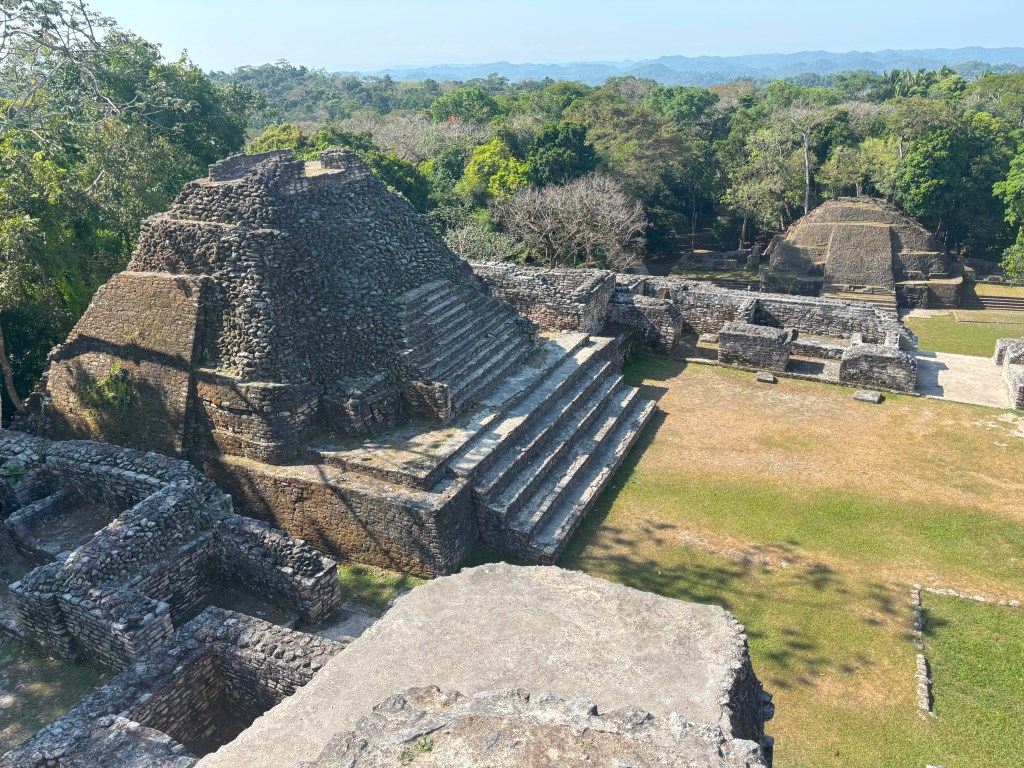
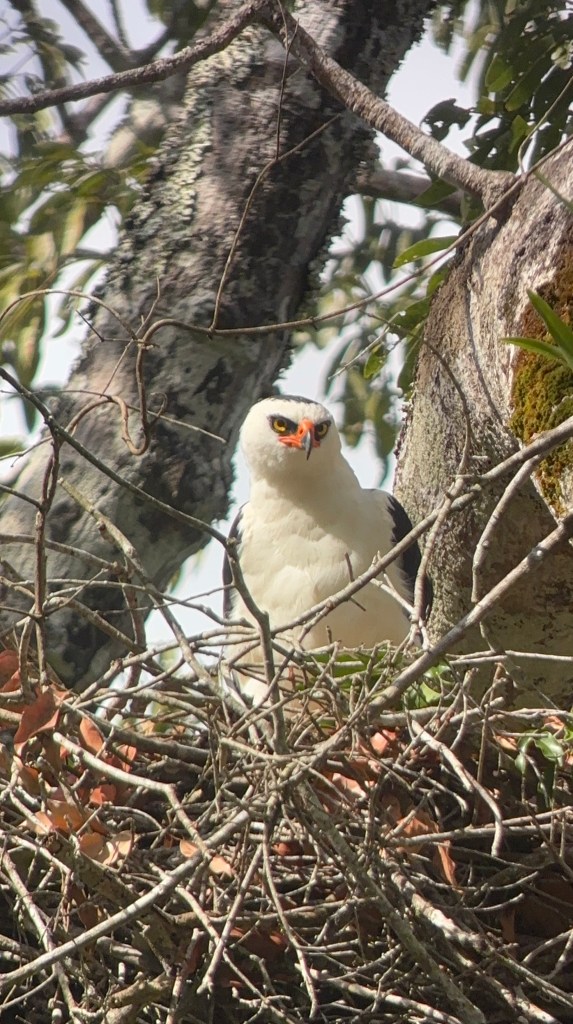
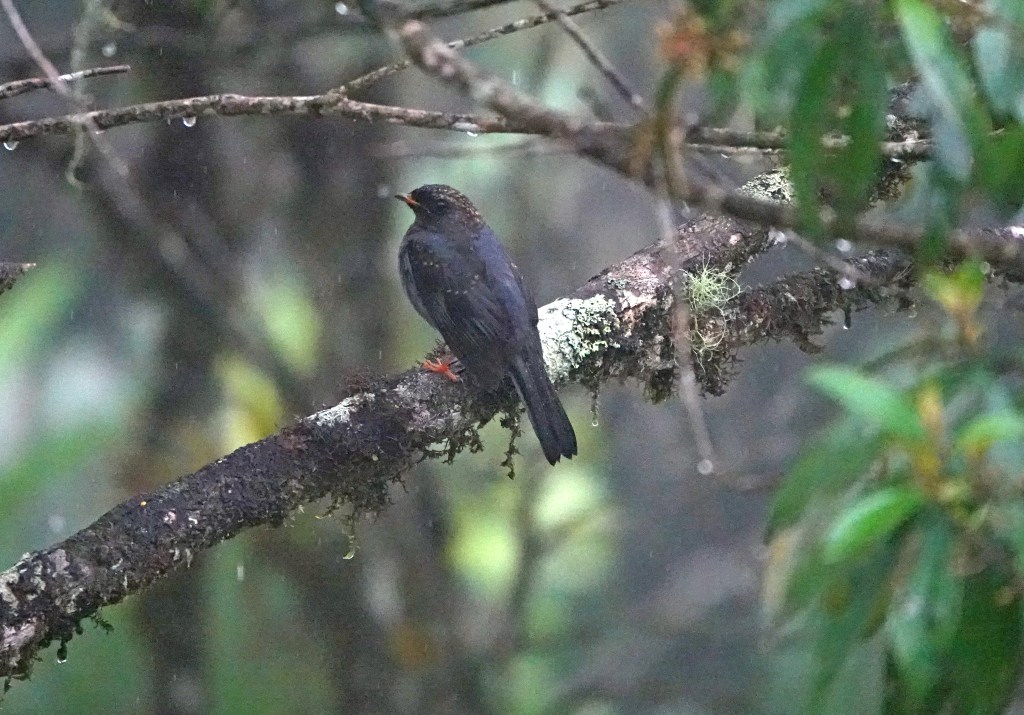
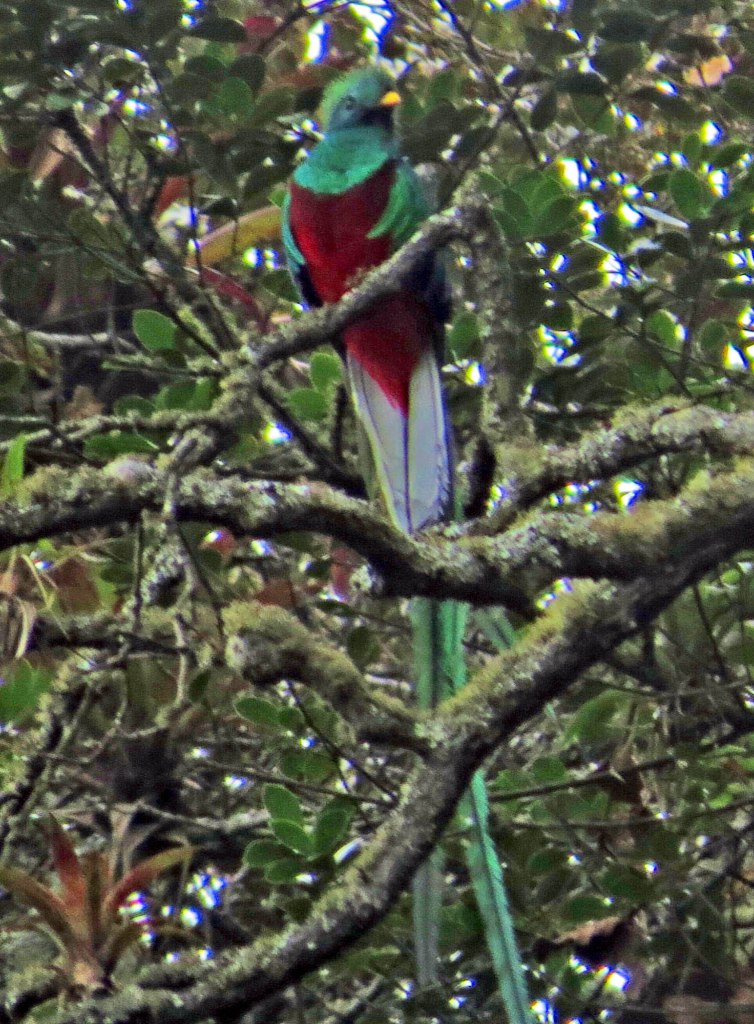
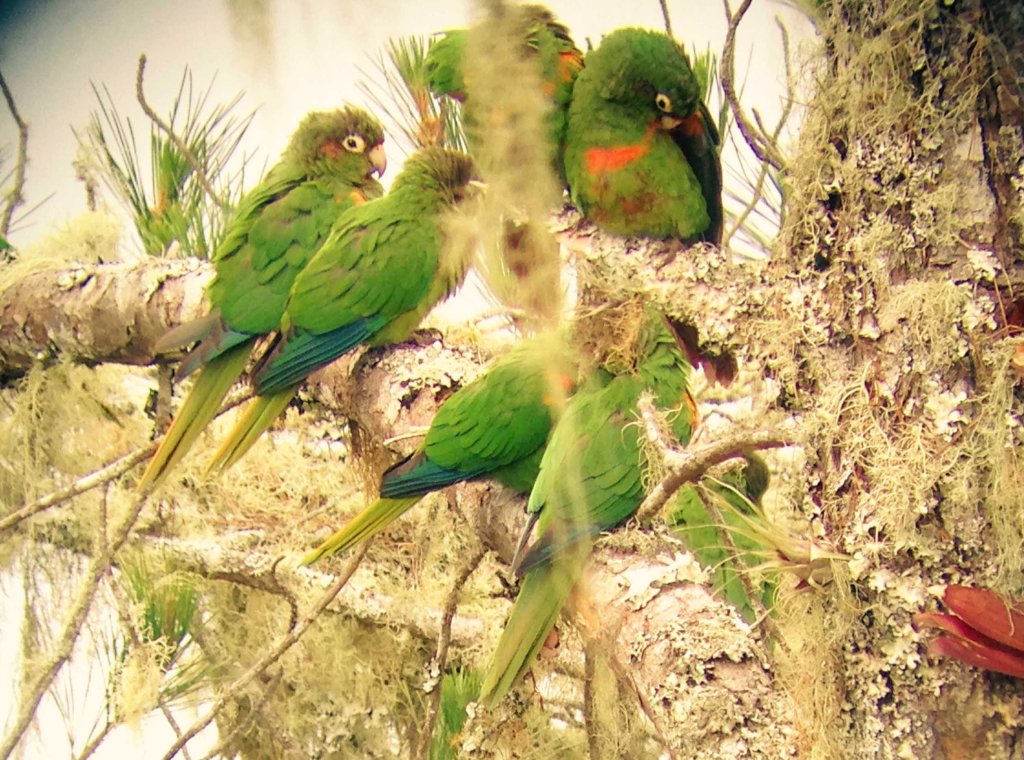
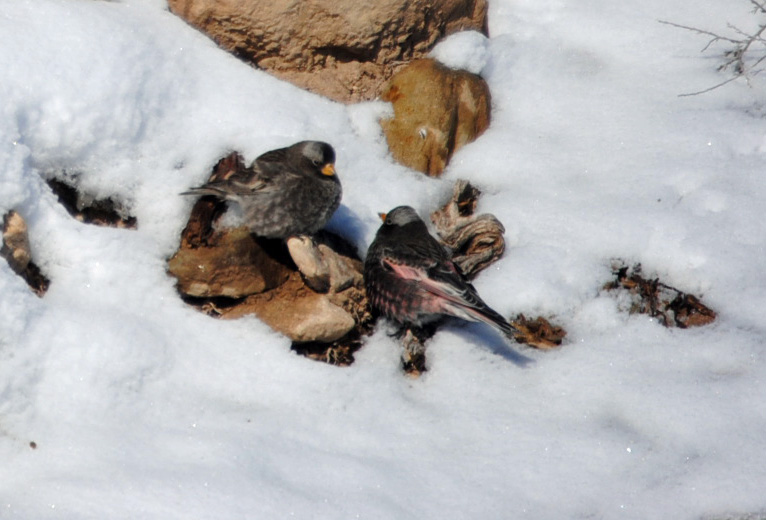
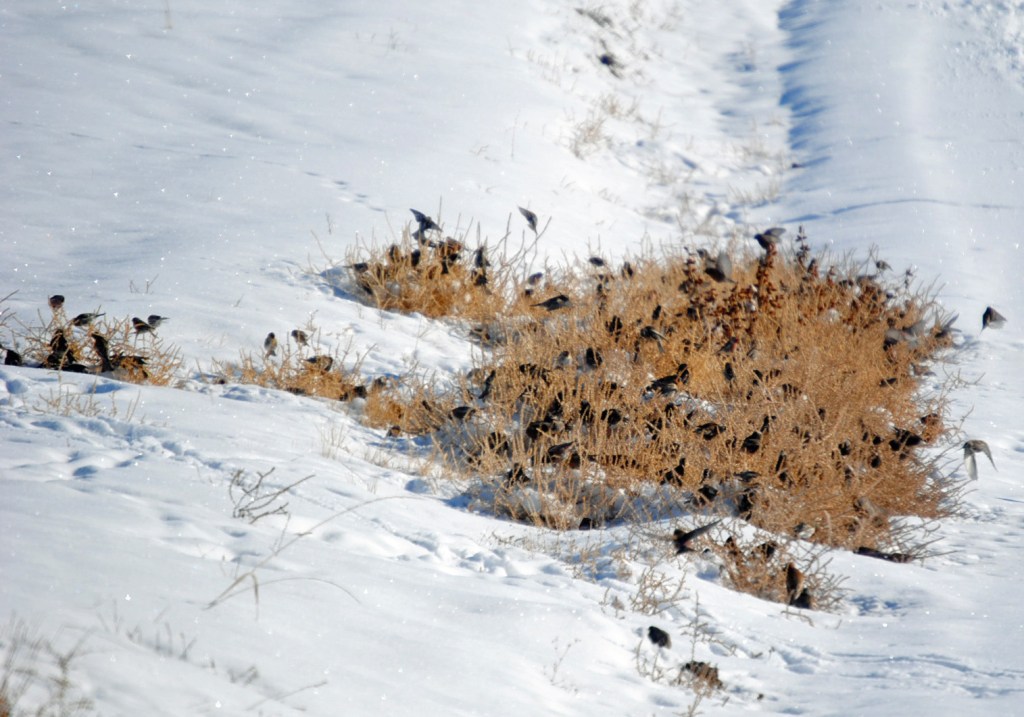
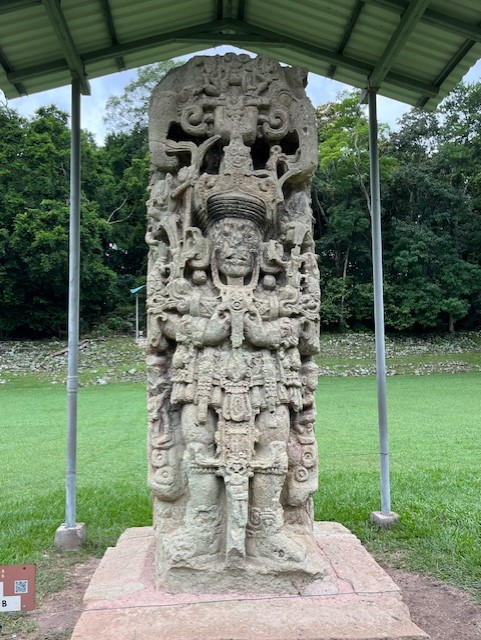
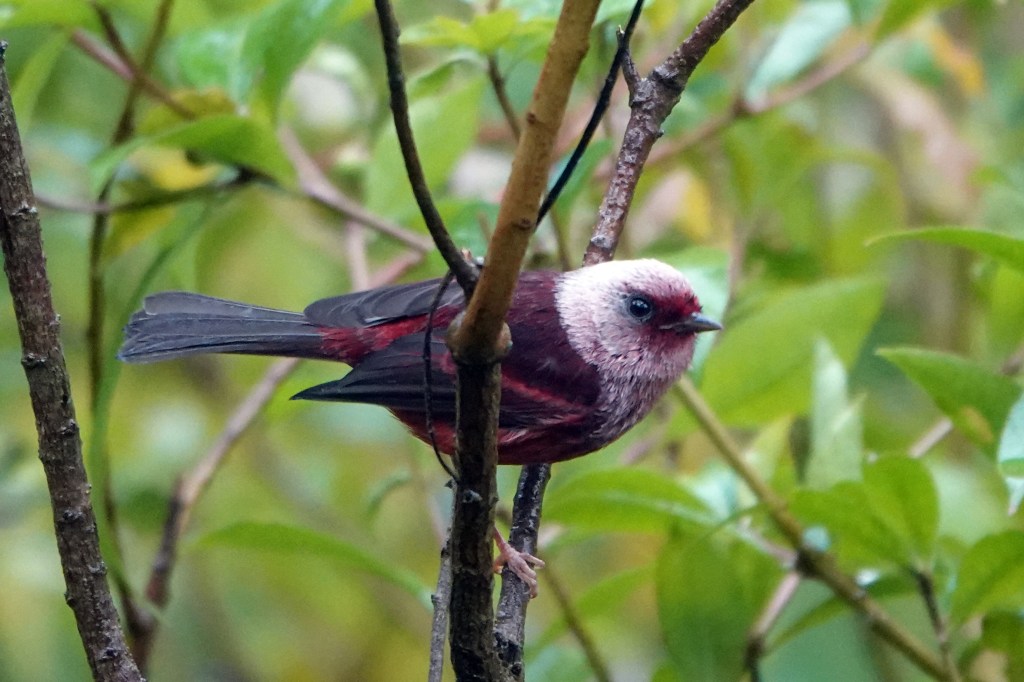
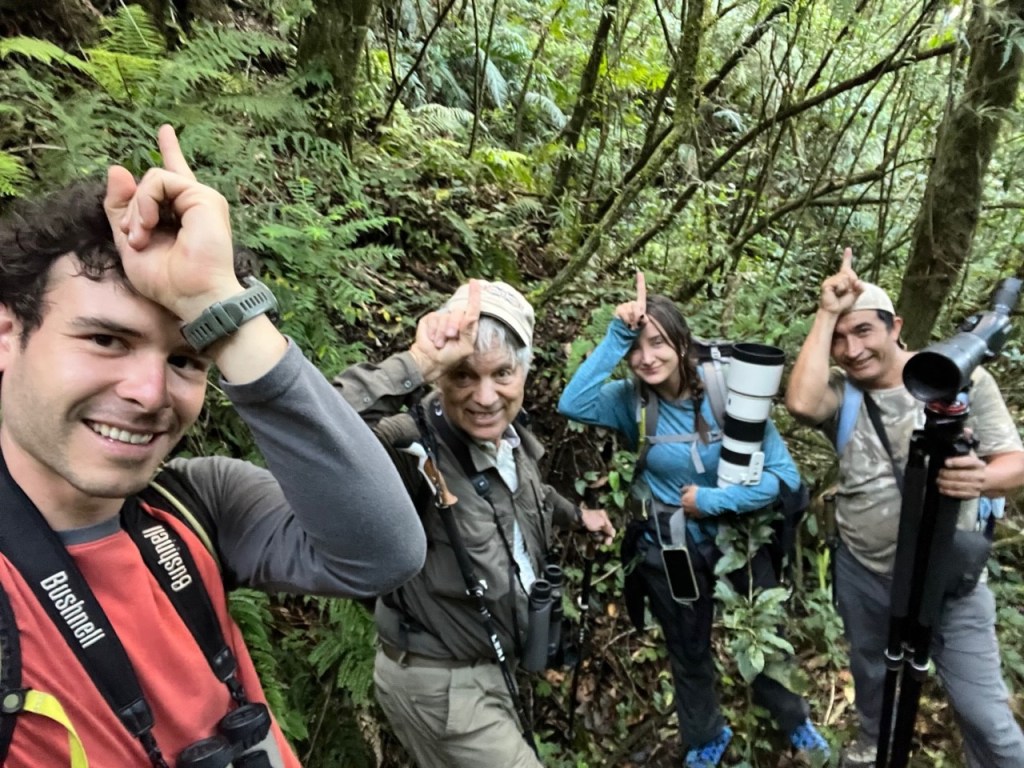
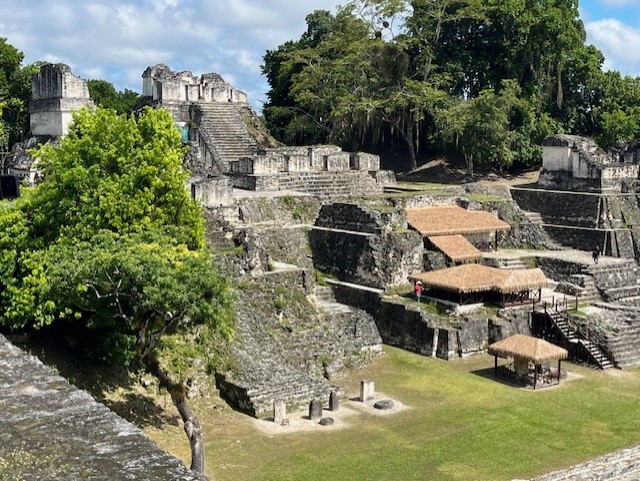

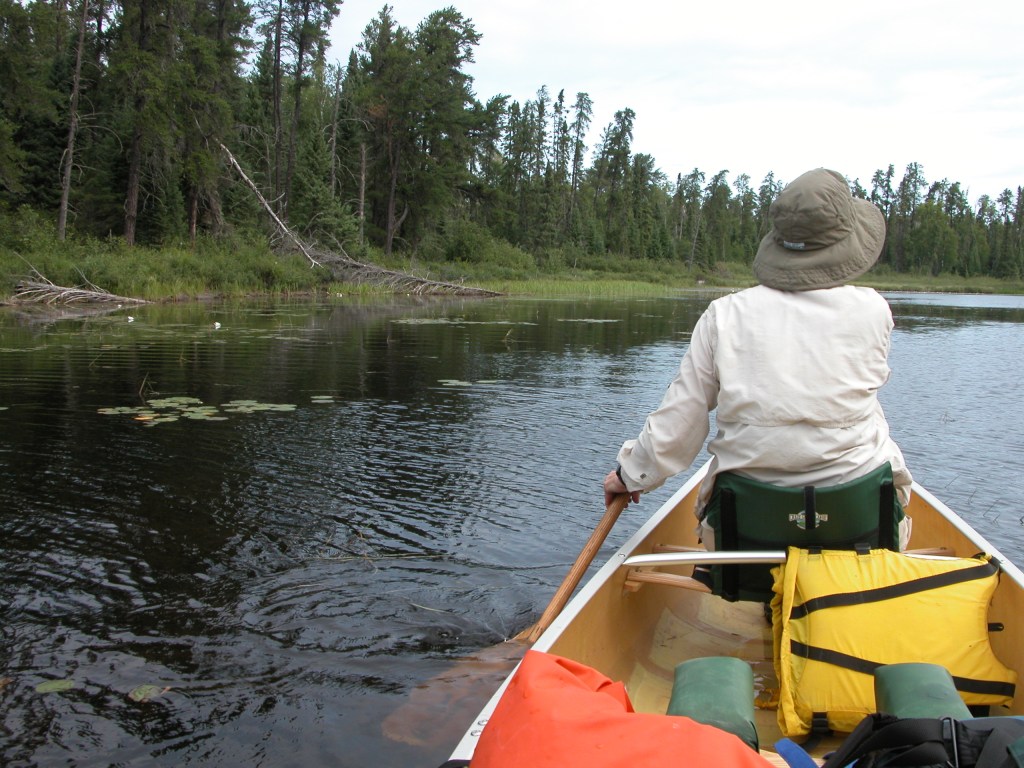
 Birds and More